

Current Biotechnology ›› 2026, Vol. 16 ›› Issue (4): 822-832.DOI: 10.19586/j.2095-2341.2026.0042
• Special Forum on Detection Technology for Genetically Modified Organisms • Previous Articles Next Articles
Zhaozhao SI1( ), Zaobing ZHU2, Dongdong LIU1, Yongping WANG1, Litao YANG1()
Received:2026-02-27
Accepted:2026-05-06
Online:2026-07-25
Published:2026-09-11
Contact:
Litao YANG
CLC Number:
Zhaozhao SI, Zaobing ZHU, Dongdong LIU, Yongping WANG, Litao YANG. Preparation of a Monoclonal Antibody Against SpCas9 Protein and Application of a Sandwich ELISA for Screening Gene-edited Rice[J]. Current Biotechnology, 2026, 16(4): 822-832.
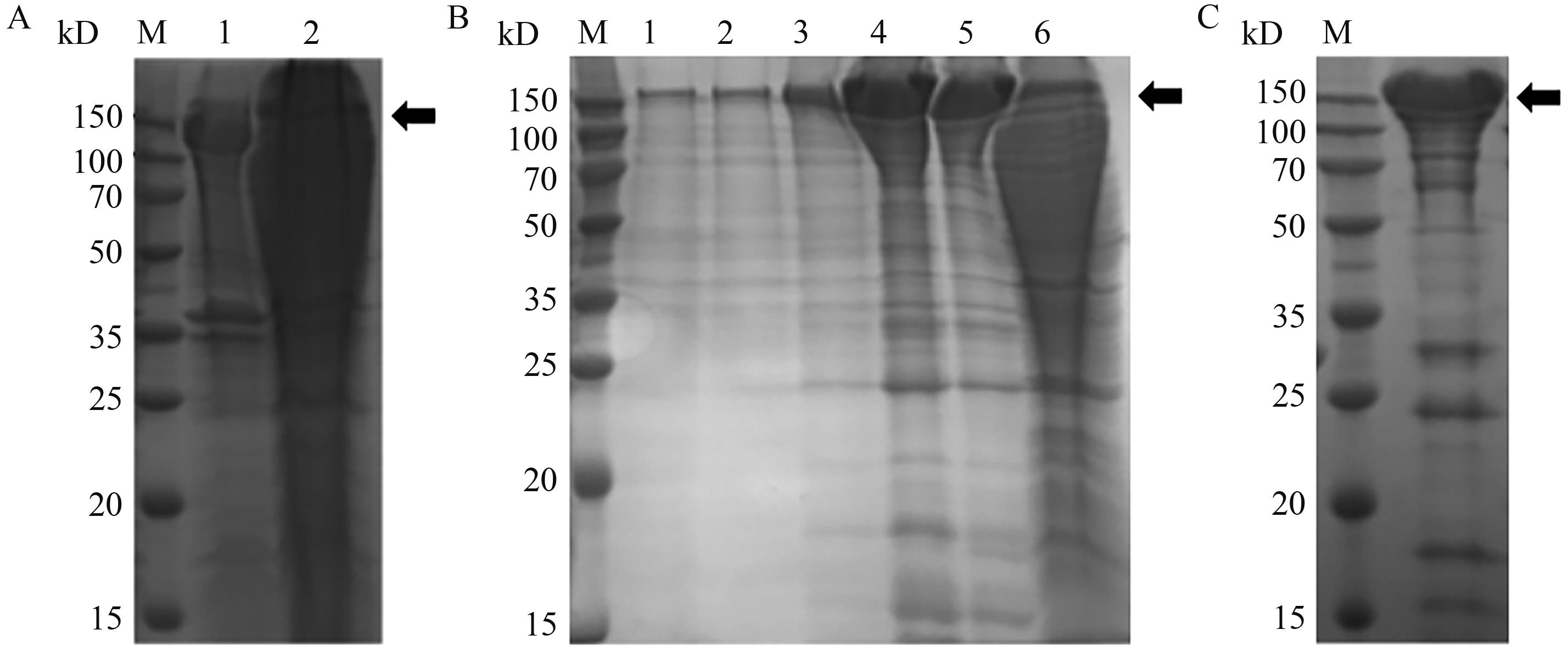
Fig. 1 Expression and purification of recombinant SpCas9 protein
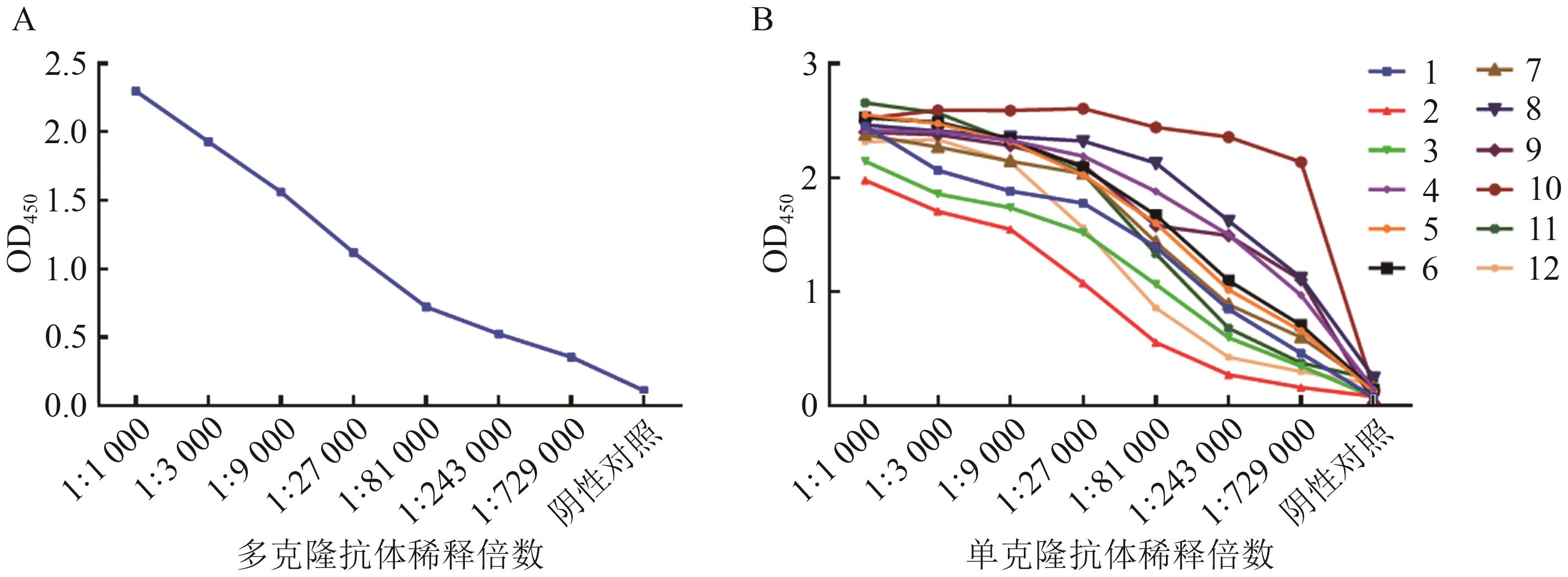
Fig. 2 The titers of pAb and mAbs
| 抗体编号 | 亚类 | 抗体编号 | 亚类 |
|---|---|---|---|
| #1 | IgG2a,κ | #7 | IgG1,κ |
| #2 | IgG1,κ | #8 | IgG1,κ |
| #3 | IgG1,κ | #9 | IgG2b,κ |
| #4 | IgG1,κ | #10 | IgG2a,κ |
| #5 | IgG1,κ | #11 | IgG1,κ |
| #6 | IgG1,κ | #12 | IgG1,κ |
Table 1 Isotype and light chain characterization of monoclonal antibodies
| 抗体编号 | 亚类 | 抗体编号 | 亚类 |
|---|---|---|---|
| #1 | IgG2a,κ | #7 | IgG1,κ |
| #2 | IgG1,κ | #8 | IgG1,κ |
| #3 | IgG1,κ | #9 | IgG2b,κ |
| #4 | IgG1,κ | #10 | IgG2a,κ |
| #5 | IgG1,κ | #11 | IgG1,κ |
| #6 | IgG1,κ | #12 | IgG1,κ |
| 抗体编号 | 标准品浓度/(ng·mL-1) | |||
|---|---|---|---|---|
| 1 000 | 100 | 10 | 0 | |
| #1 | — | 3.341 5 | 1.025 1 | 0.328 4 |
| #2 | 3.565 3 | 2.070 2 | 0.477 2 | 0.164 4 |
| #3 | 3.663 0 | 2.971 3 | 0.821 7 | 0.210 4 |
| #4 | 3.623 2 | 3.403 2 | 1.093 3 | 0.174 0 |
| #5 | 3.598 2 | 1.756 4 | 0.416 5 | 0.223 0 |
| #6 | 3.642 4 | 3.214 5 | 0.918 2 | 0.169 1 |
| #7 | 3.505 5 | 2.397 0 | 0.658 0 | 0.135 7 |
| #8 | 3.325 2 | 2.727 9 | 0.685 3 | 0.111 2 |
| #9 | 3.933 2 | 2.708 9 | 0.645 0 | 0.189 9 |
| #10 | 3.526 3 | 3.451 0 | 1.305 3 | 0.167 4 |
| #11 | 2.383 5 | 0.807 7 | 0.196 5 | 0.123 9 |
| #12 | 3.614 3 | 2.799 6 | 0.653 1 | 0.170 5 |
Table 2 Selection of paired antibodies
| 抗体编号 | 标准品浓度/(ng·mL-1) | |||
|---|---|---|---|---|
| 1 000 | 100 | 10 | 0 | |
| #1 | — | 3.341 5 | 1.025 1 | 0.328 4 |
| #2 | 3.565 3 | 2.070 2 | 0.477 2 | 0.164 4 |
| #3 | 3.663 0 | 2.971 3 | 0.821 7 | 0.210 4 |
| #4 | 3.623 2 | 3.403 2 | 1.093 3 | 0.174 0 |
| #5 | 3.598 2 | 1.756 4 | 0.416 5 | 0.223 0 |
| #6 | 3.642 4 | 3.214 5 | 0.918 2 | 0.169 1 |
| #7 | 3.505 5 | 2.397 0 | 0.658 0 | 0.135 7 |
| #8 | 3.325 2 | 2.727 9 | 0.685 3 | 0.111 2 |
| #9 | 3.933 2 | 2.708 9 | 0.645 0 | 0.189 9 |
| #10 | 3.526 3 | 3.451 0 | 1.305 3 | 0.167 4 |
| #11 | 2.383 5 | 0.807 7 | 0.196 5 | 0.123 9 |
| #12 | 3.614 3 | 2.799 6 | 0.653 1 | 0.170 5 |
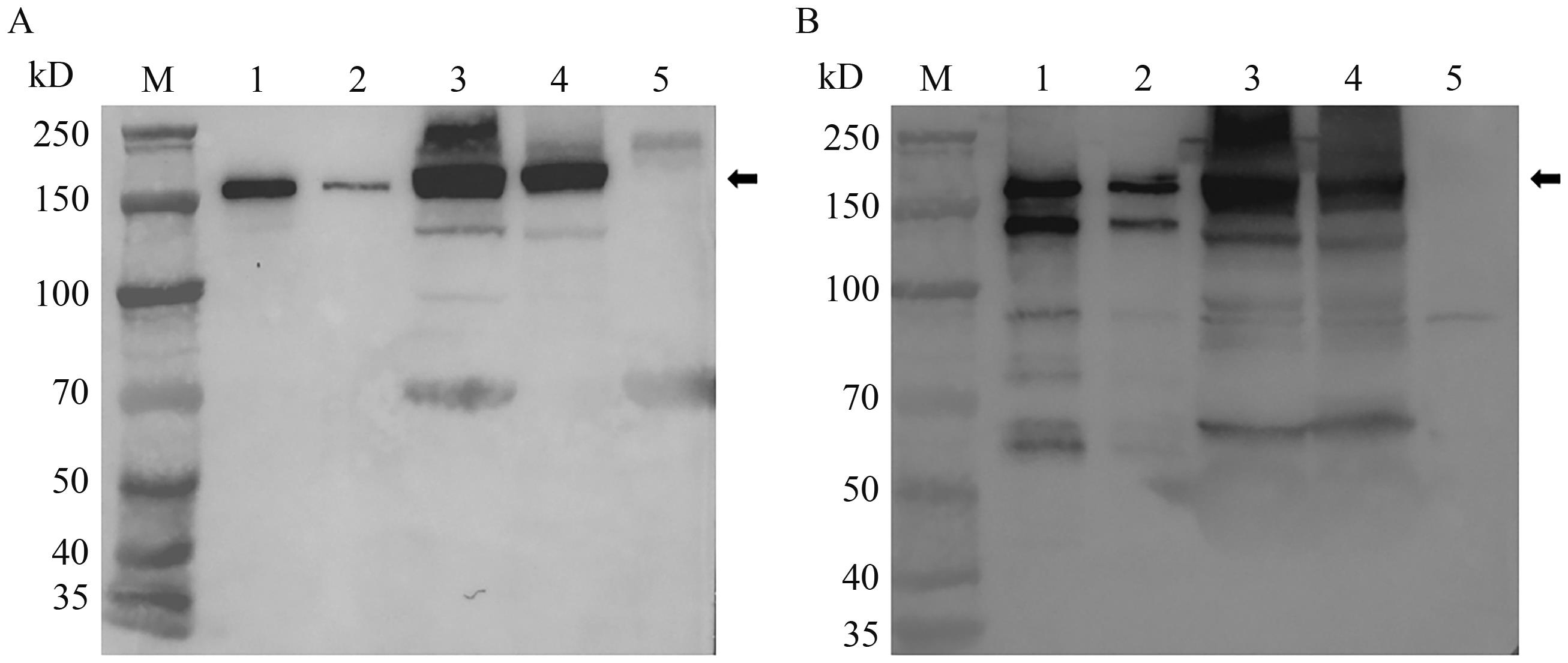
Fig. 3 Western blot analysis of the specificity of anti-SpCas9 antibodies
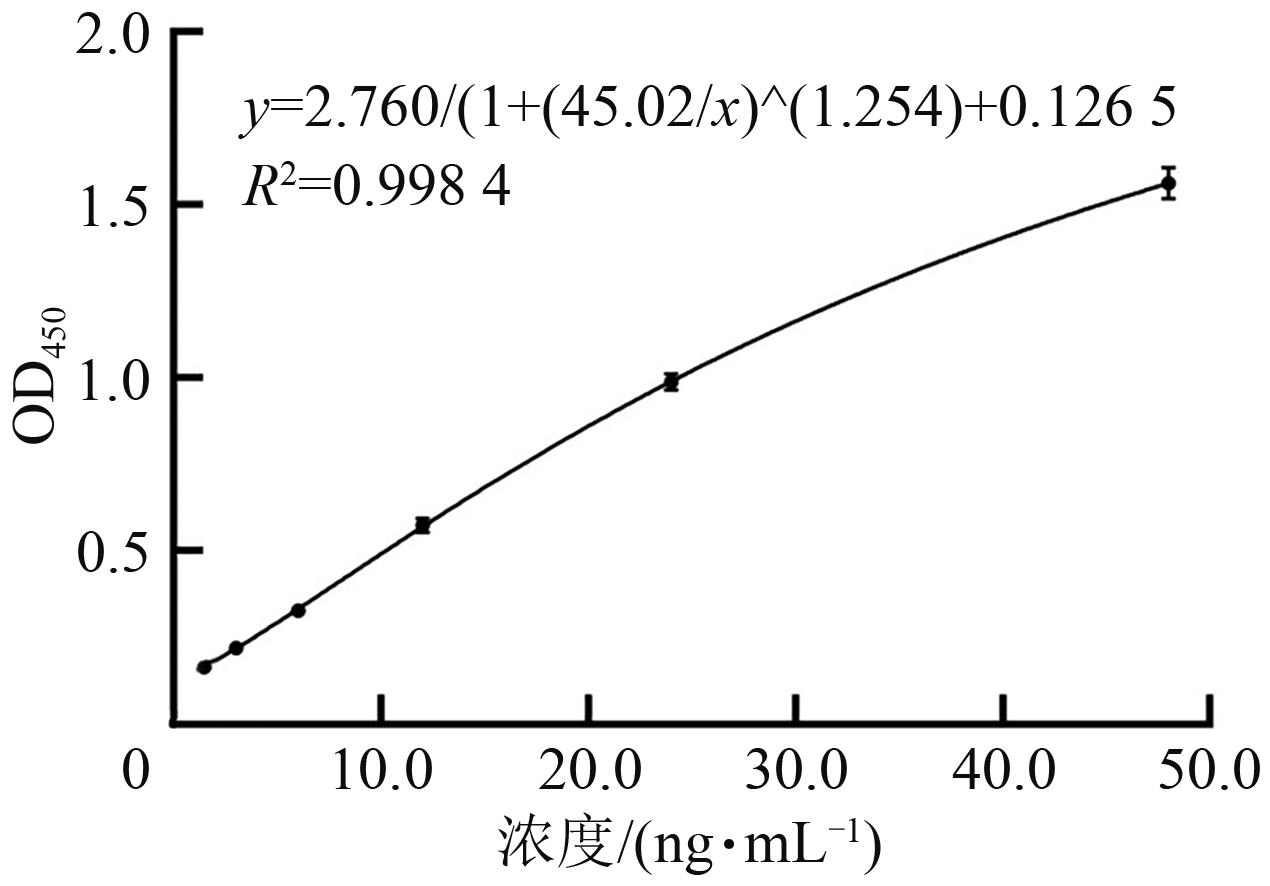
Fig. 4 The standard curve of Cas9 protein detected by sandwich ELISA
| 标准品浓度/(ng·mL-1) | |||||||
|---|---|---|---|---|---|---|---|
| 48.0 | 24.0 | 12.0 | 6.0 | 3.0 | 1.5 | ||
| 批内 | 平均值±标准差 | 48.0±2.3 | 24.3±0.6 | 11.6±0.1 | 6.4±0.3 | 2.9±0.1 | 1.4±0.1 |
| 变异系数/% | 3.0 | 2.6 | 1.2 | 3.9 | 1.0 | 1.3 | |
| 批间 | 平均值±标准差 | 47.8±0.5 | 24.0±0.2 | 12.0±0.3 | 6.1±0.2 | 3.0±0.1 | 1.5±0.1 |
| 变异系数/% | 1.0 | 0.7 | 2.4 | 4.0 | 3.3 | 7.3 | |
Table 3 Intra-assay and Inter-assay coefficients of variation
| 标准品浓度/(ng·mL-1) | |||||||
|---|---|---|---|---|---|---|---|
| 48.0 | 24.0 | 12.0 | 6.0 | 3.0 | 1.5 | ||
| 批内 | 平均值±标准差 | 48.0±2.3 | 24.3±0.6 | 11.6±0.1 | 6.4±0.3 | 2.9±0.1 | 1.4±0.1 |
| 变异系数/% | 3.0 | 2.6 | 1.2 | 3.9 | 1.0 | 1.3 | |
| 批间 | 平均值±标准差 | 47.8±0.5 | 24.0±0.2 | 12.0±0.3 | 6.1±0.2 | 3.0±0.1 | 1.5±0.1 |
| 变异系数/% | 1.0 | 0.7 | 2.4 | 4.0 | 3.3 | 7.3 | |
| 基质稀释倍数 | 原液 | 1∶2 | 1∶4 | 1∶8 | 1∶16 | 1∶32 |
|---|---|---|---|---|---|---|
| 回收率±标准差/% | 110.5±4.6 | 109.7±3.1 | 100.4±1.7 | 97.2±1.3 | 96.0±1.5 | 99.3±1.7 |
| 变异系数/% | 4.2 | 2.8 | 1.7 | 1.3 | 1.5 | 1.7 |
Table 4 Evaluation of the matrix effect in rice leaf extracts
| 基质稀释倍数 | 原液 | 1∶2 | 1∶4 | 1∶8 | 1∶16 | 1∶32 |
|---|---|---|---|---|---|---|
| 回收率±标准差/% | 110.5±4.6 | 109.7±3.1 | 100.4±1.7 | 97.2±1.3 | 96.0±1.5 | 99.3±1.7 |
| 变异系数/% | 4.2 | 2.8 | 1.7 | 1.3 | 1.5 | 1.7 |
| 标准品浓度/(ng·mL-1) | 48.0 | 24.0 | 12.0 | 6.0 | 3.0 | 1.5 |
|---|---|---|---|---|---|---|
| 回收率±标准差/% | 97.0±2.8 | 97.7±0.7 | 102.±2.6 | 106.6±3.1 | 109.1±2.0 | 108.4±1.5 |
| 变异系数/% | 2.93 | 0.68 | 2.52 | 2.87 | 1.86 | 1.36 |
Table 5 Recovery of SpCas9 protein spiked rice leaf extracts
| 标准品浓度/(ng·mL-1) | 48.0 | 24.0 | 12.0 | 6.0 | 3.0 | 1.5 |
|---|---|---|---|---|---|---|
| 回收率±标准差/% | 97.0±2.8 | 97.7±0.7 | 102.±2.6 | 106.6±3.1 | 109.1±2.0 | 108.4±1.5 |
| 变异系数/% | 2.93 | 0.68 | 2.52 | 2.87 | 1.86 | 1.36 |
| 样品 | 稀释倍数 | 检测浓度/(ng·mL-1) | 稀释回收率/% |
|---|---|---|---|
| #4 | 原液 | 14.8±0.4 | — |
| 1∶2 | 15.2±0.3 | 102.9 | |
| 1∶4 | 14.4±0.7 | 97.5 | |
| 1∶8 | 14.3±0.8 | 96.8 | |
| #6 | 原液 | 25.9±0.3 | — |
| 1∶2 | 28.2±0.2 | 109.0 | |
| 1∶4 | 28.9±0.6 | 111.8 | |
| 1∶8 | 29.5±0.1 | 114.1 |
Table 6 Dilution linearity of extracts from SpCas9-edited rice leaves
| 样品 | 稀释倍数 | 检测浓度/(ng·mL-1) | 稀释回收率/% |
|---|---|---|---|
| #4 | 原液 | 14.8±0.4 | — |
| 1∶2 | 15.2±0.3 | 102.9 | |
| 1∶4 | 14.4±0.7 | 97.5 | |
| 1∶8 | 14.3±0.8 | 96.8 | |
| #6 | 原液 | 25.9±0.3 | — |
| 1∶2 | 28.2±0.2 | 109.0 | |
| 1∶4 | 28.9±0.6 | 111.8 | |
| 1∶8 | 29.5±0.1 | 114.1 |
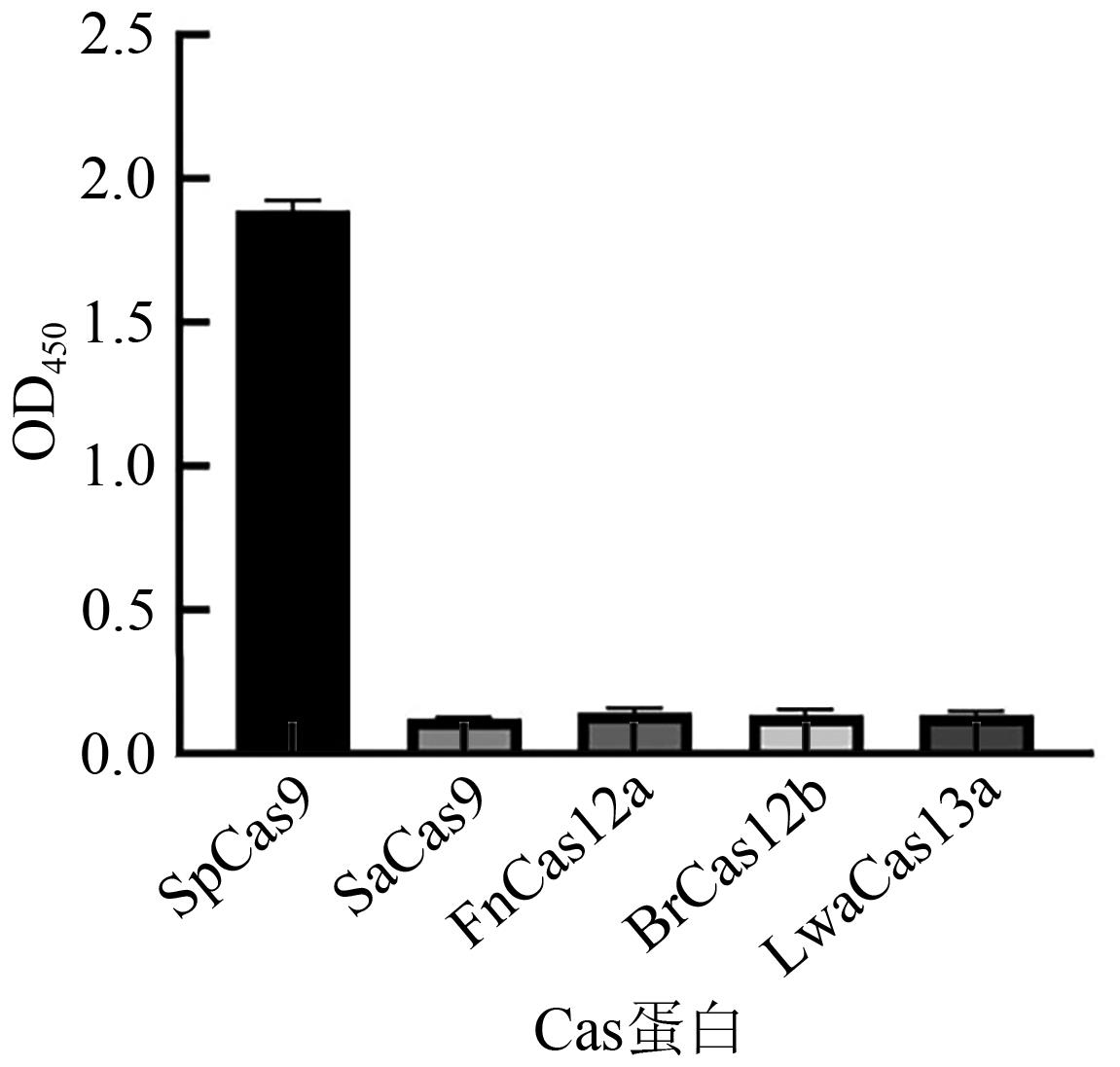
Fig. 5 Cross-reactivity analysis of the SpCas9 ELISA with four Cas proteins
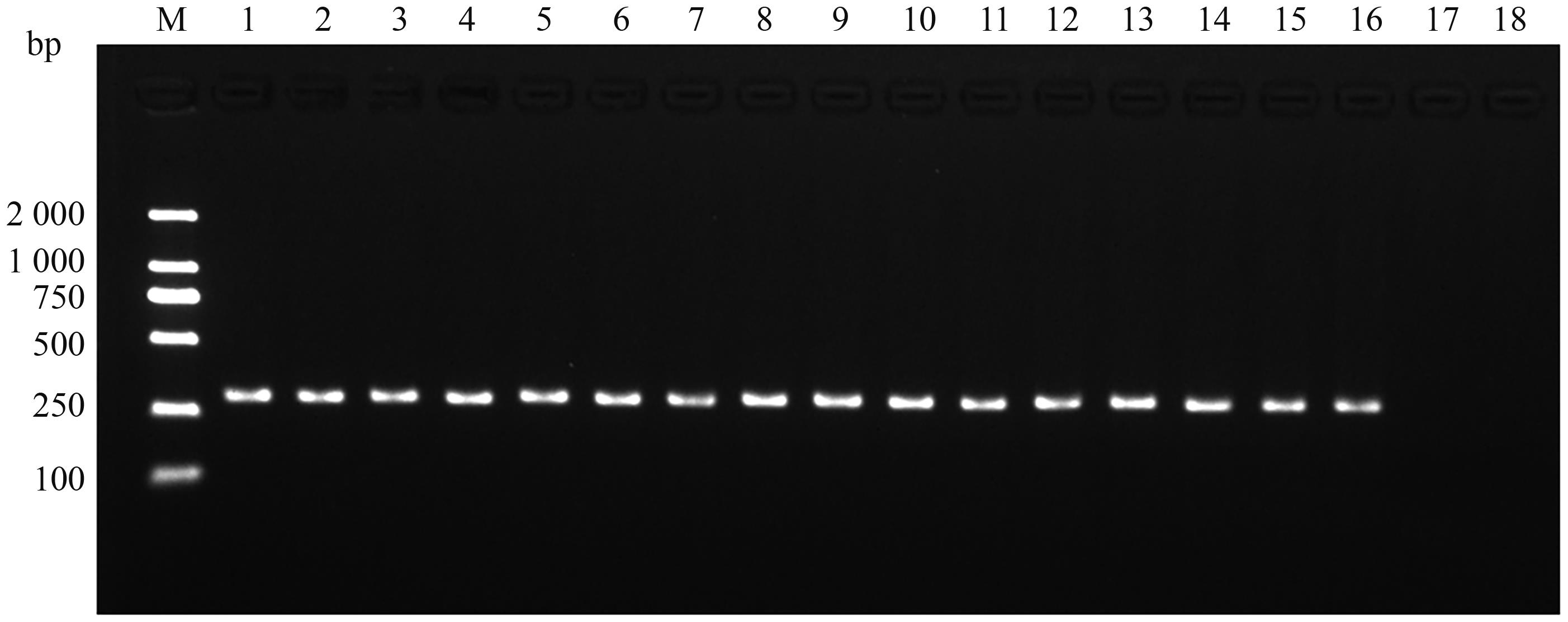
Fig. 6 PCR amplification results of SpCas9 gene in rice leaves
| 样品编号 | Cas9蛋白含量/(ng·g-1鲜重) | 样品编号 | Cas9蛋白含量/(ng·g-1鲜重) |
|---|---|---|---|
| #1 | 39.18±1.57 | #10 | 21.61±0.16 |
| #2 | 27.64±0.34 | #11 | 20.85±0.41 |
| #3 | 25.52±1.12 | #12 | 16.31±0.19 |
| #4 | 112.62±0.55 | #13 | 10.30±0.13 |
| #5 | 27.92±0.25 | #14 | 34.82±1.79 |
| #6 | 150.26±0.25 | #15 | 10.92±0.68 |
| #7 | 57.03±0.65 | #16 | 15.44±0.43 |
| #8 | 47.71±0.25 | #17 | 未检出(<LOD) |
| #9 | 24.01±0.05 | #18 | 未检出(<LOD) |
Table 7 Detection results of Cas9 protein content in gene-edited rice leaves
| 样品编号 | Cas9蛋白含量/(ng·g-1鲜重) | 样品编号 | Cas9蛋白含量/(ng·g-1鲜重) |
|---|---|---|---|
| #1 | 39.18±1.57 | #10 | 21.61±0.16 |
| #2 | 27.64±0.34 | #11 | 20.85±0.41 |
| #3 | 25.52±1.12 | #12 | 16.31±0.19 |
| #4 | 112.62±0.55 | #13 | 10.30±0.13 |
| #5 | 27.92±0.25 | #14 | 34.82±1.79 |
| #6 | 150.26±0.25 | #15 | 10.92±0.68 |
| #7 | 57.03±0.65 | #16 | 15.44±0.43 |
| #8 | 47.71±0.25 | #17 | 未检出(<LOD) |
| #9 | 24.01±0.05 | #18 | 未检出(<LOD) |
| [1] | QI L S, LARSON M H, GILBERT L A, et al.. Repurposing CRISPR as an RNA-guided platform for sequence-specific control of gene expression[J]. Cell, 2013, 152(5): 1173-1183. |
| [2] | GILBERT L A, LARSON M H, MORSUT L, et al.. CRISPR-mediated modular RNA-guided regulation of transcription in eukaryotes[J]. Cell, 2013, 154(2): 442-451. |
| [3] | HWANG W Y, FU Y, REYON D, et al.. Efficient genome editing in zebrafish using a CRISPR-Cas system[J]. Nat. Biotechnol., 2013, 31(3): 227-229. |
| [4] | SHAN Q, WANG Y, LI J, et al.. Targeted genome modification of crop plants using a CRISPR-Cas system[J]. Nat. Biotechnol., 2013, 31(8): 686-688. |
| [5] | SHALEM O, SANJANA N E, HARTENIAN E, et al.. Genome-scale CRISPR-Cas9 knockout screening in human cells[J]. Science, 2014, 343(6166): 84-87. |
| [6] | YANG S, LI S, LI X J. Shortening the half-life of Cas9 maintains its gene editing ability and reduces neuronal toxicity[J]. Cell Rep., 2018, 25(10): 2653-2659. |
| [7] | MEHTA A, MERKEL O M. Immunogenicity of Cas9 protein[J]. J. Pharm. Sci., 2020, 109(1): 62-67. |
| [8] | ALIAGA-FRANCO N, ZHANG C, PRESA S, et al.. Identification of transgene-free CRISPR-edited plants of rice, tomato, and Arabidopsis by monitoring DsRED fluorescence in dry seeds[J/OL]. Front. Plant Sci., 2019, 10: 1150[2026-03-20]. . |
| [9] | HAKIM C H, KUMAR S R P, PÉREZ-LÓPEZ D O, et al.. Cas9-specific immune responses compromise local and systemic AAV CRISPR therapy in multiple dystrophic canine models[J/OL]. Nat. Commun., 2021, 12: 6769[2026-03-20]. . |
| [10] | CHARLESWORTH C T, DESHPANDE P S, DEVER D P, et al.. Identification of preexisting adaptive immunity to Cas9 proteins in humans[J]. Nat. Med., 2019, 25(2): 249-254. |
| [11] | CHEW W L, TABEBORDBAR M, CHENG J K W, et al.. A multifunctional AAV-CRISPR-Cas9 and its host response[J]. Nat. Meth., 2016, 13(10): 868-874. |
| [12] | BUBNER B, BALDWIN I T. Use of real-time PCR for determining copy number and zygosity in transgenic plants[J]. Plant Cell Rep., 2004, 23(5): 263-271. |
| [13] | 郭亚璐,马晓飞,史佳楠,等.转基因水稻中CAS9蛋白质的免疫印迹检测[J].中国农业科学,2017,50(19):3631-3639. |
| GUO Y L, MA X F, SHI J N, et al.. Western blot detection of CAS9 protein in transgenic rice[J]. Sci. Agric. Sin., 2017, 50(19): 3631-3639. | |
| [14] | LENG S X, MCELHANEY J E, WALSTON J D, et al.. ELISA and multiplex technologies for cytokine measurement in inflammation and aging research[J]. J. Gerontol. Ser. A Biol. Sci. Med. Sci., 2008, 63(8): 879-884. |
| [15] | ASENSIO L, GONZÁLEZ I, GARCÍA T, et al.. Determination of food authenticity by enzyme-linked immunosorbent assay (ELISA)[J]. Food Control, 2008, 19(1): 1-8. |
| [16] | SUBCHAN A N, NOPITASARI S, SETIAWATI Y, et al.. Agrobacterium-mediated transformation by using immerse and agroinfiltration method for genome editing of orchids with CRISPR/Cas9[J]. Acta Hortic., 2022(1334): 263-272. |
| [17] | CHE X Y, QIU L W, PAN Y X, et al.. Sensitive and specific monoclonal antibody-based capture enzyme immunoassay for detection of nucleocapsid antigen in sera from patients with severe acute respiratory syndrome[J]. J. Clin. Microbiol., 2004, 42(6): 2629-2635. |
| [18] | AGNOLON V, CONTATO A, MENEGHELLO A, et al.. ELISA assay employing epitope-specific monoclonal antibodies to quantify circulating HER2 with potential application in monitoring cancer patients undergoing therapy with trastuzumab[J/OL]. Sci. Rep., 2020, 10: 3016[2026-03-20]. . |
| [19] | ASCOLI C A, AGGELER B. Overlooked benefits of using polyclonal antibodies[J]. BioTechniques, 2018, 65(3): 127-136. |
| [20] | LUO B, WANG F, WANG Q, et al.. Development of an immunochromatographic strip for rapid detection of recombinant rice EPSPS in transgenic crops[J/OL]. Anal. Biochem., 2025, 705: 115923[2026-03-20]. . |
| [1] | Fangqi FU, Xinhao JIN, Wei FU, Pengchong JIANG, Jing GAO, Li CUI, Yimei CAI, Lufeng REN, Hong CHEN. Establishment of On-site Rapid Identification System for Transgenic Ingredients Based on Microfluidic Platform [J]. Current Biotechnology, 2026, 16(4): 797-804. |
| [2] | Lili BI, Yunxia ZHAO, Kui JIANG, Yuanyuan WANG, Ruiping LI. Construction of the Bone Metastasis Model in B6-hRANKL Mice and Exploration of the Efficacy of hRANKL Monoclonal Antibody [J]. Current Biotechnology, 2025, 15(6): 1077-1085. |
| [3] | Xiaotian ZHANG, Zhi WANG, Pengyu ZHU, Shuang WEI, Wei FU, Chunmeng HUANG, Zhihong LI, Huiyu WANG, Yue JIAO. A Rapid Detection Method Based on qPCR for CRISPR/Cas9 Edited Crops [J]. Current Biotechnology, 2023, 13(6): 907-912. |
| [4] | Yuqi YANG, Xiuxia HE. Application of Rolling Circle Amplification Technique in Electrochemical Biosensors [J]. Current Biotechnology, 2023, 13(6): 863-867. |
| [5] | Hui CAO, Jing DONG, Yu JIA, Yifan JIANG. Effects of Different Sources of CHO Host Cells on Antibody Expression [J]. Current Biotechnology, 2023, 13(5): 698-703. |
| [6] | Teng WANG, Yifei YU, Rui WANG, Xin WANG, Yunyi LI, Yang CHEN, Nan CHENG. Research Progress on Detection Methods of Phthalates Plasticizers in Food [J]. Current Biotechnology, 2023, 13(1): 11-21. |
| [7] | Yiqi YANG, Zhigao ZHANG, Xiaolong YOU, Jing ZHANG, Guanfeng LIN, Yingsong WU. Development and Application of Monoclonal Antibody-based Drug [J]. Current Biotechnology, 2022, 12(3): 358-365. |
| [8] | ZHANG Bohui, JIA Daihui, CHENG Qian, XU Junyan*, SHAO Zhe, HUANG Yingfeng. Optimization of Hydrolysis Conditions of N-glycan from Monoclonal Antibodies by PNGase F [J]. Curr. Biotech., 2021, 11(2): 214-222. |
| [9] | WANG Huan§, NIU Kun§, JIANG Yifan, DONG Jing*. Charge Heterogeneity and Process Control of Recombinant Monoclonal Antibodies [J]. Curr. Biotech., 2020, 10(5): 456-462. |
| [10] | MA Xuan, GAO Siyue, LI Kexin, LIANG Zhihong, YAO Zhiyi*. A Novel Strategy for Constructing Chondroitin Sulfate Fluorescent Sensor [J]. Curr. Biotech., 2020, 10(2): 164-169. |
| [11] | LV Ruo-yun§, WANG Hui§, CHEN Chen, ZHANG Shi-xiong, ZHANG Xiao-nan, CAO Chen-hua, WEI Jing-shuang*. Effect of the N-glycan Removal on the Neutralization Activity of Recombinant Anti-rabies Monoclonal Antibodies [J]. Curr. Biotech., 2016, 6(4): 277-282. |
| [12] | TAO Wei-hong, QIN Min-min, ZHANG Zhe-ru. Strategy Discussion for CHO Cell Line Development [J]. Curr. Biotech., 2014, 4(6): 394-399. |
| [13] | ZHANG Jie1, WANG Yu2, LU Lin1, LIU Yan-hua1, ZHOU qi1, SUN Zi-yan1, GU De-zhou1, SHANG Shi-jin1, ZHANG Hui-yuan1, WANG Pei-rong3, CHEN Guang-quan1, YUE Jia-chang3. A Rapid Detecting Method for Enterobacter sakazakii based on F0F1-ATPase Molecular Motor Biosensor [J]. Curr. Biotech., 2013, 3(4): 297-300. |
| [14] | ZHANG Jie1, ZHANG Xin1, FAN Ai-hong2, ZHANG Hui-yuan1, WANG Qi1, GU De-zhou1, WANG Pei-rong3, HAN Jing1, LU Lin1, CHEN Guang-quan1, YUE Jia-chang3. The Study of a Detecting Technology for Listeria monocytogenes based on F0F1-ATPase Molecular Motor Biosensor [J]. Curr. Biotech., 2012, 2(6): 436-440. |
| Viewed | ||||||
|
Full text |
|
|||||
|
Abstract |
|
|||||
