

Current Biotechnology ›› 2026, Vol. 16 ›› Issue (3): 665-676.DOI: 10.19586/j.2095-2341.2026.0036
• Articles • Previous Articles Next Articles
Yuting WU1,2( ), Wei LIANG1,2, Hongtao WANG1,2, Cuicui LIU1,2(), Jiaxi ZHOU1,2()
Received:2026-02-10
Accepted:2026-03-31
Online:2026-05-25
Published:2026-07-14
Contact:
Cuicui LIU,Jiaxi ZHOU
CLC Number:
Yuting WU, Wei LIANG, Hongtao WANG, Cuicui LIU, Jiaxi ZHOU. Establishment and Optimization of RNA Interference Technology in Platelets[J]. Current Biotechnology, 2026, 16(3): 665-676.
| 引物名称 | 引物序列(5'→3') |
|---|---|
| m-Tmsb4x-F | 5'-GCGAATCGTAATGAGGCGAG-3' |
| m-Tmsb4x-R | 5'-TGATGTGAAAGGGGCAGCAC-3' |
| m-Pf4-F | 5'-GAGGTGATCAAGGCAGGACG-3' |
| m-Pf4-R | 5'-TATAGGGGTGCTTGCCGGTC-3' |
Table 1 RT-qPCR primer sequences
| 引物名称 | 引物序列(5'→3') |
|---|---|
| m-Tmsb4x-F | 5'-GCGAATCGTAATGAGGCGAG-3' |
| m-Tmsb4x-R | 5'-TGATGTGAAAGGGGCAGCAC-3' |
| m-Pf4-F | 5'-GAGGTGATCAAGGCAGGACG-3' |
| m-Pf4-R | 5'-TATAGGGGTGCTTGCCGGTC-3' |

Fig. 1 M-Plus efficiently mediate siRNA transfection in platelets compared with Lipo2000
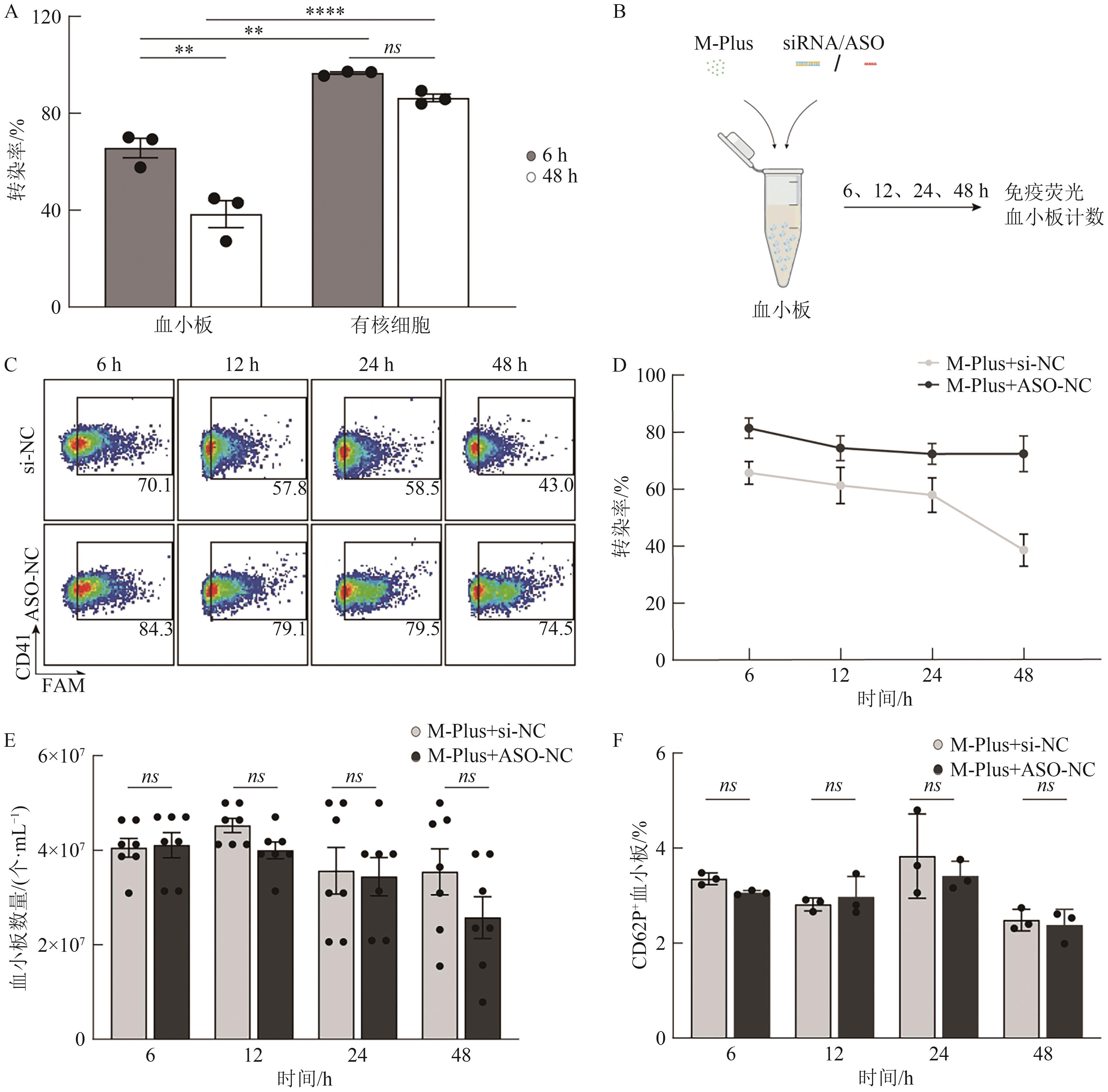
Fig. 2 ASO enhance the timeliness of RNA transfection in platelets compared with siRNA

Fig. 3 The expression of the highly abundant platelet gene Tmsb4x could be effectively knocked down by using the ASO/M-Plus transfection system
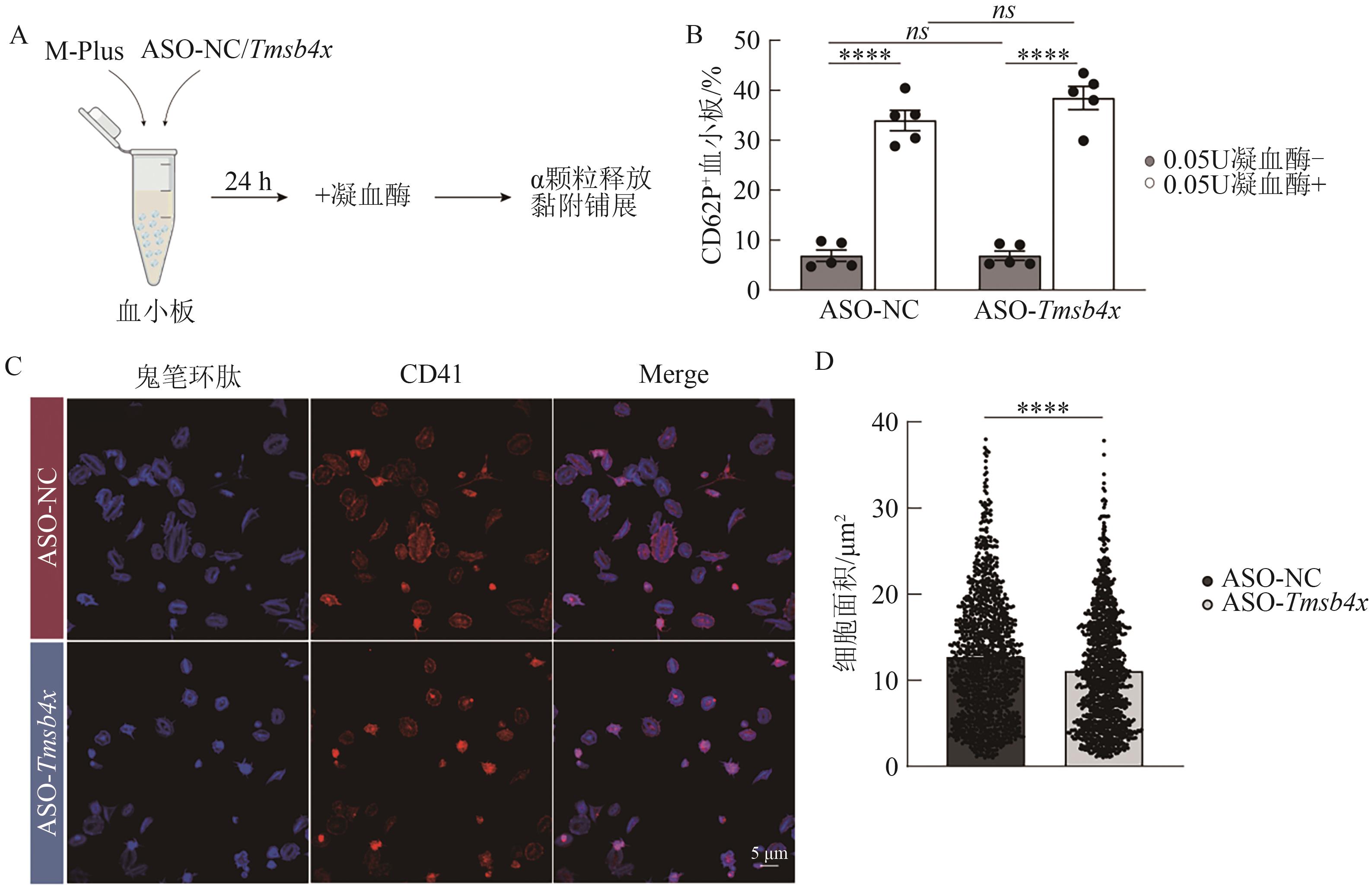
Fig. 4 Specific knockdown of Tmsb4x RNA significantly reduce the platelet spreading area
| [1] | PATEL S R, HARTWIG J H, ITALIANO J E. The biogenesis of platelets from megakaryocyte proplatelets[J]. J. Clin. Investig., 2005, 115(12): 3348-3354. |
| [2] | QUACH M E, CHEN W, LI R. Mechanisms of platelet clearance and translation to improve platelet storage[J]. Blood, 2018, 131(14): 1512-1521. |
| [3] | VAN DER MEIJDEN P E J, HEEMSKERK J W M. Platelet biology and functions: new concepts and clinical perspectives[J]. Nat. Rev. Cardiol., 2019, 16(3): 166-179. |
| [4] | FURIE B, FURIE B C. Mechanisms of thrombus formation[J]. N. Engl. J. Med., 2008, 359(9): 938-949. |
| [5] | FALATI S, GROSS P, MERRILL-SKOLOFF G, et al.. Real-time in vivo imaging of platelets, tissue factor and fibrin during arterial thrombus formation in the mouse[J]. Nat. Med., 2002, 8(10): 1175-1181. |
| [6] | SAVAGE B, SALDÍVAR E, RUGGERI Z M. Initiation of platelet adhesion by arrest onto fibrinogen or translocation on von Willebrand factor[J]. Cell, 1996, 84(2): 289-297. |
| [7] | FLAUMENHAFT R, DILKS J R, ROZENVAYN N, et al.. The actin cytoskeleton differentially regulates platelet alpha-granule and dense-granule secretion[J]. Blood, 2005, 105(10): 3879-3887. |
| [8] | CLARK S R, MA A C, TAVENER S A, et al.. Platelet TLR4 activates neutrophil extracellular traps to ensnare bacteria in septic blood[J]. Nat. Med., 2007, 13(4): 463-469. |
| [9] | HO-TIN-NOÉ B, DEMERS M, WAGNER D D. How platelets safeguard vascular integrity[J]. J. Thromb. Haemost., 2011, 9(): 56-65. |
| [10] | LABELLE M, BEGUM S, HYNES R O. Direct signaling between platelets and cancer cells induces an epithelial-mesenchymal-like transition and promotes metastasis[J]. Cancer Cell, 2011, 20(5): 576-590. |
| [11] | SEMPLE J W, ITALIANO J E, FREEDMAN J. Platelets and the immune continuum[J]. Nat. Rev. Immunol., 2011, 11(4): 264-274. |
| [12] | BEST M G, SOL N, KOOI I, et al.. RNA-seq of tumor-educated platelets enables blood-based pan-cancer, multiclass, and molecular pathway cancer diagnostics[J]. Cancer Cell, 2015, 28(5): 666-676. |
| [13] | SCHMIDL B, WEI K, GHASEMIMEHR N, et al.. Tumor-educated platelets as liquid biopsy: uncovering the mechanisms of cancer progression[J/OL]. Crit. Rev. Oncol., 2026, 218: 105106[2026-01-10]. . |
| [14] | HARPER M T, SAVAGE J S, POOLE A W. Comment on "Platelet-derived nucleotides promote tumor cell transendothelial migration and metastasis via P2Y2 receptor" by Schumacheret al.[J/OL]. Cancer Cell, 2013, 24(3): 287[2026-01-10]. . |
| [15] | PALUMBO J S, TALMAGE K E, MASSARI J V, et al.. Platelets and fibrin(ogen) increase metastatic potential by impeding natural killer cell-mediated elimination of tumor cells[J]. Blood, 2005, 105(1): 178-185. |
| [16] | IN'T VELD S G J G, WURDINGER T. Tumor-educated platelets[J]. Blood, 2019, 133(22): 2359-2364. |
| [17] | ANTUNES-FERREIRA M, D'AMBROSI S, ARKANI M, et al.. Tumor-educated platelet blood tests for non-small cell lung cancer detection and management[J/OL]. Sci. Rep., 2023, 13(1): 9359[2026-01-10]. . |
| [18] | GNATENKO D V, DUNN J J, MCCORKLE S R, et al.. Transcript profiling of human platelets using microarray and serial analysis of gene expression[J]. Blood, 2003, 101(6): 2285-2293. |
| [19] | EICHER J D, WAKABAYASHI Y, VITSEVA O, et al.. Characterization of the platelet transcriptome by RNA sequencing in patients with acute myocardial infarction[J]. Platelets, 2016, 27(3): 230-239. |
| [20] | BRAY P F, MCKENZIE S E, EDELSTEIN L C, et al.. The complex transcriptional landscape of the anucleate human platelet[J/OL]. BMC Genom., 2013, 14: 1[2026-01-10]. . |
| [21] | CLANCY L, BEAULIEU L M, TANRIVERDI K, et al.. The role of RNA uptake in platelet heterogeneity[J]. Thromb. Haemost., 2017, 117(5): 948-961. |
| [22] | NOVAKOWSKI S, JIANG K, PRAKASH G, et al.. Delivery of mRNA to platelets using lipid nanoparticles[J/OL]. Sci. Rep., 2019, 9(1): 552[2026-01-10]. . |
| [23] | DENIS M M, TOLLEY N D, BUNTING M, et al.. Escaping the nuclear confines: signal-dependent pre-mRNA splicing in anucleate platelets[J]. Cell, 2005, 122(3): 379-391. |
| [24] | LANNAN K L, SAHLER J, KIM N, et al.. Breaking the mold: transcription factors in the anucleate platelet and platelet-derived microparticles[J/OL]. Front. Immunol., 2015, 6: 48[2026-01-10]. . |
| [25] | BURKHART J M, VAUDEL M, GAMBARYAN S, et al.. The first comprehensive and quantitative analysis of human platelet protein composition allows the comparative analysis of structural and functional pathways[J]. Blood, 2012, 120(15): 73-82. |
| [26] | ZAHEDI R P, BURKHART J M, VAUDEL M, et al.. Platelet transcriptome and proteome: relation rather than correlation[J]. Blood, 2013, 122(4): 626-628. |
| [27] | JACOB S, KOSAKA Y, BHATLEKAR S, et al.. Mitofusin-2 regulates platelet mitochondria and function[J]. Circ. Res., 2024, 134(2): 143-161. |
| [28] | ANTONIADES H N. Human platelet-derived growth factor (PDGF): purification of PDGF-Ⅰ and PDGF-Ⅱ and separation of their reduced subunits[J]. Proc. Natl. Acad. Sci. USA, 1981, 78(12): 7314-7317. |
| [29] | ASSOIAN R K, KOMORIYA A, MEYERS C A, et al.. Transforming growth factor-beta in human platelets. Identification of a major storage site, purification, and characterization[J]. J. Biol. Chem., 1983, 258(11): 7155-7160. |
| [30] | HARRISON P, CRAMER E M. Platelet α-granules[J]. Blood Rev., 1993, 7(1): 52-62. |
| [31] | LANDRY P, PLANTE I, OUELLET D L, et al.. Existence of a microRNA pathway in anucleate platelets[J]. Nat. Struct. Mol. Biol., 2009, 16(9): 961-966. |
| [32] | ROWLEY J W, SCHWERTZ H, WEYRICH A S. Platelet mRNA: the meaning behind the message[J]. Curr. Opin. Hematol., 2012, 19(5): 385-391. |
| [33] | RISITANO A, BEAULIEU L M, VITSEVA O, et al.. Platelets and platelet-like particles mediate intercellular RNA transfer[J]. Blood, 2012, 119(26): 6288-6295. |
| [34] | KIRSCHBAUM M, KARIMIAN G, ADELMEIJER J, et al.. Horizontal RNA transfer mediates platelet-induced hepatocyte proliferation[J]. Blood, 2015, 126(6): 798-806. |
| [35] | ZENG Z, XIA L, FAN X, et al.. Platelet-derived miR-223 promotes a phenotypic switch in arterial injury repair[J]. J. Clin. Investig., 2019, 129(3): 1372-1386. |
| [36] | ZHANG Y, WANG Y, ZHANG L, et al.. Reduced platelet miR-223 induction in Kawasaki disease leads to severe coronary artery pathology through a miR-223/PDGFRβ vascular smooth muscle cell axis[J]. Circ. Res., 2020, 127(7): 855-873. |
| [37] | DUCHEZ A C, BOUDREAU L H, NAIKA G S, et al.. Platelet microparticles are internalized in neutrophils via the concerted activity of 12-lipoxygenase and secreted phospholipase A2-IIA[J]. Proc. Natl. Acad. Sci. USA, 2015, 112(27): 3564-3573. |
| [38] | LAFFONT B, CORDUAN A, PLÉ H, et al.. Activated platelets can deliver mRNA regulatory Ago2·microRNA complexes to endothelial cells via microparticles[J]. Blood, 2013, 122(2): 253-261. |
| [39] | OHMORI T, KASHIWAKURA Y, ISHIWATA A, et al.. Silencing of a targeted protein in in vivo platelets using a lentiviral vector delivering short hairpin RNA sequence[J]. Arterioscler. Thromb. Vasc. Biol., 2007, 27(10): 2266-2272. |
| [40] | MONTENONT E, BHATLEKAR S, JACOB S, et al.. CRISPR-edited megakaryocytes for rapid screening of platelet gene functions[J]. Blood Adv., 2021, 5(9): 2362-2374. |
| [41] | KOSAKA Y, LOPEZ B, KISHIMOTO N, et al.. Functional classification of platelet gene variants using CRISPR HDR in CD34+ cell-derived megakaryocytes[J]. Am. J. Hum. Genet., 2025, 112(12): 2888-2901. |
| [42] | NORBNOP P, INGRUNGRUANGLERT P, ISRASENA N, et al.. Generation and characterization of HLA-universal platelets derived from induced pluripotent stem cells[J/OL]. Sci. Rep., 2020, 10(1): 8472[2026-02-10]. . |
| [43] | ZHANG L, LIU C, WANG H, et al.. Thrombopoietin knock-in augments platelet generation from human embryonic stem cells[J/OL]. Stem Cell Res. Ther., 2018, 9(1): 194[2026-01-10]. . |
| [44] | LEUNG J, STRONG C, BADIOR K E, et al.. Genetically engineered transfusable platelets using mRNA lipid nanoparticles[J/OL]. Sci. Adv., 2023, 9(48): eadi0508[2026-01-10]. . |
| [45] | STRONG C, LEUNG J, KANG E, et al.. Genetic engineering of transfusable platelets with mRNA-lipid nanoparticles is compatible with blood banking practices[J]. Blood, 2024, 144(21): 2223-2236. |
| [46] | HONG W, KONDKAR A A, NAGALLA S, et al.. Transfection of human platelets with short interfering RNA[J]. Clin. Transl. Sci., 2011, 4(3): 180-182. |
| [47] | CROOKE S T, LIANG X H, BAKER B F, et al.. Antisense technology: a review[J/OL]. J. Biol. Chem., 2021, 296: 100416[2026-01-10]. . |
| [48] | GEARY R S, NORRIS D, YU R, et al.. Pharmacokinetics, biodistribution and cell uptake of antisense oligonucleotides[J]. Adv. Drug Deliv. Rev., 2015, 87: 46-51. |
| [49] | BENNETT C F, SWAYZE E E. RNA targeting therapeutics: molecular mechanisms of antisense oligonucleotides as a therapeutic platform[J]. Annu. Rev. Pharmacol. Toxicol., 2010, 50: 259-293. |
| [50] | DHURI K, BECHTOLD C, QUIJANO E, et al.. Antisense oligonucleotides: an emerging area in drug discovery and development[J/OL]. J. Clin. Med., 2020, 9(6): 2004[2026-02-10]. . |
| [51] | SCHELLER I, BECK S, GÖB V, et al.. Thymosin β4 is essential for thrombus formation by controlling the G-actin/F-actin equilibrium in platelets[J]. Haematologica, 2022, 107(12): 2846-2858. |
| [52] | WEYRICH A S, LINDEMANN S, TOLLEY N D, et al.. Change in protein phenotype without a nucleus: translational control in platelets[J]. Semin. Thromb. Hemostasis, 2004, 30(4): 491-498. |
| [53] | ELBASHIR S M, LENDECKEL W, TUSCHL T. RNA interference is mediated by 21- and 22-nucleotide RNAs[J]. Genes Dev., 2001, 15(2): 188-200. |
| [54] | BARTLETT D W, DAVIS M E. Effect of siRNA nuclease stability on the in vitro and in vivo kinetics of siRNA-mediated gene silencing[J]. Biotechnol. Bioeng., 2007, 97(4): 909-921. |
| [55] | CROOKE S T. Molecular mechanisms of antisense oligonucleotides[J]. Nucleic Acid Ther., 2017, 27(2): 70-77. |
| [56] | GOLDSTEIN A L, KLEINMAN H K. Advances in the basic and clinical applications of thymosin β4[J]. Expert Opin. Biol. Ther., 2015, 15(): 139-145. |
| [57] | WEYRICH A S, DIXON D A, PABLA R, et al.. Signal-dependent translation of a regulatory protein, Bcl-3, in activated human platelets[J]. Proc. Natl. Acad. Sci. USA, 1998, 95(10): 5556-5561. |
| [58] | SCHWERTZ H, TOLLEY N D, FOULKS J M, et al.. Signal-dependent splicing of tissue factor pre-mRNA modulates the thrombogenicity of human platelets[J]. J. Exp. Med., 2006, 203(11): 2433-2440. |
| [59] | PAN Y, LIANG H, LIU H, et al.. Platelet-secreted microRNA-223 promotes endothelial cell apoptosis induced by advanced glycation end products via targeting the insulin-like growth factor 1 receptor[J]. J. Immunol. Baltim. Md, 2014, 192(1): 437-446. |
| [60] | ANENE C, GRAHAM A M, BOYNE J, et al.. Platelet microparticle delivered microRNA-Let-7a promotes the angiogenic switch[J]. Biochim. Biophys. Acta Mol. Basis Dis., 2018, 1864(8): 2633-2643. |
| [61] | ZHENG L, FENG D, WU Y, et al.. Platelets as immune sensors: monitoring immune dynamics and diagnosing disease states across multiple disorders[J/OL]. EBioMedicine, 2026, 125: 106174[2026-01-10]. . |
| [1] | Bingyue QIU, Jiateng SHI, Jing JIN. Research Progress of siRNA Gene Therapy in Tendon Injury Repair [J]. Current Biotechnology, 2025, 15(3): 411-417. |
| [2] | Yezi MA, Meijuan XIA, Cuicui LIU, Hongtao WANG, Jiaxi ZHOU. Comparative Analysis of Platelet Transcriptome and Proteome Changes in SARS-CoV2 Omicron Infection [J]. Current Biotechnology, 2024, 14(4): 649-656. |
| [3] | Xiaoxu ZHANG, Xiangqian XIAO, Yiqun PAN, Yexiang GU, Li DONG, Haoran DANG, Xi KANG, Minglian WANG. Transfection and Inhibition of Tumor Cells by Survivin ASO Mediated by Graphene-shelled Ferro-nitride Magnetic Beads [J]. Current Biotechnology, 2023, 13(5): 785-797. |
| [4] | SUN Zhiqiang, XIA Meijuan, ZHENG Lin, ZHAO Jingjing, SU Pei, WANG Hongtao, ZHOU Jiaxi, LIU Cuicui* . The Biological Characteristics and Transcriptome Changes of Platelets in the Mouse Peritonitis Model [J]. Curr. Biotech., 2021, 11(3): 378-385. |
| [5] | LIU Yanjun, CHEN Zhisheng*. A New RNA Editing Technology: CRISPR-Cas13 [J]. Curr. Biotech., 2019, 9(6): 571-578. |
| [6] | YE Ming-qiang, KUANG Zhe-shi, ZHAO Xiang-jie, WU Fu-quan, LI Qing-rong, XIAO Yang, LUO Guo-qing*. The Application Prospect of RNAi Technology in Animal Breeding for Disease Resistance [J]. journal1, 2012, 2(4): 249-254. |
| Viewed | ||||||
|
Full text |
|
|||||
|
Abstract |
|
|||||
