

Current Biotechnology ›› 2026, Vol. 16 ›› Issue (2): 260-266.DOI: 10.19586/j.2095-2341.2026.0023
• Reviews • Previous Articles
Jianlei ZHANG( ), Fanli BU()
Received:2026-01-12
Accepted:2026-02-01
Online:2026-03-25
Published:2026-04-27
Contact:
Fanli BU
CLC Number:
Jianlei ZHANG, Fanli BU. Molecular Response Mechanism of Microbial Cells to Light-dark Alternation[J]. Current Biotechnology, 2026, 16(2): 260-266.
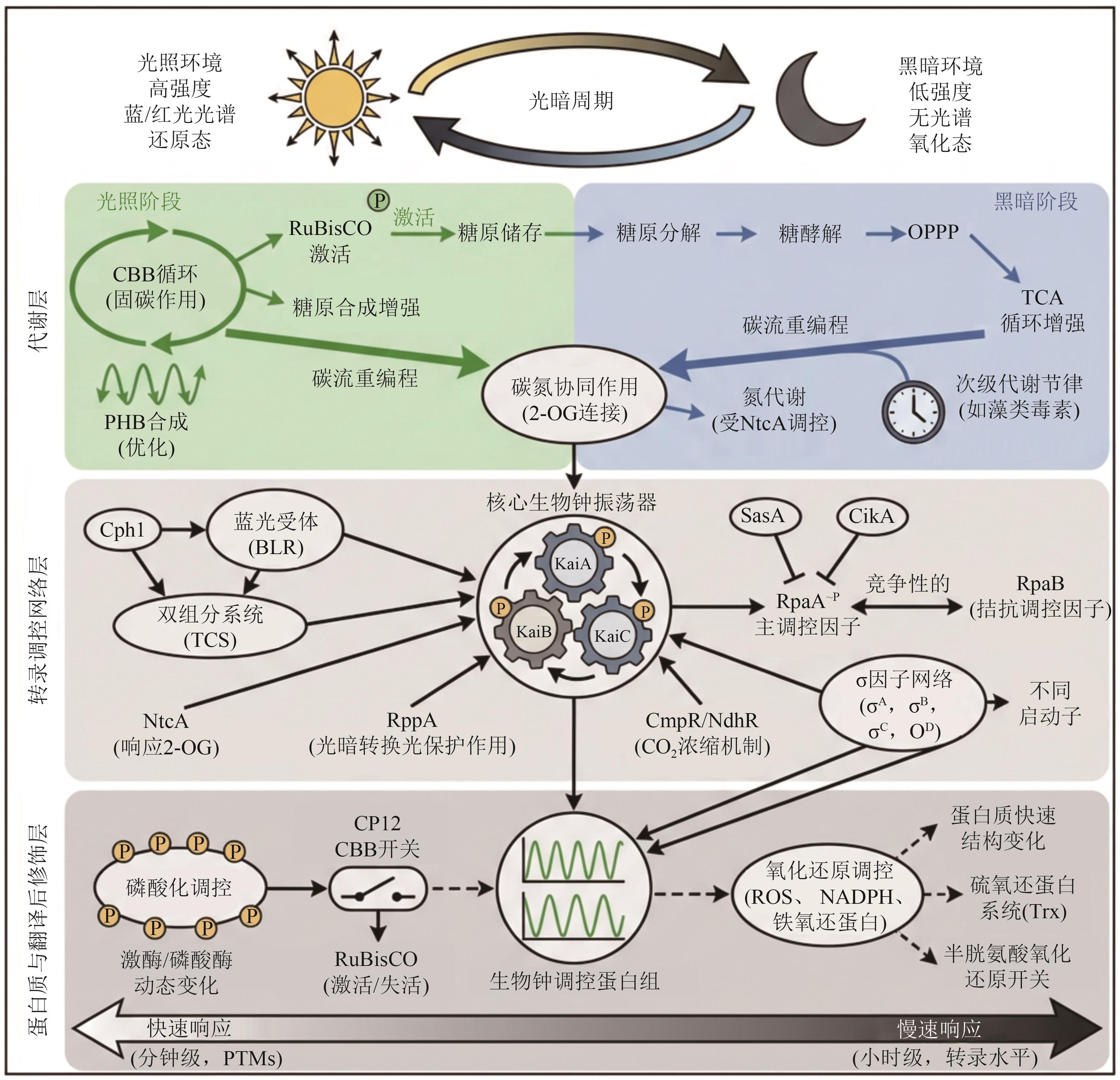
Fig. 1 Microbial light-dark response multi-layer regulatory network
| [1] | STEUER R, KNOOP H, MACHNE R. Modelling cyanobacteria: from metabolism to integrative models of phototrophic growth[J]. J. Exp. Bot., 2012, 63(6): 2259-2274. |
| [2] | WAN N, DELORENZO D M, HE L, et al.. Cyanobacterial carbon metabolism: fluxome plasticity and oxygen dependence[J]. Biotechnol. Bioeng., 2017, 114(7): 1593-1602. |
| [3] | STRAUB C, QUILLARDET P, VERGALLI J, et al.. A day in the life of Microcystis aeruginosa strain PCC 7806 as revealed by a transcriptomic analysis[J/OL]. PLoS One, 2011, 6(1): e16208[2025-12-10]. . |
| [4] | ZHANG Y, LI J, WANG H. Fructose-1,6-bisphosphatase (FBPase) fine-tunes heterotrophic growth in cyanobacteria[J/OL]. J. Bacteriol., 2020, 202(15): e00123-20[2025-12-10]. . |
| [5] | ZHAO W, LIU H, HOU P, et al.. Frequent light/dark alternation improves the redox homeostasis of photosynthetic bacteria and enhances sustainable polyhydroxybutyrate production from food waste[J/OL]. Bioresour. Technol., 2026, 444: 133945[2025-12-10]. . |
| [6] | RAN W S, ZENG X, ZHANG C C. Carbon metabolism shapes FtsZ levels and cell division in the Cyanobacterium anabaena PCC 7120[J/OL]. Commun. Biol., 2025, 8: 1440[2025-12-10]. . |
| [7] | XU Y, SCHMIEGE S C, SHARKEY T D. Time-resolved targeted metabolomics shows an abrupt switch from Calvin-Benson-Bassham cycle to tricarboxylic acid cycle when the light is turned off[J/OL]. Photosynth. Res., 2025, 163(5):124[2025-12-10]. . |
| [8] | PANDA P, GIRI S J, THIRUMALAIKUMAR V P, et al.. Proteomic analysis of metabolic adaptation in a unicellular Cyanobacterium during light-dark cycles and nitrogen fixation[J/OL]. Sci. Rep., 2025, 15(1):35561 [2025-12-10]. . |
| [9] | XU J, ZHANG P, XIN Y. Blue light sensor-guided opto-modulation for enhanced production of valuable metabolites in microalgae[J/OL]. Nat. Commun., 2022, 13(1): 189[2025-12-10]. . |
| [10] | FLORES RAMOS S, SIGUENZA N, ZHONG W, et al.. Metatranscriptomics uncovers diurnal functional shifts in bacterial transgenes with profound metabolic effects[J]. Cell Host Microbe, 2025, 33(7): 1057-1072. |
| [11] | CHANG Y G, COHEN S E. The cyanobacterial circadian clock[J]. Proc. Natl. Acad. Sci. USA, 2008, 105(16): 6156-6161. |
| [12] | GOLDEN S S, CANALES R D, JOHNSON C H. Cyanobacterial gene expression and regulation-one rhythm to rule them all[J]. Ann. Rev. Genet., 2010, 44(1): 165-190. |
| [13] | SWAN J A, GOLDEN S S, LIWANG A, et al.. Structure, function, and mechanism of the core circadian clock in cyanobacteria[J]. J. Biol. Chem., 2018, 293(14): 5026-5034. |
| [14] | GILLIAM A, SADLER N C, LI X, et al.. Cyanobacterial circadian regulation enhances bioproduction under subjective nighttime through rewiring of carbon partitioning dynamics, redox balance orchestration, and cell cycle modulation[J/OL]. Microb. Cell Fact., 2025, 24(1): 589[2025-12-10]. . |
| [15] | PIECHURA J R, AMARNATH K, O'SHEA E K. Natural changes in light interact with circadian regulation at promoters to control gene expression in cyanobacteria[J/OL]. eLife, 2017, 6: e32032[2025-12-10]. . |
| [16] | YU C, XU H F, LIU Y R, et al.. The transcription factor RppA regulates chlorophyll and carotenoid biosynthesis to improve photoprotection in cyanobacteria[J/OL]. Plant Physiol., 2024, 197: kiae502[2025-12-10]. . |
| [17] | XU X, MENG L H, TALLA E, et al.. Functional dissection of the CRP-family transcription factor DevH and its interplay with NtcA in a Cyanobacterium [J/OL]. Cell Rep., 2025, 44(10): 116435[2025-12-10]. . |
| [18] | 杨小龙, 刘莉华, 毕永红, 等. 蓝藻光合氮同化的特征与分子调控机理研究进展[J]. 湖泊科学, 2023, 35(3): 766-779. |
| YANG X L, LIU L H, BI Y H, et al. Progress on photosynthetic nitrogen assimilation and its regulatory mechanisms in cyanobacteria[J]. J. Lake Sci., 2023, 35(3): 766-779. | |
| [19] | BOLAY P, DODGE N, JANSSEN K, et al.. Tailoring regulatory components for metabolic engineering in cyanobacteria[J/OL]. Physiol. Plant., 2024, 176(3): e14316[2025-12-10]. . |
| [20] | GARCÍA-DOMÍNGUEZ M, MURO-PASTOR M I, REYES J C, et al.. Light-dependent regulation of cyanobacterial phytochrome expression[J]. J. Bacteriol., 2000, 182(1): 38-44. |
| [21] | BARSKE T, HAGEMANN M. The regulatory impact of serine/threonine-specific protein phosphorylation among cyanobacteria[J/OL]. Front. Plant Sci., 2025, 16: 1540914[2025-12-10]. . |
| [22] | PATHANIA R, SRIVASTAVA A, SRIVASTAVA S, et al.. Metabolic systems biology and multi-omics of cyanobacteria: Perspectives and future directions[J/OL]. Bioresour. Technol., 2022, 343: 126007[2025-12-10]. . |
| [23] | GIESE J, EIRICH J, WALTHER D, et al.. The interplay of post-translational protein modifications in Arabidopsis leaves during photosynthesis induction[J]. Plant J., 2023, 116(4): 1172-1193. |
| [24] | WANG L, ZHANG H, LI J. Oxygen photoreduction in cyanobacteria[J/OL]. J Photochem Photobiol B, 2022, 231: 112389[2025-12-10]. . |
| [25] | ANSONG C, SADLER N C, HILL E A, et al.. Characterization of protein redox dynamics induced during light-to-dark transitions and nutrient limitation in cyanobacteria[J/OL]. Front. Microbiol., 2014, 5: 325[2025-12-10]. . |
| [26] | MILLER A M, DAVIS K L, HALL C D. Multi-omics reveals temporal scales of carbon metabolism inSynechococcus elongatus PCC 7942 under light disturbance[J/OL]. Front. Microbiol., 2021, 12: 705892[2025-12-10].. |
| [1] | Yujing WANG, Jia WU, Honge LI, Shanshan LI, Xiaoni YANG, Qingqing GUO, Wenran HU. The Ecological Niche Protection Function Mediated by Microbial Secondary Metabolites [J]. Current Biotechnology, 2025, 15(6): 952-959. |
| [2] | Xiaoqi WU, Wenjing GONG, Guoyu LI, Ang LI, Jihua WANG, Di CUI. Knowledge Gaps and Chanllenges in Microbial Fermentation of Traditional Chinese Medicine: From Strain Selection to Quality Control [J]. Current Biotechnology, 2025, 15(2): 201-211. |
| [3] | Huanzhen WU, Ye YANG, Xiuming CUI, Yuan LIU. The Current Status and Improvement Strategies of Agricultural Biological Control Technology [J]. Current Biotechnology, 2024, 14(5): 697-711. |
| [4] | Bicong WU, Bo JIAO, Yu ZHANG, Xin GUO, Yu ZHANG, Xiaohong LUO, Lei DAI, Qiang WANG. Effect of Feed-to-liquid Ratio on the Quality Characteristics of Stirred UHT Walnut Yogurt [J]. Current Biotechnology, 2024, 14(4): 640-648. |
| [5] | Yezi MA, Meijuan XIA, Cuicui LIU, Hongtao WANG, Jiaxi ZHOU. Comparative Analysis of Platelet Transcriptome and Proteome Changes in SARS-CoV2 Omicron Infection [J]. Current Biotechnology, 2024, 14(4): 649-656. |
| [6] | Chang XU, Tianyi LIU, Wenjia LIU, Limin ZHANG, Jixian MO. Research Progress in Source, Biosynthesis and Function of Microbial Exopolysaccharides [J]. Current Biotechnology, 2024, 14(3): 368-376. |
| [7] | Zhaoqing XI, Mingwei BAO. Research Progress on Glycolipid Metabolism Reprogramming of Macrophage in Non-alcoholic Fatty Liver Disease [J]. Current Biotechnology, 2024, 14(3): 399-405. |
| [8] | Jiaqi SUN, Jia GUO, Chuang ZHANG, Qing LIU, Ziyu WANG, Hanchao XIA, Buxuan QIAN, Fangfang ZHAO, Qi WANG, Jianfeng LIU, Xiangguo LIU. Research Progress of Phosphite Dehydrogenase in Genetically Engineered Microorganisms and Plants [J]. Current Biotechnology, 2024, 14(2): 173-181. |
| [9] | Yunpeng MA, Jing ZHU, Xinghua CUI. Content Estimating of Microbial Dissolved Organic Carbon Based on Machine Learning [J]. Current Biotechnology, 2023, 13(4): 645-653. |
| [10] | Siyuan QIU, Jingxue XU, Yuyang DUAN, Jinyu ZHAO, Wenjing ZHAO, Lixin ZHANG, Guoling REN. Research Progress on Production and Application of Mannosylerythritol Lipids [J]. Current Biotechnology, 2023, 13(2): 210-219. |
| [11] | Jie HAO, Qiang JI, Liqun LI, Chao ZHENG, Na WU, Han WU, Xuanwen LI, Zhikang SUN. Research Progress on Improving Aroma of Tobacco Leaf with Bio-enzymes and Microorganism Technology [J]. Current Biotechnology, 2022, 12(6): 817-824. |
| [12] | Peimin LIU, Jinping LUO, Quanxin GAO. Research Progress of Environmental Microorganisms in Aquaculture [J]. Current Biotechnology, 2022, 12(5): 690-695. |
| [13] | XU Huanhuan, ZHANG Hongbing*, LI Huixuan, LI Lei. Application Progress of Atmospheric and Room Temperature Plasma Technology in Microbial Mutagenesis [J]. Curr. Biotech., 2020, 10(4): 358-362. |
| [14] | LI Yubang1, WU Junlin1,2*, LI Mansha1. Progress on Microbial Fermentation of Medicinal and Edible Plants [J]. Curr. Biotech., 2019, 9(5): 461-466. |
| [15] | ZHANG Maona, JIANG Liang*, ZHANG Yan*. Advance on Bioinformatic Analysis of Selenium Metabolic Network and Selenoproteomes [J]. Curr. Biotech., 2017, 7(5): 537-544. |
| Viewed | ||||||
|
Full text |
|
|||||
|
Abstract |
|
|||||
