

Current Biotechnology ›› 2026, Vol. 16 ›› Issue (3): 647-653.DOI: 10.19586/j.2095-2341.2026.0012
• Articles • Previous Articles Next Articles
Bilian LIN( ), Peng MENG, Menghang HE, Chaohui ZHANG, Ming DAI, Fang ZHANG, Binhong HUANG, Fengling JIANG, Tianxi WANG, Yun HE, Hui XU, Yan CHEN, Zhenhua KE()
Received:2026-01-16
Accepted:2026-04-15
Online:2026-05-25
Published:2026-07-14
Contact:
Zhenhua KE
CLC Number:
Bilian LIN, Peng MENG, Menghang HE, Chaohui ZHANG, Ming DAI, Fang ZHANG, Binhong HUANG, Fengling JIANG, Tianxi WANG, Yun HE, Hui XU, Yan CHEN, Zhenhua KE. The Stability of 12 Foodborne Standard Strains Preserved by Porcelain Beads Cryopreservation Method[J]. Current Biotechnology, 2026, 16(3): 647-653.
| 菌株名称 | 菌株编号 | 来源 |
|---|---|---|
| 鼠伤寒沙门氏菌(Salmonella typhimurium) | CGMCC 1.1174 | 中国普通微生物菌种保藏管理中心 |
| 大肠埃希氏菌(Escherichia coli) | CGMCC 1.3373 | 中国普通微生物菌种保藏管理中心 |
| 阪崎克罗诺杆菌(Enterobacter sakazakii) | ATCC 51329 | 美国标准菌种保藏中心 |
| 小肠结肠炎耶尔森氏菌(Yersinia enterocolitica) | CMCC(B) 52204 | 中国医学细菌菌种保藏管理中心 |
| 副溶血性弧菌(Vibrio parahaemolyticus) | ATCC 17802 | 美国标准菌种保藏中心 |
| 福氏志贺氏菌(Shigella flexneri) | CGMCC 1.1868 | 中国普通微生物菌种保藏管理中心 |
| 金黄色葡萄球菌(Staphylococcus aureus) | CGMCC 1.0089 | 中国普通微生物菌种保藏管理中心 |
| 单核细胞增生李斯特氏菌(Listeria monocytogenes) | CMCC 54002 | 中国医学细菌菌种保藏管理中心 |
| 乙型溶血性链球菌(Streptococcus pyogenes) | CMCC(B) 32210 | 中国医学细菌菌种保藏管理中心 |
| 蜡样芽孢杆菌(Bacillus cereus) | ATCC 14579 | 美国标准菌种保藏中心 |
| 铜绿假单胞菌(Pseudomonas aeruginosa) | CGMCC 1.2464 | 中国普通微生物菌种保藏管理中心 |
| 产气荚膜梭菌(Clostridium perfringens) | ATCC 13124 | 美国标准菌种保藏中心 |
Table 1 Experimental strains
| 菌株名称 | 菌株编号 | 来源 |
|---|---|---|
| 鼠伤寒沙门氏菌(Salmonella typhimurium) | CGMCC 1.1174 | 中国普通微生物菌种保藏管理中心 |
| 大肠埃希氏菌(Escherichia coli) | CGMCC 1.3373 | 中国普通微生物菌种保藏管理中心 |
| 阪崎克罗诺杆菌(Enterobacter sakazakii) | ATCC 51329 | 美国标准菌种保藏中心 |
| 小肠结肠炎耶尔森氏菌(Yersinia enterocolitica) | CMCC(B) 52204 | 中国医学细菌菌种保藏管理中心 |
| 副溶血性弧菌(Vibrio parahaemolyticus) | ATCC 17802 | 美国标准菌种保藏中心 |
| 福氏志贺氏菌(Shigella flexneri) | CGMCC 1.1868 | 中国普通微生物菌种保藏管理中心 |
| 金黄色葡萄球菌(Staphylococcus aureus) | CGMCC 1.0089 | 中国普通微生物菌种保藏管理中心 |
| 单核细胞增生李斯特氏菌(Listeria monocytogenes) | CMCC 54002 | 中国医学细菌菌种保藏管理中心 |
| 乙型溶血性链球菌(Streptococcus pyogenes) | CMCC(B) 32210 | 中国医学细菌菌种保藏管理中心 |
| 蜡样芽孢杆菌(Bacillus cereus) | ATCC 14579 | 美国标准菌种保藏中心 |
| 铜绿假单胞菌(Pseudomonas aeruginosa) | CGMCC 1.2464 | 中国普通微生物菌种保藏管理中心 |
| 产气荚膜梭菌(Clostridium perfringens) | ATCC 13124 | 美国标准菌种保藏中心 |

Fig. 1 Trend of viable bacterial count in 12 foodborne standard strains after repeated freeze-thaw cycles
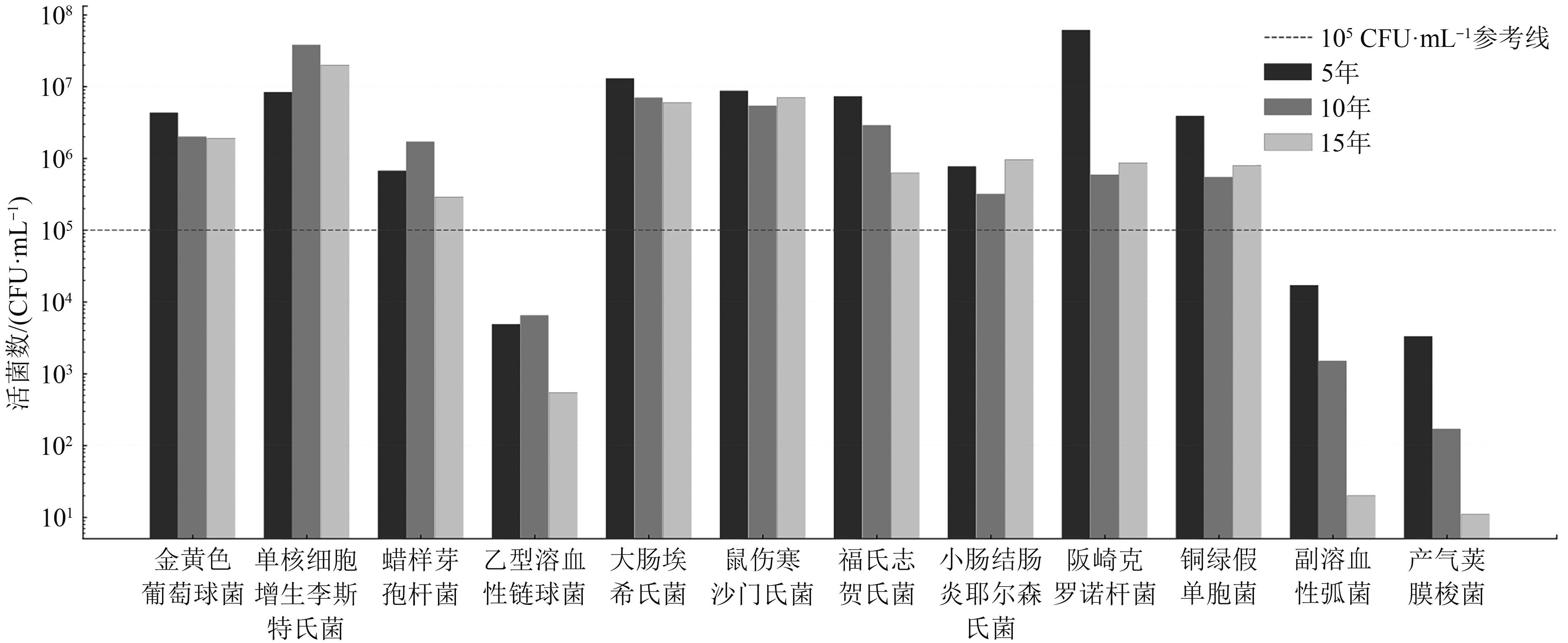
Fig. 2 Comparison of viable bacterial count in 12 strains after different cryopreservation durations
| 菌株名称 | 鉴定卡片 | 置信度 | 鉴定结果 | 第一可疑菌群 |
|---|---|---|---|---|
| 鼠伤寒沙门氏菌 | GN | 极好的鉴定 | / | Salmonella group |
| 大肠埃希氏菌 | GN | 极好的鉴定 | Escherichia coli | / |
| 阪崎克罗诺杆菌 | GN | 极好的鉴定 | / | Cronobacter sakazakii group |
| 小肠结肠炎耶尔森氏菌 | GN | 极好的鉴定 | / | Yersinia enterocolitica/Yersinia frederiksenii |
| 副溶血性弧菌 | GN | 极好的鉴定 | Vibrio parahaemolyticus | / |
| 福氏志贺氏菌 | GN | 极好的鉴定 | / | Shigella group |
| 金黄色葡萄球菌 | GP | 极好的鉴定 | Staphylococcus aureus | / |
| 单核细胞增生李斯特氏菌 | GP | 极好的鉴定 | Listeria monocytogenes | / |
| 乙型溶血性链球菌 | GP | 极好的鉴定 | Streptococcus pyogenes | / |
| 蜡样芽孢杆菌 | BCL | 极好的鉴定 | / | Bacillus cereus/thuringsis/mycoides |
| 铜绿假单胞菌 | GN | 极好的鉴定 | Pseudomonas aeruginosa | / |
| 产气荚膜梭菌 | ANC | 极好的鉴定 | Clostridium perfringens | / |
Table 2 The results of VITEK 2 compact biochemical system
| 菌株名称 | 鉴定卡片 | 置信度 | 鉴定结果 | 第一可疑菌群 |
|---|---|---|---|---|
| 鼠伤寒沙门氏菌 | GN | 极好的鉴定 | / | Salmonella group |
| 大肠埃希氏菌 | GN | 极好的鉴定 | Escherichia coli | / |
| 阪崎克罗诺杆菌 | GN | 极好的鉴定 | / | Cronobacter sakazakii group |
| 小肠结肠炎耶尔森氏菌 | GN | 极好的鉴定 | / | Yersinia enterocolitica/Yersinia frederiksenii |
| 副溶血性弧菌 | GN | 极好的鉴定 | Vibrio parahaemolyticus | / |
| 福氏志贺氏菌 | GN | 极好的鉴定 | / | Shigella group |
| 金黄色葡萄球菌 | GP | 极好的鉴定 | Staphylococcus aureus | / |
| 单核细胞增生李斯特氏菌 | GP | 极好的鉴定 | Listeria monocytogenes | / |
| 乙型溶血性链球菌 | GP | 极好的鉴定 | Streptococcus pyogenes | / |
| 蜡样芽孢杆菌 | BCL | 极好的鉴定 | / | Bacillus cereus/thuringsis/mycoides |
| 铜绿假单胞菌 | GN | 极好的鉴定 | Pseudomonas aeruginosa | / |
| 产气荚膜梭菌 | ANC | 极好的鉴定 | Clostridium perfringens | / |
| 菌株名称 | 16S rDNA鉴定结果 |
|---|---|
| 鼠伤寒沙门氏菌 | Salmonella enterica strain |
| 大肠埃希氏菌 | Escherichia coli strain |
| 阪崎克罗诺杆菌 | Cronobacter sakazakii strain |
| 小肠结肠炎耶尔森氏菌 | Yersinia enterocolitica strain |
| 福氏志贺氏菌 | Shigella flexneri strain |
| 金黄色葡萄球菌 | Staphylococcus aureus strain |
| 单核细胞增生李斯特氏菌 | Listeria monocytogenes strain |
| 乙型溶血性链球菌 | Streptococcus pyogenes strain |
| 蜡样芽孢杆菌 | Bacillus cereus strain |
| 铜绿假单胞菌 | Pseudomonas aeruginosa strain |
| 副溶血性弧菌 | Vibrio parahaemolyticus strain |
| 产气荚膜梭菌 | Clostridium perfringens strain |
Table 3 Results of 16S rDNA sequence analysis of strains
| 菌株名称 | 16S rDNA鉴定结果 |
|---|---|
| 鼠伤寒沙门氏菌 | Salmonella enterica strain |
| 大肠埃希氏菌 | Escherichia coli strain |
| 阪崎克罗诺杆菌 | Cronobacter sakazakii strain |
| 小肠结肠炎耶尔森氏菌 | Yersinia enterocolitica strain |
| 福氏志贺氏菌 | Shigella flexneri strain |
| 金黄色葡萄球菌 | Staphylococcus aureus strain |
| 单核细胞增生李斯特氏菌 | Listeria monocytogenes strain |
| 乙型溶血性链球菌 | Streptococcus pyogenes strain |
| 蜡样芽孢杆菌 | Bacillus cereus strain |
| 铜绿假单胞菌 | Pseudomonas aeruginosa strain |
| 副溶血性弧菌 | Vibrio parahaemolyticus strain |
| 产气荚膜梭菌 | Clostridium perfringens strain |
| [1] | MANJANA A, BANJANA A, ARIJITMAJUMDAR D, et al.. Selection of storage methods for maintenance of different stock cultures[J]. Int. J. Curr. Microbiol. Appl. Sci., 2016, 5: 1097-1104. |
| [2] | LALAYMIA I, CRANENBROUCK S, DRAYE X, et al.. Preservation at ultra-low temperature of in vitro cultured arbuscular mycorrhizal fungi via encapsulation-drying[J]. Fungal Biol., 2012, 116(10): 1032-1041. |
| [3] | CELIK O F, O'SULLIVAN D J. Factors influencing the stability of freeze-dried stress-resilient and stress-sensitive strains of bifidobacteria[J]. J. Dairy Sci., 2013, 96(6): 3506-3516. |
| [4] | PRAKASH O, NIMONKAR Y, DESAI D. A recent overview of microbes and microbiome preservation[J]. Indian J. Microbiol., 2020, 60(3): 297-309. |
| [5] | 张晖,黄萍.微生物学实验室菌种使用保存与管理方法研究[J].公共卫生与预防医学,2008,19(4):93-95. |
| ZHANG H, HUANG P. Research on the use, preservation and management methods of strains in microbiology laboratories[J]. J. Public Health Prev. Med., 2008, 19(4): 93-95. | |
| [6] | 中华人民共和国国家质量监督检验检疫总局. 食品微生物实验室菌种保藏方法: [S].北京:中国标准出版社. |
| [7] | 陈晓燕,林光.微生物实验菌种保存方式探讨[J].临床合理用药,2014,7(10):129-130. |
| CHEN X Y, LIN G. Discussion on preservation methods of microbial experimental strains[J]. J. Clin. Rational Drug Use, 2014, 7(10): 129-130. | |
| [8] | SENARATNE W M T N, JAYAWEERA J A A S. Comparison of microbial preservation methods: a narrative review[J]. Germs, 2024, 14(4): 375-386. |
| [9] | JÚNIOR L L Z, LOPES A D, CORDEIRO F A, et al.. Cryopreservation at -75 ℃ of Agaricus subrufescens on wheat grains with sucrose[J]. Publ. Braz. Soc. Microbiol., 2018, 49(2): 370-377. |
| [10] | BIRCHER L, GEIRNAERT A, HAMMES F, et al.. Effect of cryopreservation and lyophilization on viability and growth of strict anaerobic human gut microbes[J]. Microb. Biotechnol., 2018, 11(4): 721-733. |
| [11] | PRAKASH O, NIMONKAR Y, SHOUCHE Y S. Practice and prospects of microbial preservation[J]. FEMS Microbiol. Lett., 2013, 339(1): 1-9. |
| [12] | TAP J, COOLS-PORTIER S, PAVAN S, et al.. Effects of the long-term storage of human fecal microbiota samples collected in RNAlater[J/OL]. Sci. Rep., 2019, 9(1): 601[2026-01-11]. . |
| [13] | 耿冬青.瓷珠保存法定量制备单核细胞增生李斯特菌质控菌株[J].肉类工业,2020,7(471):45-47. |
| GENG D Q. Quantitative preparation of quality control strains of Listeria monocytogenes by porcelain beads preservation method[J]. Meat Ind., 2020, 7(471): 45-47. | |
| [14] | 张永华,李怡,范斌,等.副溶血性弧菌7种保藏方法比较[J].江苏农业科学,2012,40(10):209-211. |
| ZHANG Y H, LI Y, FAN B, et al.. Comparison of seven preservation methods for Vibrio parahaemolyticus [J]. Jiangsu J. Agric. Sci., 2012, 40(10): 209-211. | |
| [15] | DIANAWATI D, SHAH N P. Enzyme stability of microencapsulated Bifidobacterium animalis ssp. lactis Bb12 after freeze drying and during storage in low water activity at room temperature[J]. J. Food Sci., 2011, 76(6): 463-471. |
| [16] | WANG G, LUO L, DONG C, et al.. Polysaccharides can improve the survival of Lactiplantibacillus plantarum subjected to freeze-drying[J]. J. Dairy Sci., 2021, 104(3): 2606-2614. |
| [17] | MISSIAKAS D M, SCHNEEWIND O. Growth and laboratory maintenance of Staphylococcus aureus [J/OL]. Curr. Protoc. Microbiol., 2013, Chapter(9): Unit9C.1[2026-01-11]. . |
| [18] | RATHORE S, DESAI P M, LIEW C V, et al.. Microencapsulation of microbial cells[J]. J. Food Eng., 2013, 116: 369-381. |
| [19] | 张红芝,陈雯杰,刘雪薇,等.基于全基因组测序的阪崎克罗诺杆菌婴幼儿食品分离株分子特征研究[J].中国食品卫生杂志, 2021,33(2):138-143. |
| ZHANG H Z, CHEN W J, LIU X W, et al.. Molecular characterization of Cronobacter sakazakii from infant foods using whole genome sequencing[J]. Chin. J. Food Hygiene,2021, 33(2): 138-143. | |
| [20] | 丁慧,伍茜,程建国,等.一株林麝源丙二酸盐克罗诺杆菌的分离鉴定及其全基因组序列分析[J].微生物学通报,2024,51(10):4212-4229. |
| DING H, WU X, CHENG J G, et al.. Isolation, identification, and whole genome sequencing of Cronobacter malonaticus from forest musk deer[J]. Microbiol. China, 2024, 51(10): 4212-4229. | |
| [21] | 葛辉,李慧耀,巫旗生,等.福建牡蛎致病菌沙氏弧菌的分离鉴定及全基因组分析[J].厦门大学学报(自然科学版),2025,64(5):841-848. |
| GE H, LI HY, WU Q S, et al.. Isolation, identification, and whole genome analysis of Vibrio chagasii, a pathogenic bacterium in Crassostrea angulata [J]. J. Xiamen Uni., 2025, 64(5): 841-848. |
| [1] | Jing ZUO, Lu ZHAO, Chunling MA, Jing ZI, Chao CHENG, Yong LIU, Weiye ZHANG, Wei TONG. Establishment and Research of MRC-5 Working Cell Bank for Rabies Vaccine Production [J]. Current Biotechnology, 2026, 16(1): 164-169. |
| [2] | YAN Dongke*, LYU Ping*. Progress on Hypoxia-inducible Factor and its Inhibitors [J]. Curr. Biotech., 2019, 9(4): 332-340. |
| [3] | HUANG Yi, ZHANG Wei, YAN Yongliang*. Progress on the Relative Elements Involved in RNA Stability Regulation in Bacteria [J]. Curr. Biotech., 2018, 8(5): 376-382. |
| [4] | LIU Yang1, LIU Xiang-guo1, WANG Yang-zhou2, ZHAO Fang-fang3, ZHANG Yan1, XIAO Guo-hong3, FENG Shu-dan3, HAN Si-ping1*, YIN Yue-jia1*. Genetic Stability Analysis of Insect-resistant and Herbicide-tolerance Transgenic Maize HiII-NGc-1 [J]. Curr. Biotech., 2016, 6(6): 428-434. |
| [5] | ZHANG Peng-hua, LI Jiang*, XU Ling-ling. Study on Ferrous Oxidase-encoding Genes of Acidithiobacillus ferrooxidans [J]. Curr. Biotech., 2016, 6(3): 206-211. |
| [6] | ZHAO Zhong-lin1§, LI Shu-ying2§, NIE Ying2, YUAN Chao1, LI Yan3, TANG Xuan-ming2*. Isolation of Nattokinase Producing Strain and Analysis of its Thermal Stability [J]. Curr. Biotech., 2013, 3(4): 277-280. |
| [7] | SU Xiao-hua, BAO Bo*, ZHU Shao-ping, CHAI Xing-xing. Advances in Functions and Stability of Lycopene [J]. Curr. Biotech., 2013, 3(1): 18-21. |
| [8] | TIAN Jian, WANG Ping, WU Ning-feng, FAN Yun-liu. Recent Advances in the Rational Design to Improve the Protein Thermostability [J]. Current Biotechnology, 2012, 2(4): 233-239. |
| Viewed | ||||||
|
Full text |
|
|||||
|
Abstract |
|
|||||
