

Current Biotechnology ›› 2026, Vol. 16 ›› Issue (4): 765-773.DOI: 10.19586/j.2095-2341.2026.0032
• Special Forum on Detection Technology for Genetically Modified Organisms • Previous Articles Next Articles
Tianyi HAN1( ), Yu GAO1, Nan CHENG1, Xiaoyun HE1, Weichen LIU2, Wei FU3, Kunlun HUANG1(), Hong CHEN3()
Received:2026-02-09
Accepted:2026-04-03
Online:2026-07-25
Published:2026-09-11
Contact:
Kunlun HUANG,Hong CHEN
CLC Number:
Tianyi HAN, Yu GAO, Nan CHENG, Xiaoyun HE, Weichen LIU, Wei FU, Kunlun HUANG, Hong CHEN. Innovative Applications of Artificial Intelligence in Safety Assessment of Biological Breeding Products[J]. Current Biotechnology, 2026, 16(4): 765-773.
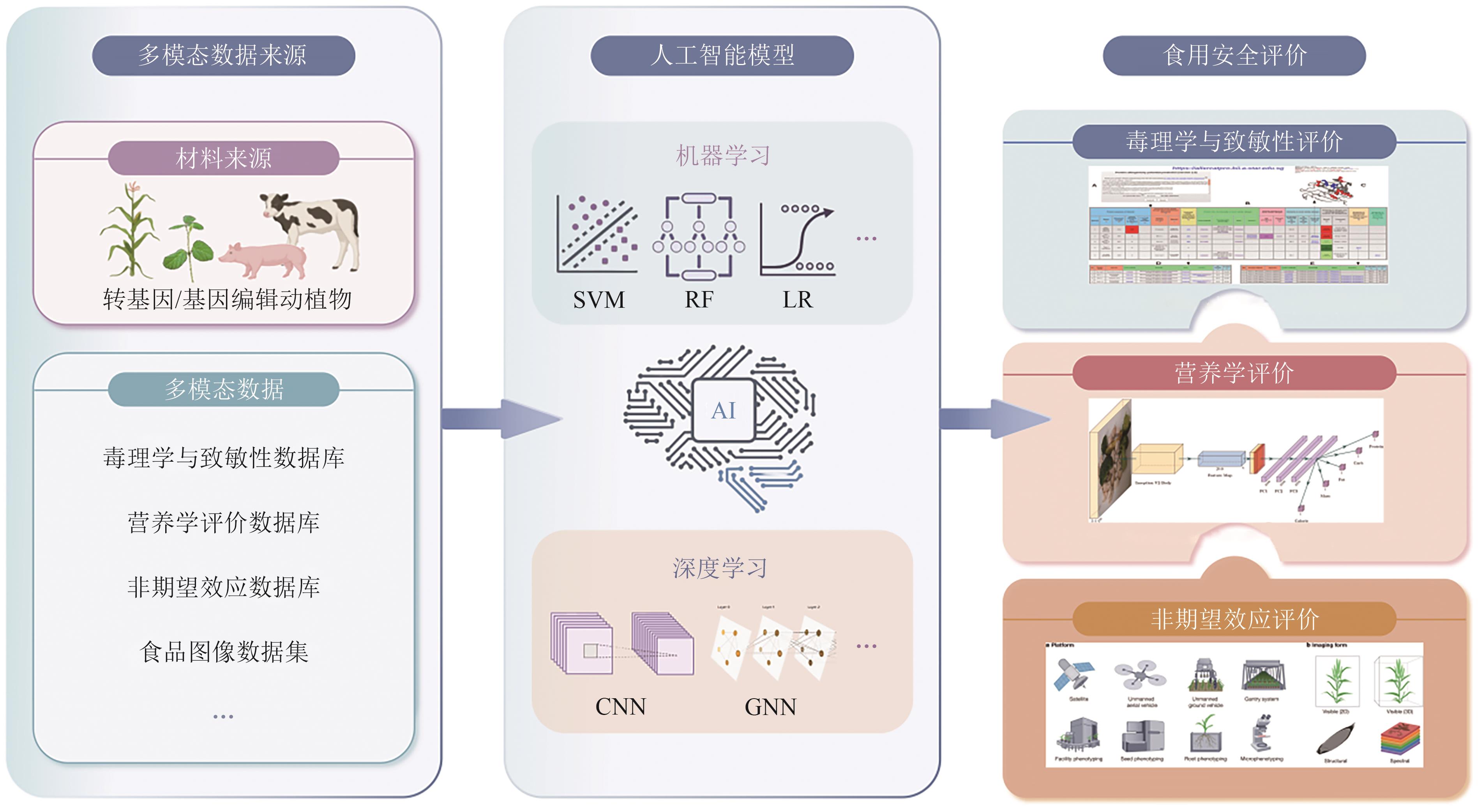
Fig. 1 Application of AI in food safety assessment of biotechnology products
| 应用领域 | 数据库/工具名称 | 主要特征与应用价值 |
|---|---|---|
食品营养学 评估 | USDA Food Data Central | 美国农业部发布 |
| 中国食物成分表 | 针对中国本土饮食习惯,记录特有食材营养数据,更具地域适用性 | |
| McCance and Widdowson's | 英国/欧洲代表性数据库,数据质量极高,常用于跨国营养研究 | |
| Phenol-Explorer | 专注植物生化物质(多酚),记录加工过程(煎炸煮等)对含量的影响 | |
致敏与毒性 评估 | AlphaFold | 预测蛋白质三维结构,弥补晶体结构数据缺失 |
| WHO/IUIS & AllergenOnline | 权威过敏原数据库,用于序列比对和风险关联分析 | |
| MassBank / Metabolomics Workbench | 公共质谱数据库,用于复杂基质中未知代谢物、过敏原及污染物的鉴定 | |
| 非期望效应 | KEGG / HMDB / FooDB | 生物代谢通路及化合物库,用于识别非自然变异范围的成分变化 |
Table 1 Data resource support for the safety evaluation of AI-assisted biological breeding products
| 应用领域 | 数据库/工具名称 | 主要特征与应用价值 |
|---|---|---|
食品营养学 评估 | USDA Food Data Central | 美国农业部发布 |
| 中国食物成分表 | 针对中国本土饮食习惯,记录特有食材营养数据,更具地域适用性 | |
| McCance and Widdowson's | 英国/欧洲代表性数据库,数据质量极高,常用于跨国营养研究 | |
| Phenol-Explorer | 专注植物生化物质(多酚),记录加工过程(煎炸煮等)对含量的影响 | |
致敏与毒性 评估 | AlphaFold | 预测蛋白质三维结构,弥补晶体结构数据缺失 |
| WHO/IUIS & AllergenOnline | 权威过敏原数据库,用于序列比对和风险关联分析 | |
| MassBank / Metabolomics Workbench | 公共质谱数据库,用于复杂基质中未知代谢物、过敏原及污染物的鉴定 | |
| 非期望效应 | KEGG / HMDB / FooDB | 生物代谢通路及化合物库,用于识别非自然变异范围的成分变化 |
| 评价对象 | 模型/工具名称 | 核心算法/技术 | 优势与性能表现 |
|---|---|---|---|
| 大分子蛋白质 | AllergenAI | CNN(局部特征)+Bi-LSTM(长程依赖) | 仅依赖序列即可量化致敏潜力,无需经验数据支撑 |
| AllerCatPro 2.0 | 结构同源建模(SWISS-MODEL)+线性表位滑动窗口 | 整合10个权威库,高灵敏度的同时降低25%假阳性率 | |
| ToxinPred2/Toxify | 机器学习/深度学习 | 欧盟食品安全局关注的工具,准确度与适用性较好 | |
| 小分子物质 | DeepTox | 深度多任务学习(deep learning) | Tox21挑战赛优胜者,擅长预测核受体激活及应激反应 |
| ADMETlab 2.0 | 多任务图注意力框架(graph attention) | 高效预测吸收、分布、代谢、排泄及毒性等80多个指标 | |
| ProTox-Ⅱ | 分子相似性+药效团+机器学习 | 快速筛查LD50、肝毒性、致癌性及致突变性 |
Table 2 The application of AI in predicting the allergenicity and toxicity of biological breeding products
| 评价对象 | 模型/工具名称 | 核心算法/技术 | 优势与性能表现 |
|---|---|---|---|
| 大分子蛋白质 | AllergenAI | CNN(局部特征)+Bi-LSTM(长程依赖) | 仅依赖序列即可量化致敏潜力,无需经验数据支撑 |
| AllerCatPro 2.0 | 结构同源建模(SWISS-MODEL)+线性表位滑动窗口 | 整合10个权威库,高灵敏度的同时降低25%假阳性率 | |
| ToxinPred2/Toxify | 机器学习/深度学习 | 欧盟食品安全局关注的工具,准确度与适用性较好 | |
| 小分子物质 | DeepTox | 深度多任务学习(deep learning) | Tox21挑战赛优胜者,擅长预测核受体激活及应激反应 |
| ADMETlab 2.0 | 多任务图注意力框架(graph attention) | 高效预测吸收、分布、代谢、排泄及毒性等80多个指标 | |
| ProTox-Ⅱ | 分子相似性+药效团+机器学习 | 快速筛查LD50、肝毒性、致癌性及致突变性 |
| 检测目标 | 模型/研究案例 | 关键技术 | 改进效果/主要发现 |
|---|---|---|---|
| 宏量营养素 | 动植物源奶识别 | 高光谱成像(HSI) + 卷积神经网络(CNN) | 耗时仅78 s,准确率达99.9%,实现快速无损检测 |
| Swin-Nutrition | 近红外光谱(NIR)+分层视觉变换器(SwinT) | 利用注意力机制捕获长程波段关联;蛋白质RMSE降低23.6%,优于传统CNN | |
| 抗营养因子 | ANPS模型 | 理化特征(AAC/DPC)+支持向量机(SVM) | 识别准确率94.31%,解决了低同源性蛋白难识别的问题 |
| Glycomol | 超高性能液相色谱/高分辨率质谱(UPLC/HRMS)+图神经网络(GNN) | 模拟糖链裂解反推结构,Top-1准确率88.4%,将解析时间从数天缩短至秒级 |
Table 3 Nutritional evaluation methods for biological breeding products based on AI
| 检测目标 | 模型/研究案例 | 关键技术 | 改进效果/主要发现 |
|---|---|---|---|
| 宏量营养素 | 动植物源奶识别 | 高光谱成像(HSI) + 卷积神经网络(CNN) | 耗时仅78 s,准确率达99.9%,实现快速无损检测 |
| Swin-Nutrition | 近红外光谱(NIR)+分层视觉变换器(SwinT) | 利用注意力机制捕获长程波段关联;蛋白质RMSE降低23.6%,优于传统CNN | |
| 抗营养因子 | ANPS模型 | 理化特征(AAC/DPC)+支持向量机(SVM) | 识别准确率94.31%,解决了低同源性蛋白难识别的问题 |
| Glycomol | 超高性能液相色谱/高分辨率质谱(UPLC/HRMS)+图神经网络(GNN) | 模拟糖链裂解反推结构,Top-1准确率88.4%,将解析时间从数天缩短至秒级 |
| 评价层面 | 整合数据/技术 | 评价逻辑与突破 |
|---|---|---|
| 宏观预测与设计 | 生成式AI+气象大数据+AlphaFold | 模拟G×E互作:预测极端气候下蛋白质折叠与代谢流向,早期干预代谢瓶颈与过敏风险 |
| 微观表型检测 | 高光谱表型组学+级联筛选 | 构象偏离:低成本精准捕捉种子内部蛋白质与淀粉的微观构象变化 |
| 元素代谢指纹 | 激光诱导击穿光谱+随机森林 | 元素异常:通过Mg/Ca/K光谱指纹,揭示转基因操作对矿物质代谢的非期望干扰 |
| 基因调控与预警 | 生成式AI+可解释AI(XAI) | 蓝图设计:识别关键调控元件(CREs/uORFs),强调利用XAI解析非期望效应背后的分子机制 |
Table 4 Evaluation and mechanism analysis of unintended effects assisted by AI
| 评价层面 | 整合数据/技术 | 评价逻辑与突破 |
|---|---|---|
| 宏观预测与设计 | 生成式AI+气象大数据+AlphaFold | 模拟G×E互作:预测极端气候下蛋白质折叠与代谢流向,早期干预代谢瓶颈与过敏风险 |
| 微观表型检测 | 高光谱表型组学+级联筛选 | 构象偏离:低成本精准捕捉种子内部蛋白质与淀粉的微观构象变化 |
| 元素代谢指纹 | 激光诱导击穿光谱+随机森林 | 元素异常:通过Mg/Ca/K光谱指纹,揭示转基因操作对矿物质代谢的非期望干扰 |
| 基因调控与预警 | 生成式AI+可解释AI(XAI) | 蓝图设计:识别关键调控元件(CREs/uORFs),强调利用XAI解析非期望效应背后的分子机制 |
| [1] | COHEN S N, CHANG A C, BOYER H W, et al.. Construction of biologically functional bacterial plasmids in vitro [J]. Proc. Natl. Acad. Sci. USA, 1973, 70(11): 3240-3244. |
| [2] | KIM Y G, CHA J, CHANDRASEGARAN S. Hybrid restriction enzymes: zinc finger fusions to Fok I cleavage domain[J]. Proc. Natl. Acad. Sci. USA, 1996, 93(3): 1156-1160. |
| [3] | SAMUEL A L. Some studies in machine learning using the game of checkers[J]. IBM J. Res. Dev., 1959, 3(3): 210-229. |
| [4] | HINTON G E, SALAKHUTDINOV R R. Reducing the dimensionality of data with neural networks[J]. Science, 2006, 313(5786): 504-507. |
| [5] | ROBERTS L G. Machine perception of three-dimensional solids[D]. Cambridge: Massachusetts Institute of Technology, 1963. |
| [6] | MCKUSICK V A, RUDDLE F H. A new discipline, a new name, a new journal[J]. Genomics, 1987, 1(1): 1-2. |
| [7] | GYGI S P, RIST B, GERBER S A, et al.. Quantitative analysis of complex protein mixtures using isotope-coded affinity tags[J]. Nat. Biotechnol., 1999, 17(10): 994-999. |
| [8] | FIEHN O. Metabolomics: the link between genotypes and phenotypes[M]// Functional Genomics. Dordrecht: Springer Netherlands, 2002: 155-171. |
| [9] | NGUYEN M N, KRUTZ N L, LIMVIPHUVADH V, et al.. AllerCatPro 2.0: a web server for predicting protein allergenicity potential[J/OL]. Nucleic Acids Res., 2022, 50(W1): 36-43. |
| [10] | WANG W, MIN W, LI T, et al.. A review on vision-based analysis for automatic dietary assessment[J]. Trends Food Sci. Technol., 2022, 122: 223-237. |
| [11] | LI G, AN L, YANG W, et al.. Integrated biotechnological and AI innovations for crop improvement[J]. Nature, 2025, 643(8073): 925-937. |
| [12] | WANG X, XU K, HUANG Z, et al.. Accelerating promoter identification and design by deep learning[J]. Trends Biotechnol., 2025, 43(12): 3071-3087. |
| [13] | CHUAI G, MA H, YAN J, et al.. DeepCRISPR: optimized CRISPR guide RNA design by deep learning[J/OL]. Genome Biol., 2018, 19(1): 80[2026-03-20]. . |
| [14] | GAO C. Genome engineering for crop improvement and future agriculture[J]. Cell, 2021, 184(6): 1621-1635. |
| [15] | YANG Y, WANG Z. China food composition tables standard edition[M]. Beijing: Peking Univ. Med. Press, 2018. |
| [16] | MCCANCE R A, WIDDOWSON E M. McCance and widdowson's the composition of foods[M]. Cambridge: Royal Society Chem., 2014. |
| [17] | ROTHWELL J A, URPI-SARDA M, BOTO-ORDOÑEZ M, et al.. Phenol-Explorer 2.0: a major update of the Phenol-Explorer database integrating data on polyphenol metabolism and pharmacokinetics in humans and experimental animals[J/OL]. Database, 2012, 201210.1093: database[2026-03-20]. . |
| [18] | JUMPER J, EVANS R, PRITZEL A, et al.. Highly accurate protein structure prediction with AlphaFold[J]. Nature, 2021, 596(7873): 583-589. |
| [19] | GOODMAN R E, EBISAWA M, FERREIRA F, et al.. AllergenOnline: a peer-reviewed, curated allergen database to assess novel food proteins for potential cross-reactivity[J]. Mol. Nutr. Food Res., 2016, 60(5): 1183-1198. |
| [20] | HORAI H, ARITA M, KANAYA S, et al.. MassBank: a public repository for sharing mass spectral data for life sciences[J]. J. Mass Spectrom., 2010, 45(7): 703-714. |
| [21] | SUD M, FAHY E, COTTER D, et al.. Metabolomics Workbench: an international repository for metabolomics data and metadata, metabolite standards, protocols, tutorials and training, and analysis tools[J]. Nucleic Acids Res., 2016, 44(D1): 463-470. |
| [22] | KANEHISA M, FURUMICHI M, SATO Y, et al.. KEGG for taxonomy-based analysis of pathways and genomes[J/OL]. Nucleic Acids Res., 2023, 51(D1): 587-592. |
| [23] | WISHART D S, GUO A, OLER E, et al.. HMDB 5.0: the human metabolome database for 2022[J/OL]. Nucleic Acids Res., 2022, 50(D1): 622-631. |
| [24] | WISHART D S. FooDB: The Food Database[DB/OL]. [2026-03-22]. . |
| [25] | BOWMAN C C, CLAIN S M. Biotechnology methods for assessing potential allergenicity of novel proteins according to global regulations[M]//MALEKI S J, BURKS A W, HELM R M. Food Allergy. Boca Raton: CRC Press, 2017: 295-316. |
| [26] | AHUJA V, QUATCHADZE M, AHUJA V, et al.. Evaluation of biotechnology-derived novel proteins for the risk of food-allergic potential: advances in the development of animal models and future challenges[J]. Arch. Toxicol., 2010, 84(12): 909-917. |
| [27] | KLEINSTREUER N, HARTUNG T. Artificial intelligence (AI): it's the end of the tox as we know it (and I feel fine)[J]. Arch. Toxicol., 2024, 98(3): 735-754. |
| [28] | LIU J, NEGI S S, YANG C, et al.. AllergenAI: a deep learning model predicting allergenicity based on protein sequence[J/OL]. BMC Bioinform., 2025, 26(1): 279[2026-03-20]. . |
| [29] | PALAZZOLO L, LAURENZI T, MARIEM OBEN, et al.. Development of in silico methodologies to predict the toxicity of novel proteins in the context of food and feed risk assessment[J/OL]. EFSA Support. Publ., 2024, 21(10): 9063E[2026-03-20]. . |
| [30] | MAYR A, KLAMBAUER G, UNTERTHINER T, et al.. DeepTox: toxicity prediction using deep learning[J/OL]. Front. Environ. Sci., 2016, 3: 80[2026-03-20]. . |
| [31] | XIONG G, WU Z, YI J, et al.. ADMETlab 2.0: an integrated online platform for accurate and comprehensive predictions of ADMET properties[J]. Nucleic Acids Res., 2021, 49(W1): 5-14. |
| [32] | BANERJEE P, ECKERT A O, SCHREY A K, et al.. ProTox-II: a webserver for the prediction of toxicity of chemicals[J]. Nucleic Acids Res., 2018, 46(W1): 257-263. |
| [33] | PALAZZOLO L, LAURENZI T, MARIEM OBEN, et al.. Development of in silico methodologies to predict the toxicity of novel proteins in the context of food and feed risk assessment[J/OL]. EFSA Support. Publ., 2024, 21(10): 9063E[2026-03-20]. . |
| [34] | NIELSEN S S. Food Analysis[M]. Chambridge: Springer International Publishing, 2017. |
| [35] | MÆHRE H, DALHEIM L, EDVINSEN G, et al.. Protein determination: method matters[J/OL]. Foods, 2018, 7(1): 5[2026-03-20]. . |
| [36] | SUBHI M A, ALI S H, MOHAMMED M A. Vision-based approaches for automatic food recognition and dietary assessment: a survey[J]. IEEE Access, 2019, 7: 35370-35381. |
| [37] | ASMARA N, SAPUTRO A H. Animal and plant-based milk identification system using hyperspectral imaging and convolutional neural network[J/OL]. Adv. Biolog. Sci. Res., 2021, 2022: 049[2026-03-20]. . |
| [38] | SHAO W, HOU S, JIA W, et al.. Rapid non-destructive analysis of food nutrient content using swin-nutrition[J/OL]. Foods, 2022, 11(21): 3429[2026-03-20]. . |
| [39] | PUROHIT P, RAWAT H, VERMA N, et al.. Analytical approach to assess anti-nutritional factors of grains and oilseeds: a comprehensive review[J/OL]. J. Agric. Food Res., 2023, 14: 100877[2026-03-20]. . |
| [40] | NAHA S, KAUR S, BHATTACHARYA R, et al.. ANPS: machine learning based server for identification of anti-nutritional proteins in plants[J/OL]. Funct. Integr. Genom., 2024, 24(6): 201[2026-03-20]. . |
| [41] | ZHAO D, WANG C, QU H, et al.. Glycomol: a pervasive tool for structure predication of natural saponin products basing on MS data[J/OL]. J. Pharm. Anal., 2024, 14(7): 100897. |
| [42] | US. FOOD AND DRUG ADMINISTRATION (FDA). Statement of policy: foods derived from new plant varieties[EB/OL]. 1992 [2026-03-22]. . |
| [43] | HSU C Y, ASKAR S, ALSHKARCHY S S, et al.. AI-driven multi-omics integration in precision oncology: bridging the data deluge to clinical decisions[J/OL]. Clin. Exp. Med., 2025, 26(1): 29[2026-03-20]. . |
| [44] | FERNANDEZ A, CLARE MILLS E N, KONING F, et al.. Allergenicity assessment of novel food proteins: what should be improved?[J]. Trends Biotechnol., 2021, 39(1): 4-8. |
| [45] | HE X, LIU X, ZUO F, et al.. Artificial intelligence-based multi-omics analysis fuels cancer precision medicine[J]. Semin. Cancer Biol., 2023, 88: 187-200. |
| [46] | YETGIN A. Revolutionizing multi-omics analysis with artificial intelligence and data processing[J/OL]. Quant. Biol., 2025, 13(3): e70002[2026-03-20]. . |
| [47] | ZHANG J, FENG X, JIN J, et al.. Concise cascade methods for transgenic rice seed discrimination using spectral phenotyping[J/OL]. Plant Phenomics, 2023, 5: 71[2026-03-20]. . |
| [48] | CICERO RIBEIRO M, CABRAL J, NICOLODELLI G, et al.. Discrimination of maize transgenic and non-transgenic varieties by laser induced spectroscopy (LIBS) and machine learning algorithms[J/OL]. Microchem. J., 2024, 203: 110898[2026-03-20]. . |
| [49] | JUHAS M, RODEKOHR B, BAUER-PANSKUS A, et al.. Combining AI and new genomic techniques to 'fine-tune' plants: challenges in risk assessment[J/OL]. Front. Plant Sci., 2025, 16: 1677066[2026-03-20]. . |
| [50] | EFSA Panel on Genetically Modified Organisms, MULLINS E, BRESSON J L, et al.. Criteria for risk assessment of plants produced by targeted mutagenesis, cisgenesis and intragenesis[J/OL]. EFSA J., 2022, 20(10): e07618[2026-03-20]. . |
| [1] | Yu GAO, Tianyi HAN, Xiaoyun HE, Nan CHENG, Weichen LIU, Wei FU, Kunlun HUANG, Hong CHEN. Research Progress on Multi-omics Systematic Analysis of Unintended Effects in Biotechnology-derived Breeding Products [J]. Current Biotechnology, 2026, 16(4): 732-743. |
| [2] | Mengyao JIA, Deqin HU, Yuan LI, Dongmei WANG, Wei LU, Hongsheng PAN. Research Progress and Environmental Safety Assessment of Transgenic Cotton in China [J]. Current Biotechnology, 2026, 16(4): 774-785. |
| [3] | Pan WEI, Peijian CAO, Qiansi CHEN. Current Status and Hotspot Analysis on Tobacco Biotechnology Research Based on Bibliometrics [J]. Current Biotechnology, 2026, 16(4): 941-951. |
| [4] | Juan LI, Yuting HE, Xiaoxuan YE, Jiayi JIA, Yaohui ZHANG, Hongyang ZHANG, Tao WU. Metabolic Engineering Strategies and Application Advances of Microbial Cell Factories for Carotenoid Production [J]. Current Biotechnology, 2026, 16(3): 523-534. |
| [5] | Yingxuan DU, Yutong SUN, Jinyu PENG, Jiahao ZHAO, Keran DONG, Xinyuan GAO, Haoze WU, Yunyao LUO, Xiaoping MU, Hongshu SUI. Application of Non-mammalian Models in Predictive Toxicology: Progress, Challenges and Prospects [J]. Current Biotechnology, 2026, 16(3): 610-617. |
| [6] | Zhenhua XU, Shiwei GAO, Dawei GAO, Yanming YU, Haiying LIU, Hongtao WU, Shuli ZHANG, Zhongyi SUN, Xin WANG, Ping YAN. Biological Breeding Science and Technology Innovation for Seed Industry Development and Prospects [J]. Current Biotechnology, 2025, 15(4): 557-564. |
| [7] | Ziya GAO, Bingxin HUANGFU, Jiake LI, Fangqian LI, Zhihao MA, Yang PANG, Jingang LIANG, Xiaoyun HE. Risk Identification and Suggestions for the Industrialization of Biological Breeding——based on Grower Field Research [J]. Current Biotechnology, 2025, 15(3): 456-465. |
| [8] | Sijia JI, Xiaoxue ZHANG, Lili ZHAI, Jing DONG, Yanyi LI, Liang CHANG. Research Progress of Antibody Drug Screening Technology [J]. Current Biotechnology, 2025, 15(1): 43-49. |
| [9] | Jing WANG, Haitao GUAN, Xiaolei ZHANG, Baohuai WANG, Baohai LIU, Hongtao WEN. Detection Dynamic and Development Tendency of Agricultural Gene Editing Products [J]. Current Biotechnology, 2024, 14(5): 712-723. |
| [10] | Chunlei ZHANG. Pathogens Detection Technology: A Review [J]. Current Biotechnology, 2024, 14(2): 189-195. |
| [11] | Kehao CAO, Junli ZHU, Huashan HE, Weizhuo XU. Impact of the Fourth Modifications of Patent Laws on Biotechnology Patent Applications and Industry Development [J]. Current Biotechnology, 2023, 13(5): 663-670. |
| [12] | Doudou LEI, Runran MA, Jiabo WANG, Weijun KONG. Research Progress on New Biological Detection Technology for Pesticide Residues in Foods [J]. Current Biotechnology, 2023, 13(1): 1-10. |
| [13] | Tingting LIU, Tao TONG, Kunlun HUANG. Research Progress and Safety Evaluation of Transgenic Corn [J]. Current Biotechnology, 2022, 12(4): 523-531. |
| [14] | Xing DANG, Binwei ZHI, Kehao CAO, Tingting LIU, Biao CHEN, Yuanjie DING. Patent Analysis on Genetically Modified Maize Biological Breeding Technology and Development Suggestions [J]. Current Biotechnology, 2022, 12(4): 614-622. |
| [15] | Min LIN, Bin YAO. Strengthening Innovation in Synthetic Biotechnology and Leading the Leapfrog Development of Modern Agriculture [J]. Current Biotechnology, 2022, 12(3): 321-324. |
| Viewed | ||||||
|
Full text |
|
|||||
|
Abstract |
|
|||||
