

Current Biotechnology ›› 2026, Vol. 16 ›› Issue (4): 732-743.DOI: 10.19586/j.2095-2341.2026.0025
• Special Forum on Detection Technology for Genetically Modified Organisms • Previous Articles Next Articles
Yu GAO1( ), Tianyi HAN1, Xiaoyun HE1, Nan CHENG1, Weichen LIU2, Wei FU3, Kunlun HUANG1(), Hong CHEN3()
Received:2026-02-06
Accepted:2026-03-03
Online:2026-07-25
Published:2026-09-11
Contact:
Kunlun HUANG,Hong CHEN
CLC Number:
Yu GAO, Tianyi HAN, Xiaoyun HE, Nan CHENG, Weichen LIU, Wei FU, Kunlun HUANG, Hong CHEN. Research Progress on Multi-omics Systematic Analysis of Unintended Effects in Biotechnology-derived Breeding Products[J]. Current Biotechnology, 2026, 16(4): 732-743.
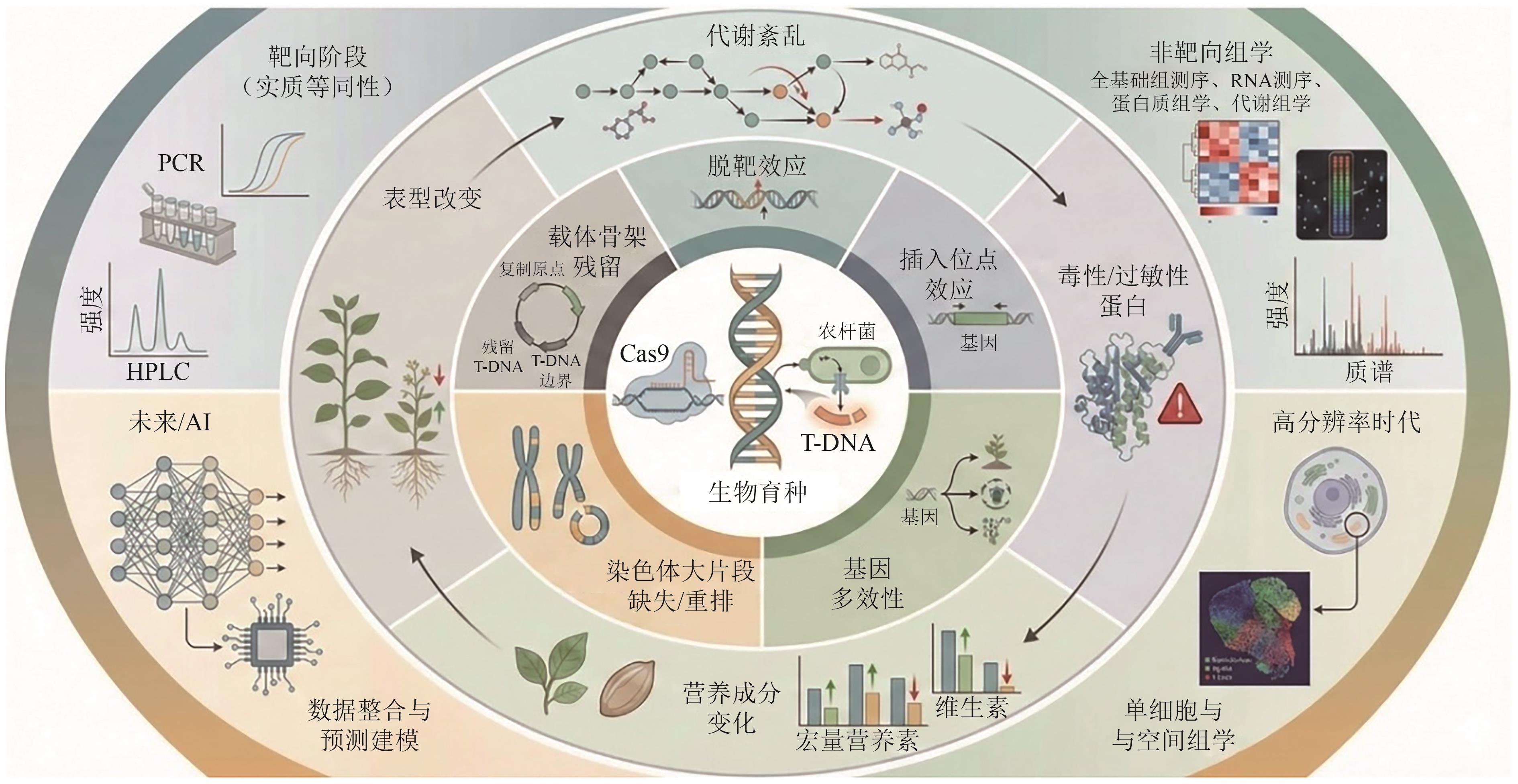
Fig. 1 A multi-omics systems analysis framework for evaluating unintended effects in biotechnology-derived foods
Table 1 Cases employing genomics technologies to assess unintended effects in biotechnology-derived breeding products
| 转基因作物 | 预期性状 | 检测方法 | 非期望效应结论 | 参考文献 |
|---|---|---|---|---|
| 转基因水稻 | 抗黑条矮缩病毒 | 转录组学(RNA-seq)、代谢组学(HPLC-MS) | 未观察到显著的非期望效应 | [ |
| 转基因玉米 | 抗绿盲蝽 | 转录组学(RNA-seq)、代谢组学(HPLC-MS) | 未观察到显著的非期望效应 | [ |
| 转基因杨树 | 抗虫性 | 转录组学(RNA-seq) | 未观察到显著的非期望效应 | [ |
| 转基因玉米 | 耐草甘膦 | 转录组学(RNA-Seq) | 观察到非期望效应,丁酸酯代谢及缬氨酸、亮氨酸和异亮氨酸降解等多个生物学过程和代谢通路发生改变 | [ |
Table 2 Cases employing transcriptomic technologies to assess unintended effects in biotechnology-derived breeding products
| 转基因作物 | 预期性状 | 检测方法 | 非期望效应结论 | 参考文献 |
|---|---|---|---|---|
| 转基因水稻 | 抗黑条矮缩病毒 | 转录组学(RNA-seq)、代谢组学(HPLC-MS) | 未观察到显著的非期望效应 | [ |
| 转基因玉米 | 抗绿盲蝽 | 转录组学(RNA-seq)、代谢组学(HPLC-MS) | 未观察到显著的非期望效应 | [ |
| 转基因杨树 | 抗虫性 | 转录组学(RNA-seq) | 未观察到显著的非期望效应 | [ |
| 转基因玉米 | 耐草甘膦 | 转录组学(RNA-Seq) | 观察到非期望效应,丁酸酯代谢及缬氨酸、亮氨酸和异亮氨酸降解等多个生物学过程和代谢通路发生改变 | [ |
| 转基因作物 | 预期性状 | 检测方法 | 非期望效应结论 | 参考文献 |
|---|---|---|---|---|
| 转基因水稻 | 抗虫性 | 蛋白组学(LC-MS/MS) | 未观察到显著的非期望效应 | [ |
| 转基因玉米 | 抗虫性、耐除草剂 | 蛋白质组学(DIA)、代谢组学(LC-MS) | 未观察到显著的非期望效应 | [ |
| 转基因玉米 | 植酸酶高表达 | 蛋白质组学(TOF/TOF-MS) | 未观察到显著的非期望效应 | [ |
| 转基因菜豆 | 抗金黄色花叶病毒 | 蛋白质组学(MALDI-TOF/TOF-MS) | 未观察到显著的非期望效应 | [ |
Table 3 Cases employing proteomic technologies to assess unintended effects in biotechnology-derived breeding products
| 转基因作物 | 预期性状 | 检测方法 | 非期望效应结论 | 参考文献 |
|---|---|---|---|---|
| 转基因水稻 | 抗虫性 | 蛋白组学(LC-MS/MS) | 未观察到显著的非期望效应 | [ |
| 转基因玉米 | 抗虫性、耐除草剂 | 蛋白质组学(DIA)、代谢组学(LC-MS) | 未观察到显著的非期望效应 | [ |
| 转基因玉米 | 植酸酶高表达 | 蛋白质组学(TOF/TOF-MS) | 未观察到显著的非期望效应 | [ |
| 转基因菜豆 | 抗金黄色花叶病毒 | 蛋白质组学(MALDI-TOF/TOF-MS) | 未观察到显著的非期望效应 | [ |
| 转基因作物 | 预期性状 | 检测方法 | 非期望效应结论 | 参考文献 |
|---|---|---|---|---|
| 转基因玉米 | 抗双斑叶甲 | 转录组学(RNA-seq)、代谢组学(UPLC-MS/MS) | 未观察到显著的非期望效应 | [ |
| 转基因水稻 | 抗虫性 | 转录组学(RNA-seq)、代谢组学(UPLC-MS/MS) | 未观察到显著的非期望效应 | [ |
| 转基因烟草细胞 | 增强绿原酸的生物合成 | 代谢组学(UHPLC-MS) | 观察到非期望效应,绿原酸的合成并未增强,而导致了苯甲酸类化合物的积累 | [ |
| 转基因玉米 | 抗虫性、草甘膦耐受性 | 转录组学(RNA-seq)、代谢组学(UPLC-MS) | 未观察到显著的非期望效应 | [ |
Table 4 Cases employing metabolomic technologies to assess unintended effects in biotechnology-derived breeding products
| 转基因作物 | 预期性状 | 检测方法 | 非期望效应结论 | 参考文献 |
|---|---|---|---|---|
| 转基因玉米 | 抗双斑叶甲 | 转录组学(RNA-seq)、代谢组学(UPLC-MS/MS) | 未观察到显著的非期望效应 | [ |
| 转基因水稻 | 抗虫性 | 转录组学(RNA-seq)、代谢组学(UPLC-MS/MS) | 未观察到显著的非期望效应 | [ |
| 转基因烟草细胞 | 增强绿原酸的生物合成 | 代谢组学(UHPLC-MS) | 观察到非期望效应,绿原酸的合成并未增强,而导致了苯甲酸类化合物的积累 | [ |
| 转基因玉米 | 抗虫性、草甘膦耐受性 | 转录组学(RNA-seq)、代谢组学(UPLC-MS) | 未观察到显著的非期望效应 | [ |
| 组学 | 转基因作物 | 预期性状 | 检测方法 | 非期望效应结论 | 参考文献 |
|---|---|---|---|---|---|
| 空间组学 | 转基因水稻 | 樱花素高表达 | 液相色谱串联质谱(LC-MS/MS)、基质辅助激光解吸/电离质谱成像(MALDI-MSI) | 未观察到显著的非期望效应 | [ |
| 转基因大豆 | 耐除草剂 | 基质辅助激光解吸/电离质谱成像(MALDI-MSI)结合LC-MS/MS脂质组学分析 | 观察到非期望效应,鉴定出18种脂质在表达丰度与空间分布上存在显著差异 | [ | |
| 转基因大豆 | 耐除草剂 | 基质辅助激光解吸/电离质谱成像(MALDI-MSI)结合LC-Q-TOF质谱技术 | 观察到非期望效应,在与营养存储相关和胁迫响应与防御相关蛋白中出现丰度和空间分布的差异 | [ | |
| 其他新兴组学 | 转基因大豆 | 耐草甘膦 | 离子组学(ICP-MS)和脂质组学(1H NMR) | 差异存在,但未观察到显著的非期望效应 | [ |
| 转基因水稻 | 抗虫性 | 近红外光谱(NIR)与太赫兹光谱(THz)成像技术 | 观察到非期望效应,脂质与有机酸类代谢物组学出现显著差异 | [ | |
| 转基因大豆 | 高油酸 | 蛋白质组学(TMT)和脂质组学(LC-MS/MS) | 观察到非期望效应,脂氧合酶和油质蛋白代谢物组发生改变 | [ |
Table 5 Cases employing spatial omics and other emerging omics technologies to assess unintended effects in biotechnology-derived breeding products
| 组学 | 转基因作物 | 预期性状 | 检测方法 | 非期望效应结论 | 参考文献 |
|---|---|---|---|---|---|
| 空间组学 | 转基因水稻 | 樱花素高表达 | 液相色谱串联质谱(LC-MS/MS)、基质辅助激光解吸/电离质谱成像(MALDI-MSI) | 未观察到显著的非期望效应 | [ |
| 转基因大豆 | 耐除草剂 | 基质辅助激光解吸/电离质谱成像(MALDI-MSI)结合LC-MS/MS脂质组学分析 | 观察到非期望效应,鉴定出18种脂质在表达丰度与空间分布上存在显著差异 | [ | |
| 转基因大豆 | 耐除草剂 | 基质辅助激光解吸/电离质谱成像(MALDI-MSI)结合LC-Q-TOF质谱技术 | 观察到非期望效应,在与营养存储相关和胁迫响应与防御相关蛋白中出现丰度和空间分布的差异 | [ | |
| 其他新兴组学 | 转基因大豆 | 耐草甘膦 | 离子组学(ICP-MS)和脂质组学(1H NMR) | 差异存在,但未观察到显著的非期望效应 | [ |
| 转基因水稻 | 抗虫性 | 近红外光谱(NIR)与太赫兹光谱(THz)成像技术 | 观察到非期望效应,脂质与有机酸类代谢物组学出现显著差异 | [ | |
| 转基因大豆 | 高油酸 | 蛋白质组学(TMT)和脂质组学(LC-MS/MS) | 观察到非期望效应,脂氧合酶和油质蛋白代谢物组发生改变 | [ |
| [1] | XIONG W, REYNOLDS M, XU Y. Climate change challenges plant breeding[J/OL]. Curr. Opin. Plant Biol., 2022, 70: 102308[2026-01-10]. . |
| [2] | Genome editing and sustainable agriculture[J/OL]. Nat. Sustain., 2024, 7(4): 369-370. |
| [3] | GAO C. Genome engineering for crop improvement and future agriculture[J]. Cell, 2021, 184(6): 1621-1635. |
| [4] | SCHNELL J, STEELE M, BEAN J, et al.. A comparative analysis of insertional effects in genetically engineered plants: considerations for pre-market assessments[J]. Transgenic Res., 2015, 24(1): 1-17. |
| [5] | ZARKA K A, HOKANSON K, DOUCHES D S. Molecular characterization for food safety assessment of a genetically modified late blight resistant potato: an unusual case[J]. Transgenic Res., 2021, 30(2): 169-183. |
| [6] | FERNANDEZ A, PAOLETTI C. Unintended effects in genetically modified food/feed safety: a way forward[J]. Trends Biotechnol., 2018, 36(9): 872-875. |
| [7] | 祁潇哲,贺晓云,黄昆仑.转基因生物食用安全评价技术体系及其发展趋势[J].中国农业大学学报,2019,24(7):71-78. |
| QI X Z, HE X Y, HUANG K L. Food safety assessment technology system of genetically modified organisms and its development trend[J]. J. China Agric. Univ., 2019, 24(7): 71-78. | |
| [8] | RISCHER H, OKSMAN-CALDENTEY K M. Unintended effects in genetically modified crops: revealed by metabolomics[J]. Trends Biotechnol., 2006, 24(3): 102-104. |
| [9] | RICROCH A E, BERGÉ J B, KUNTZ M. Evaluation of genetically engineered crops using transcriptomic, proteomic, and metabolomic profiling techniques[J]. Plant Physiol., 2011, 155(4): 1752-1761. |
| [10] | BENEVENUTO R F, ZANATTA C B, WAßMANN F, et al.. Integration of omics analyses into GMO risk assessment in Europe: a case study from soybean field trials[J/OL]. Environ. Sci. Eur., 2023, 35(1): 14[2026-01-10]. . |
| [11] | 王晨光,许文涛,朱鹏宇,等.转基因组学分析技术研究进展[J].食品科学,2015,36(17):288-295. |
| WANG C G, XU W T, ZHU P Y, et al.. Recent progress in "omics" technologies for safety assessment of genetically modified crops[J]. Food Sci., 2015, 36(17): 288-295. | |
| [12] | LI J, MANGHWAR H, SUN L, et al.. Whole genome sequencing reveals rare off-target mutations and considerable inherent genetic or/and somaclonal variations in CRISPR/Cas9-edited cotton plants[J]. Plant Biotechnol. J., 2019, 17(5): 858-868. |
| [13] | CÉSAR-RAZQUIN A, CASACUBERTA J, et al.. Technical note on the quality of DNA sequencing for the molecular characterisation of genetically modified plants[J/OL]. EFSA J., 2024, 22(4): e8744[2026-01-10]. . |
| [14] | PAUWELS K, DE KEERSMAECKER S C J, DE SCHRIJVER A, et al.. Next-generation sequencing as a tool for the molecular characterisation and risk assessment of genetically modified plants: added value or not?[J]. Trends Food Sci. Technol., 2015, 45(2): 319-326. |
| [15] | ZHANG Z, HUANG Y, DONG Y, et al.. Effect of T-DNA integration on growth of transgenic Populus × euramericana cv. Neva underlying field stands[J/OL]. Int. J. Mol. Sci., 2023, 24(16): 12952[2026-01-10]. . |
| [16] | YANG L, WANG C, HOLST-JENSEN A, et al.. Characterization of GM events by insert knowledge adapted re-sequencing approaches[J/OL]. Sci. Rep., 2013, 3: 2839[2026-01-10]. . |
| [17] | GUTTIKONDA S K, MARRI P, MAMMADOV J, et al.. Molecular characterization of transgenic events using next generation sequencing approach[J/OL]. PLoS One, 2016, 11(2): e0149515[2026-01-10]. . |
| [18] | MING R, HOU S, FENG Y, et al.. The draft genome of the transgenic tropical fruit tree Papaya (Carica papaya Linnaeus)[J]. Nature, 2008, 452(7190): 991-996. |
| [19] | PARK J S, SHIN Y H, PARK Y D. DNA methylation level changes in transgenic Chinese cabbage (Brassica rapa ssp. pekinensis) plants and their effects on corresponding gene expression patterns[J/OL]. Genes, 2021, 12(10): 1563[2026-02-10]. . |
| [20] | LIU Q, WANG Q, NING L, et al.. Efficient identification of genomic insertions and surrounding regions in two transgenic maize events using third-generation single-molecule nanopore sequencing technology[J/OL]. Sci. Rep., 2024, 14: 31921[2026-01-10]. . |
| [21] | LI S, LIN D, ZHANG Y, et al.. Genome-edited powdery mildew resistance in wheat without growth penalties[J]. Nature, 2022, 602(7897): 455-460. |
| [22] | MONZÓ C, LIU T, CONESA A. Transcriptomics in the era of long-read sequencing[J]. Nat. Rev. Genet., 2025, 26(10): 681-701. |
| [23] | ZHOU X, REN Y, WANG S, et al.. T-DNA integration and its effect on gene expression in dual Bt gene transgenic Populus × euramericana cv. Neva[J/OL]. Ind. Crops Prod., 2022, 178: 114636[2026-01-10]. . |
| [24] | HUANG C, WANG Z, ZHU P, et al.. RNA interference-based genetic engineering maize resistant to Apolygus lucorum does not manifest unpredictable unintended effects relative to conventional breeding: short interfering RNA, transcriptome, and metabolome analysis[J/OL]. Front. Plant Sci., 2022, 13: 745708[2026-01-10]. . |
| [25] | S-EBEN ALI, DRAXLER A, POELZL D, et al.. Analysis of transcriptomic differences between NK603 maize and near-isogenic varieties using RNA sequencing and RT-qPCR[J/OL]. Environ. Sci. Eur., 2020, 32(1): 132[2026-01-10]. . |
| [26] | 张敏.基于组学评估基因编辑水稻的非预期效应研究[D].安徽阜阳:阜阳师范大学,2022. |
| [27] | 张文蔚,赵洁,李云河,等.转录组分析转基因水稻华恢1号地上及地下部分不存在非预期效应[J].农业生物技术学报,2015,23(7):876-887. |
| ZHANG W W, ZHAO J, LI Y H, et al.. Transcriptome analysis revealing the absence of unintended effects both in aerial and underground portions of transgenic rice (Oryza sativa L.) Huahui 1[J]. J. Agric. Biotechnol., 2015, 23(7): 876-887. | |
| [28] | HUANG C, WANG Z, ZHU P, et al.. RNAi-based genetically engineered rice resistant to black-streaked dwarf virus does not show adverse genetic effects: a multi-omics analysis[J]. Plants People Planet, 2024, 6(3): 622-639. |
| [29] | ZANON AGAPITO-TENFEN S, GUERRA M P, NODARI R O, et al.. Untargeted proteomics-based approach to investigate unintended changes in genetically modified maize for environmental risk assessment purpose[J/OL]. Front. Toxicol., 2021, 3: 655968[2026-01-10]. . |
| [30] | BALSAMO G M, VALENTIM-NETO P A, MELLO C S, et al.. Comparative proteomic analysis of two varieties of genetically modified (GM) embrapa 5.1 common bean (Phaseolus vulgaris L.) and their non-GM counterparts[J]. J. Agric. Food Chem., 2015, 63(48): 10569-10577. |
| [31] | 彭波,孙晓宇,邱静,等.基于iTRAQ蛋白质组学的OsAAP6不同转基因水稻胚乳差异蛋白筛选[J].南方农业学报,2024,55(4):1060-1069. |
| PENG B, SUN X Y, QIU J, et al.. Screening differential proteins in OsAAP6 different transgenic rice endosperms based on iTRAQ proteomics[J]. J. South. Agric., 2024, 55(4): 1060-1069. | |
| [32] | WANG Y, LIU Q, SONG X, et al.. Unintended changes in transgenic maize cause no nontarget effects[J]. Plants People Planet, 2022, 4(4): 392-402. |
| [33] | SUN Y, ZHAO H, CHEN Z, et al.. Comparison of the phenotypic performance, molecular diversity, and proteomics in transgenic rice[J/OL]. Plants, 2023, 12(1): 156[2026-01-10]. . |
| [34] | TAN Y, YI X, WANG L, et al.. Comparative proteomics of leaves from phytase-transgenic maize and its non-transgenic isogenic variety[J/OL]. Front. Plant Sci., 2016, 7: 1211[2026-01-10]. . |
| [35] | 杨婧.转基因水稻比较蛋白组学研究[D].北京:中央民族大学,2010. |
| [36] | DOS SANTOS-DONADO P R, DONADO-PESTANA C M, RONDÁN-SANABRIA G G, et al.. Two-dimensional gel and shotgun proteomics approaches for the comparative evaluation of genetically modified maize[J]. J. Food Meas. Charact., 2024, 18(5): 3215-3235. |
| [37] | 王森,李健爽,杜晓燕.代谢组学在转基因作物非预期效应评价中的应用[J].食品科学,2014,35(9):312-316. |
| WANG S, LI J S, DU X Y. Applications of metabolomics in evaluation of unintended effects of genetically modified crops[J]. Food Sci., 2014, 35(9): 312-316. | |
| [38] | BEDAIR M, GLENN K C. Evaluation of the use of untargeted metabolomics in the safety assessment of genetically modified crops[J/OL]. Metabolomics, 2020, 16(10): 111[2026-01-10]. . |
| [39] | FENG H, LI Y, DAI G, et al.. Integrative phenomics, metabolomics and genomics analysis provides new insights for deciphering the genetic basis of metabolism in polished rice[J/OL]. Genome Biol., 2025, 26(1): 55[2026-01-10]. . |
| [40] | ZHANG X, ZHANG R, LI L, et al.. Negligible transcriptome and metabolome alterations in RNAi insecticidal maize against Monolepta hieroglyphica [J]. Plant Cell Rep., 2020, 39(11): 1539-1547. |
| [41] | LIU Q, YANG X, TZIN V, et al.. Plant breeding involving genetic engineering does not result in unacceptable unintended effects in rice relative to conventional cross-breeding[J]. Plant J., 2020, 103(6): 2236-2249. |
| [42] | MUDAU S P, STEENKAMP P A, PIATER L A, et al.. Metabolomics-guided investigations of unintended effects of the expression of the hydroxycinnamoyl quinate hydroxycinnamoyltransferase (hqt1) gene from Cynara cardunculus var. scolymus in Nicotiana tabacum cell cultures[J]. Plant Physiol. Biochem., 2018, 127: 287-298. |
| [43] | WANG X J, ZHANG X, YANG J T, et al.. Effect on transcriptome and metabolome of stacked transgenic maize containing insecticidal cry and glyphosate tolerance epsps genes[J]. Plant J., 2018, 93(6): 1007-1016. |
| [44] | LIU W, DONG M, MENG L, et al.. Metabolic profiling of maize seeds with both insect- and herbicide-resistance genes (cry1Ab and epsps), dual herbicide-resistance genes (epsps and pat), and natural genotypic varieties[J/OL]. Chem. Biol. Technol. Agric., 2021, 8(1): 57[2026-01-10]. . |
| [45] | PENG C, DING L, HU C, et al.. Effect on metabolome of the grains of transgenic rice containing insecticidal cry and glyphosate tolerance epsps genes[J]. Plant Growth Regul., 2019, 88(1): 1-7. |
| [46] | LUO C, FERNIE A R, YAN J. Single-cell genomics and epigenomics: technologies and applications in plants[J]. Trends Plant Sci., 2020, 25(10): 1030-1040. |
| [47] | WANG D, BODOVITZ S. Single cell analysis: the new frontier in 'omics'[J]. Trends Biotechnol., 2010, 28(6): 281-290. |
| [48] | 皇甫秉欣,李杰,陈亚南,等.单细胞组学在食品安全评价中的应用现状及前景[J].食品科技,2025,50(8):1-9. |
| HUANGFU B X, LI J, CHEN Y N, et al.. Current use and future prospects of single-cell omics in food safety assessment[J]. Food Sci. Technol., 2025, 50(8): 1-9. | |
| [49] | WANG X, HUANG H, JIANG S, et al.. A single-cell multi-omics atlas of rice[J]. Nature, 2025, 644(8077): 722-730. |
| [50] | HAN Y, ZHANG J, CAI M, et al.. Parental specific expression by scRNA-seq reveals HaWRKY40 contributing to heterosis of sunflower[J]. Plant Biotechnol. J., 2025, 23(11): 5126-5128. |
| [51] | ZHU M, TAYLOR I W, BENFEY P N. Single-cell genomics revolutionizes plant development studies across scales[J/OL]. Development, 2022, 149(6): dev200179[2026-01-10]. . |
| [52] | ZHU X, XU Z, WANG G, et al.. Single-cell resolution analysis reveals the preparation for reprogramming the fate of stem cell niche in cotton lateral meristem[J/OL]. Genome Biol., 2023, 24(1): 194[2026-01-10]. . |
| [53] | NOBORI T, MONELL A, LEE T A, et al.. A rare PRIMER cell state in plant immunity[J]. Nature, 2025, 638(8049): 197-205. |
| [54] | TAKAGI H, ITO S, SHIM J S, et al.. Companion cells with high florigen production express other small proteins and reveal a nitrogen-sensitiveFT repressor[J/OL]. eLife, 14: RP102529[2026-01-20]. . |
| [55] | ZHA W, LI C, WU Y, et al.. Single-cell RNA sequencing of leaf sheath cells reveals the mechanism of rice resistance to brown planthopper (Nilaparvata lugens)[J/OL]. Front. Plant Sci., 2023, 14: 1200014[2026-01-10]. . |
| [56] | BAYSOY A, BAI Z, SATIJA R, et al.. The technological landscape and applications of single-cell multi-omics[J]. Nat. Rev. Mol. Cell Biol., 2023, 2410: 695-713. |
| [57] | WANG X, HAN J, LI Z, et al.. Insight into plant spatial omics: mass spectrometry imaging[J/OL]. Front. Plant Sci., 2023, 14: 1273010[2026-01-10]. . |
| [58] | STÅHL P L, SALMÉN F, VICKOVIC S, et al.. Visualization and analysis of gene expression in tissue sections by spatial transcriptomics[J]. Science, 2016, 353(6294): 78-82. |
| [59] | WU Z H, WANG R Z, SUN Z L, et al.. A mass spectrometry imaging approach on spatiotemporal distribution of multiple alkaloids in Gelsemium elegans [J/OL]. Front. Plant Sci., 2022, 13: 1051756[2026-01-10]. . |
| [60] | ZHAO Y, HU J, ZHOU Z, et al.. Biofortified rice provides rich sakuranetin in endosperm[J/OL]. Rice, 2024, 17(1): 19[2026-01-10]. . |
| [61] | REN Z, QIN L, CHEN L, et al.. Spatial lipidomics of EPSPS and PAT transgenic and non-transgenic soybean seeds using matrix-assisted laser desorption/ionization mass spectrometry imaging[J]. J. Agric. Food Chem., 2023, 71(26): 10190-10202. |
| [62] | YIN Y, REN Z, ZHANG L, et al.. In situ proteomic analysis of herbicide-resistant soybean and hybrid seeds via matrix-assisted laser desorption/ionization-mass spectrometry imaging[J]. J. Agric. Food Chem., 2023, 71(18): 7140-7151. |
| [63] | FERREIRA DA COSTA L, FRANCISCO TORMENA C, AURéLIO ZEZZI ARRUDA M. Ionomics and lipidomics for evaluating the transgenic (cp4-EPSPS gene) and non-transgenic soybean seed generations [J]. Microchem. J., 2021, 165. |
| [64] | ZHANG J, FENG X, JIN J, et al.. Concise cascade methods for transgenic rice seed discrimination using spectral phenotyping[J/OL]. Plant Phenomics, 2023, 5: 71[2026-01-10]. . |
| [65] | XU Y, YAN F, LIU Y, et al.. Quantitative proteomic and lipidomics analyses of high oil content GmDGAT1-2 transgenic soybean illustrate the regulatory mechanism of lipoxygenase and oleosin[J]. Plant Cell Rep., 2021, 40(12): 2303-2323. |
| [66] | XU Y, YAN F, ZONG Y, et al.. Proteomic and lipidomics analyses of high fatty acid AhDGAT3 transgenic soybean reveals the key lipase gene associated with the lipid internal mechanism[J]. Genome, 2022, 65(3): 153-164. |
| [67] | YIN X, REN Z, JIA R, et al.. Metabolic profiling and spatial metabolite distribution in wild soybean (G. soja) and cultivated soybean (G. max) seeds[J/OL]. Food Chem., 2024, 23: 101717[2026-01-10]. . |
| [68] | HUANG X Y, SALT D E. Plant ionomics: from elemental profiling to environmental adaptation[J]. Mol. Plant, 2016, 9(6): 787-797. |
| [69] | JANGRA S, CHAUDHARY V, YADAV R C, et al.. High-throughput phenotyping: a platform to accelerate crop improvement[J]. Phenomics, 2021, 1(2): 31-53. |
| [70] | ABEBE A M, KIM Y, KIM J, et al.. Image-based high-throughput phenotyping in horticultural crops[J/OL]. Plants, 12(10): 2061[2026-01-10].. |
| [71] | MATSUZAWA Y, HIGASHI Y, TAKANO K, et al.. Food lipidomics for 155 agricultural plant products[J]. J. Agric. Food Chem., 2021, 69(32): 8981-8990. |
| [72] | ZHOU L, XU J D, ZHOU S S, et al.. Integrating targeted glycomics and untargeted metabolomics to investigate the processing chemistry of herbal medicines, a case study on Rehmanniae radix [J]. J. Chromatogr. A, 2016, 1472: 74-87. |
| [73] | HART G W, COPELAND R J. Glycomics hits the big time[J]. Cell, 2010, 143(5): 672-676. |
| [74] | MORABITO A, DE SIMONE G, PASTORELLI R, et al.. Algorithms and tools for data-driven omics integration to achieve multilayer biological insights: a narrative review[J/OL]. J. Transl. Med., 2025, 23(1): 425[2026-01-10]. . |
| [75] | YANG Y, SAAND MALI, HUANG L, et al.. Applications of multi-omics technologies for crop improvement[J/OL]. Front. Plant Sci., 2021, 12: 563953[2026-01-10]. . |
| [76] | SANCHES P H G, DE MELO N C, PORCARI A M, et al.. Integrating molecular perspectives: strategies for comprehensive multi-omics integrative data analysis and machine learning applications in transcriptomics, proteomics, and metabolomics[J/OL]. Biology, 2024, 13(11): 848[2026-01-10]. . |
| [77] | ZENG F, SHI M, XIAO H, et al.. WGCNA‐based identification of Hub genes and key pathways involved in nonalcoholic fatty liver disease[J/OL]. BioMed. Res. Int., 2021, 2021(1): 5633211[2026-01-10]. . |
| [78] | CHONG J, SOUFAN O, LI C, et al.. MetaboAnalyst 4.0: towards more transparent and integrative metabolomics analysis[J]. Nucleic Acids Res., 2018, 46(W1): 486-494. |
| [79] | MESNAGE R, AGAPITO-TENFEN S Z, VILPERTE V, et al.. An integrated multi-omics analysis of the NK603 Roundup-tolerant GM maize reveals metabolism disturbances caused by the transformation process[J/OL]. Sci. Rep., 2016, 6: 37855[2026-01-10]. . |
| [80] | LI G, AN L, YANG W, et al.. Integrated biotechnological and AI innovations for crop improvement[J]. Nature, 2025, 643(8073): 925-937. |
| [81] | REEL P S, REEL S, PEARSON E, et al.. Using machine learning approaches for multi-omics data analysis: a review[J/OL]. Biotechnol. Adv., 2021, 49: 107739[2026-01-10]. . |
| [82] | XIAO X, FU L, ZHANG Z, et al.. Recent advances in integrating machine learning with omics approaches in food science and nutrition research[J]. J. Agric. Food Chem., 2025, 73(47): 29998-30025. |
| [83] | RIBEIRO M C, CABRAL J, NICOLODELLI G, et al.. Discrimination of maize transgenic and non-transgenic varieties by laser induced spectroscopy (LIBS) and machine learning algorithms[J/OL]. Microchem. J., 203: 110898[2026-01-10]. . |
| [84] | MMBANDO G S. The use of artificial intelligence in the production of genetically modified (GM) crops: a recent promising strategy for enhancing the acceptability of GM products?[J/OL]. Discov. Appl. Sci., 2024, 6(11): 581[2026-01-10]. . |
| [85] | JUHAS M, RODEKOHR B, BAUER-PANSKUS A, et al.. Combining AI and new genomic techniques to 'fine-tune' plants: challenges in risk assessment[J/OL]. Front. Plant Sci., 2025, 16: 1677066[2026-01-10]. . |
| [1] | Yingxuan DU, Yutong SUN, Jinyu PENG, Jiahao ZHAO, Keran DONG, Xinyuan GAO, Haoze WU, Yunyao LUO, Xiaoping MU, Hongshu SUI. Application of Non-mammalian Models in Predictive Toxicology: Progress, Challenges and Prospects [J]. Current Biotechnology, 2026, 16(3): 610-617. |
| [2] | Zeyu LIU, Mengyang ZHANG, Baobao ZHANG, Lin SU, Zhuo LI, Wen HU. Application of Python Program in Bioinformatics [J]. Current Biotechnology, 2026, 16(3): 595-609. |
| [3] | Yujie WANG, Pengyi YANG, Yang LI, Yiyang LI, Zhongqiang LI, Hongshu SUI, Zengshuo MAN. Research Progress on the Mechanisms of Mercury Toxicity and Novel Prevention and Control Strategies [J]. Current Biotechnology, 2025, 15(4): 655-660. |
| Viewed | ||||||
|
Full text |
|
|||||
|
Abstract |
|
|||||
