

Current Biotechnology ›› 2026, Vol. 16 ›› Issue (1): 10-17.DOI: 10.19586/j.2095-2341.2025.0070
• Reviews • Previous Articles Next Articles
Jiazeng GAO1,2,3,4( ), Yunshu XIAO1,2,3,4, Wenzheng YAN1,2,3,4, Yongli LI1,2,3,4, Zhanying LIU1,2,3,4, Jianhua HU1,2,3,4()
Received:2025-06-20
Accepted:2025-11-07
Online:2026-01-25
Published:2026-02-12
Contact:
Jianhua HU
CLC Number:
Jiazeng GAO, Yunshu XIAO, Wenzheng YAN, Yongli LI, Zhanying LIU, Jianhua HU. Research Progress on Screening of High-yield Xylanase-producing Strains[J]. Current Biotechnology, 2026, 16(1): 10-17.
高家增, 肖蕴澍, 闫文正, 李永丽, 刘占英, 胡建华. 高产木聚糖酶菌株选育的研究进展[J]. 生物技术进展, 2026, 16(1): 10-17.
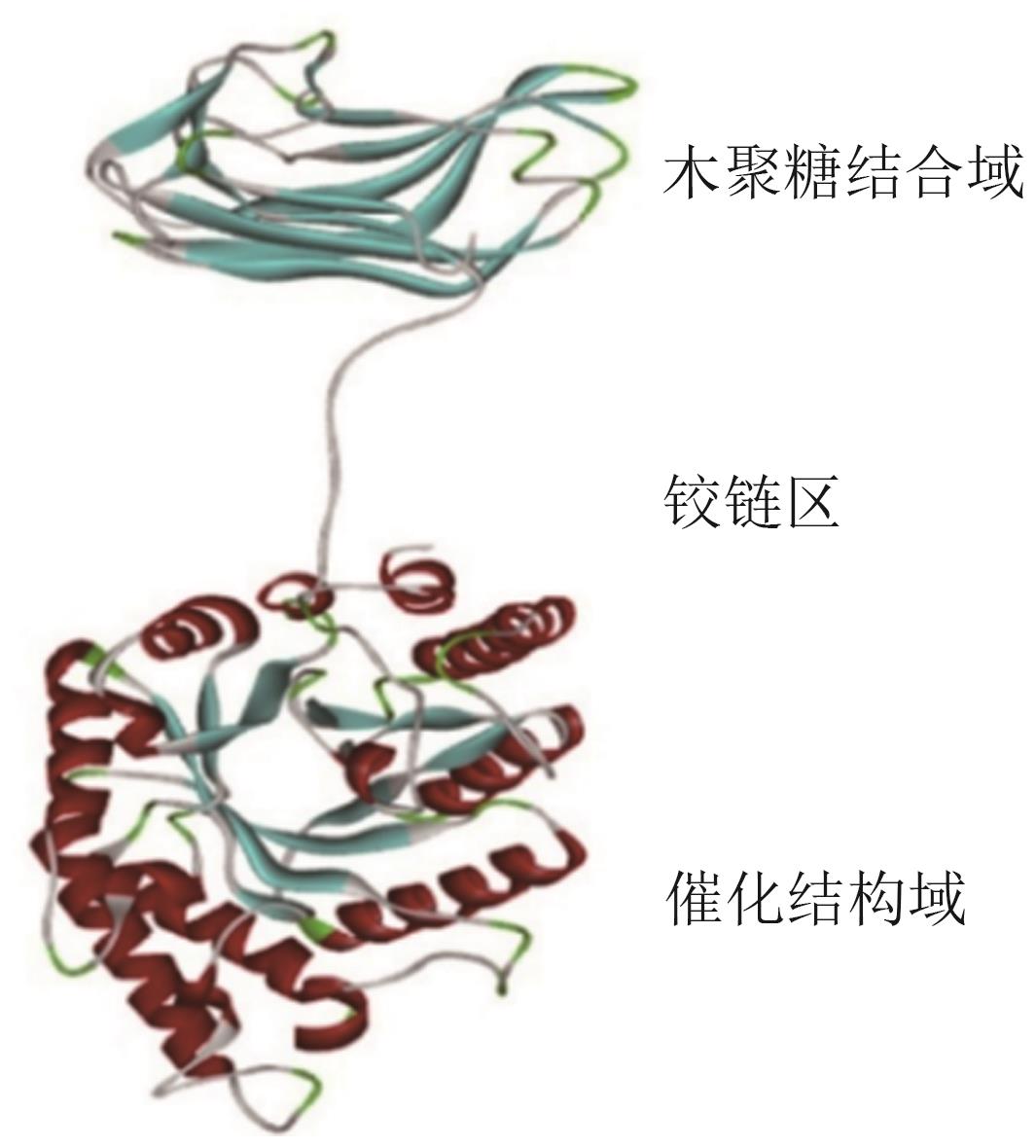
Fig. 1 The model 3D structure of xylanase[11]
| 菌株 | 诱变方法 | 结果 | 参考文献 |
|---|---|---|---|
| 球毛壳霉菌Z30-56 | 紫外诱变 | 酶活9850 U·mL-1,较最初菌株提高了53.7% | [ |
| 短小芽胞杆菌M-11-2 | 紫外诱变 | 酶活500~600 U·mL-1,是最初菌株酶活的1.5倍 | [ |
| 黑曲霉ARTP-82 | 常压常温等离子体诱变 | 最适反应温度45 ℃、pH 7.0,酶活175.33 U·mL-1,较最初菌株提高了120.8% | [ |
| 菌疏棉状嗜热霉菌W5-133 | 微波诱变 | 较最初菌株提高了66.8% | [ |
| 枯草芽孢杆菌 | 稀土选育 | 酶活133.79 U·mL-1,较最初菌株提高了10.48% | [ |
| 克里布所类芽胞杆菌2A82s-13 | 紫外诱变、常压常温等离子体诱变 | 酶活135.25±0.40 U·mL-1,3轮紫外诱变提高了66.8%,2轮ARTP诱变进一步提高了31.2% | [ |
| 黑曲霉X1U4-1 | 紫外、硫酸二乙酯及紫外-硫酸二乙酯复合诱变 | 酶活938 3.18 U·g-1,较最初菌株提高了3.8% | [ |
| 黑曲霉 | 紫外诱变、快中子辐照诱变、硫酸二乙酯诱变、亚硝酸钠诱变、亚硝基胍诱变 | 酶活分别是最初菌株的2.18、1.72、1.51、1.46、1.38倍 | [ |
Table 1 Enhancement of xylanase activity by different mutagenesis methods
| 菌株 | 诱变方法 | 结果 | 参考文献 |
|---|---|---|---|
| 球毛壳霉菌Z30-56 | 紫外诱变 | 酶活9850 U·mL-1,较最初菌株提高了53.7% | [ |
| 短小芽胞杆菌M-11-2 | 紫外诱变 | 酶活500~600 U·mL-1,是最初菌株酶活的1.5倍 | [ |
| 黑曲霉ARTP-82 | 常压常温等离子体诱变 | 最适反应温度45 ℃、pH 7.0,酶活175.33 U·mL-1,较最初菌株提高了120.8% | [ |
| 菌疏棉状嗜热霉菌W5-133 | 微波诱变 | 较最初菌株提高了66.8% | [ |
| 枯草芽孢杆菌 | 稀土选育 | 酶活133.79 U·mL-1,较最初菌株提高了10.48% | [ |
| 克里布所类芽胞杆菌2A82s-13 | 紫外诱变、常压常温等离子体诱变 | 酶活135.25±0.40 U·mL-1,3轮紫外诱变提高了66.8%,2轮ARTP诱变进一步提高了31.2% | [ |
| 黑曲霉X1U4-1 | 紫外、硫酸二乙酯及紫外-硫酸二乙酯复合诱变 | 酶活938 3.18 U·g-1,较最初菌株提高了3.8% | [ |
| 黑曲霉 | 紫外诱变、快中子辐照诱变、硫酸二乙酯诱变、亚硝酸钠诱变、亚硝基胍诱变 | 酶活分别是最初菌株的2.18、1.72、1.51、1.46、1.38倍 | [ |
| 极端温度温泉宏基因组 | 7.0 | 80 | E. coli BL21 | pET-23a | - | [ |
| 帕特里克念珠菌 | 5.5 | 60 | E. coli BL21 | pET-28a | 1 358.00 | [ |
| 沙福芽孢杆菌 | 7.0 | 60 | E. coli BL21 | pET15b16S | - | [ |
| 芽孢杆菌SC1 | 9.0 | 55 | E. coli BL21 | pET-28a | 4 594.00 | [ |
| 美国国家生物技术信息中心 | 5.0 | 35 | E. coli BL21 | pET-28a | 9 742.50 | [ |
纤维分解粘细菌 溶糖曲霉 JOP 1030-1 T. reesei XynⅡ蛋白的氨基酸 1-189 高高芽孢杆菌JYY-02 链霉菌 L2001 糖解曲霉JOP1030-1 厌氧芽孢杆菌 | 6.0 5.5 5.5 6.5 6.0 6.0 7.0 | 50 55 55 50 50 50 65 | E. coli BL21 E. coli BL21 E. coli BL21 E. coli Rosetta E. coli BL21 E. coli BL21 E. coli BL21 | pET-29a pET-28a pET-NTMST pET-15b pET-28a pET-28a pET-28a | 3 643.52 1 567.20 6 678.00 1 105.00 2 010.55 198.10 284.60 | [ [ [ [ [ [ [ |
Table 2 Expression of xylanase in the bacterial expression system
| 极端温度温泉宏基因组 | 7.0 | 80 | E. coli BL21 | pET-23a | - | [ |
| 帕特里克念珠菌 | 5.5 | 60 | E. coli BL21 | pET-28a | 1 358.00 | [ |
| 沙福芽孢杆菌 | 7.0 | 60 | E. coli BL21 | pET15b16S | - | [ |
| 芽孢杆菌SC1 | 9.0 | 55 | E. coli BL21 | pET-28a | 4 594.00 | [ |
| 美国国家生物技术信息中心 | 5.0 | 35 | E. coli BL21 | pET-28a | 9 742.50 | [ |
纤维分解粘细菌 溶糖曲霉 JOP 1030-1 T. reesei XynⅡ蛋白的氨基酸 1-189 高高芽孢杆菌JYY-02 链霉菌 L2001 糖解曲霉JOP1030-1 厌氧芽孢杆菌 | 6.0 5.5 5.5 6.5 6.0 6.0 7.0 | 50 55 55 50 50 50 65 | E. coli BL21 E. coli BL21 E. coli BL21 E. coli Rosetta E. coli BL21 E. coli BL21 E. coli BL21 | pET-29a pET-28a pET-NTMST pET-15b pET-28a pET-28a pET-28a | 3 643.52 1 567.20 6 678.00 1 105.00 2 010.55 198.10 284.60 | [ [ [ [ [ [ [ |
| 木聚糖酶基因来源 | 最适pH | 最适温度/℃ | 表达菌株 | 表达载体 | 比酶活 | 参考文献 |
|---|---|---|---|---|---|---|
| 热稳定粘褶菌 | 4.5~5.0 | 75 | P. pastoris GS115 | pPIC9 | 1 205.00 | [ |
| 毛壳菌属CQ31菌株 | 6.5 | 85 | P. pastoris GS115 | pPIC9K | 2 489.00 | [ |
| 硫磺曲霉JCM01963菌株 | 5.0 | 70 | P. pastoris | pPICZαA | 80.71 | [ |
| 三浦盐乳杆菌 | 6.5 | 45 | P. pastoris | pPICZαA | 1 021.65 | [ |
| 黑曲霉BCC14405 菌株 | 6.0 | 45 | P. pastoris KM71 | pPICZαA | 3 852.00 | [ |
毛壳菌属CQ31菌株 嗜热毁丝霉 厌氧瘤胃微生物 烟曲霉Z5 嗜热菌丝体 米黑根毛霉CAU432 尖孢镰刀菌Fo47 | 7.0 5.0 5.5 7.4 6.0 7.0 5.0 | 70 60 40 70 50 65 45 | A. niger P. pastoris X33 P. pastoris P. pastoris X33 P. pastoris P. pastoris P. pastoris X33 | pEASY-Blunt pPICZαA pPIC9K pPICZaa pPICZαA pPIC9K pPICZɑA-FXYL | 2 540.00 179.07 56.02 - 1 533.71 7 915.50 - | [ [ [ [ [ [ [ |
Table 3 Expression of xylanase in the fungal expression system
| 木聚糖酶基因来源 | 最适pH | 最适温度/℃ | 表达菌株 | 表达载体 | 比酶活 | 参考文献 |
|---|---|---|---|---|---|---|
| 热稳定粘褶菌 | 4.5~5.0 | 75 | P. pastoris GS115 | pPIC9 | 1 205.00 | [ |
| 毛壳菌属CQ31菌株 | 6.5 | 85 | P. pastoris GS115 | pPIC9K | 2 489.00 | [ |
| 硫磺曲霉JCM01963菌株 | 5.0 | 70 | P. pastoris | pPICZαA | 80.71 | [ |
| 三浦盐乳杆菌 | 6.5 | 45 | P. pastoris | pPICZαA | 1 021.65 | [ |
| 黑曲霉BCC14405 菌株 | 6.0 | 45 | P. pastoris KM71 | pPICZαA | 3 852.00 | [ |
毛壳菌属CQ31菌株 嗜热毁丝霉 厌氧瘤胃微生物 烟曲霉Z5 嗜热菌丝体 米黑根毛霉CAU432 尖孢镰刀菌Fo47 | 7.0 5.0 5.5 7.4 6.0 7.0 5.0 | 70 60 40 70 50 65 45 | A. niger P. pastoris X33 P. pastoris P. pastoris X33 P. pastoris P. pastoris P. pastoris X33 | pEASY-Blunt pPICZαA pPIC9K pPICZaa pPICZαA pPIC9K pPICZɑA-FXYL | 2 540.00 179.07 56.02 - 1 533.71 7 915.50 - | [ [ [ [ [ [ [ |

Fig. 2 Phylogenetic tree of xylanase gene sequences from different strains
| [1] | PRADE R A. Xylanases: from biology to biotechnology[J]. Biotechnol. Genet. Eng. Rev., 1996, 13: 101-131. |
| [2] | MOHAMMADI M, ZOGHI A, AZIZI M H. Effect of xylanase and pentosanase enzymes on dough rheological properties and quality of baguette bread[J/OL]. J. Food Qual., 2022, 2022(1): 2910821[2025-11-07]. . |
| [3] | ALGAN M, SÜRMELI Y, ŞANLı-MOHAMED G. A novel thermostable xylanase from Geobacillus vulcani GS90: production, biochemical characterization, and its comparative application in fruit juice enrichment[J/OL]. J. Food Biochem., 2021, 45(5): e13716[2025-11-07]. . |
| [4] | NAGAR S, GUPTA V K. Hyper production and eco-friendly bleaching of kraft pulp by xylanase from Bacillus pumilus SV-205 using agro waste material[J]. Waste Biomass Valorization, 2021, 12(7): 4019-4031. |
| [5] | LI X, DILOKPIMOL A, KABEL M A, et al.. Fungal xylanolytic enzymes: diversity and applications[J/OL]. Bioresour. Technol., 2022, 344: 126290[2025-11-07]. . |
| [6] | HUANG L Z, MA M G, JI X X, et al.. Recent developments and applications of hemicellulose from wheat straw: a review[J/OL]. Bioeng Biotechnol., 2021, 9: 690773[2025-11-07]. . |
| [7] | GUO H, ZHAO Y, CHANG J S, et al.. Enzymes and enzymatic mechanisms in enzymatic degradation of lignocellulosic biomass: a mini-review[J/OL]. Bioresour. Technol., 2023, 367: 128252[2025-11-07]. . |
| [8] | UDAY U S P, CHOUDHURY P, BANDYOPADHYAY T K, et al.. Classification, mode of action and production strategy of xylanase and its application for biofuel production from water hyacinth[J]. Int. J. Biol. Macromol., 2016, 82: 1041-1054. |
| [9] | 滕超,鹿发展,范光森,等.木聚糖酶的研究进展及其在食品领域的应用[J].生物产业技术,2019(4):34-41. |
| TENG C, LU F Z, FAN G S, et al.. Advances in xylanase and its application in food industry[J]. Biotechnol. Bus., 2019(4): 34-41. | |
| [10] | BIELY P, VRSANSKÁ M, TENKANEN M, et al.. Endo-beta-1,4-xylanase families: differences in catalytic properties[J]. J. Biotechnol., 1997, 57(1-3): 151-166. |
| [11] | KIM D R, LIM H K, LEE K I, et al.. Identification of a novel cellulose-binding domain within the endo-β-1,4-xylanase KRICT PX-3 from Paenibacillus terrae HPL-003[J]. Enzyme Microb. Technol., 2016, 93-94: 166-173. |
| [12] | 杨健,姚笛,王颖,等.紫外诱变球毛壳霉选育木聚糖酶高产菌株[J].中国食品添加剂,2011,22(4):86-89. |
| YANG J, YAO D, WANG Y, et al.. Breeding of xylanase producing strain with Chaetomium globosum by ultraviolet mutation[J]. China Food Addit., 2011, 22(4): 86-89. | |
| [13] | 问清江,慕娟,党永,等.紫外诱变选育高产碱性木聚糖酶优良短小芽胞杆菌[J].陕西农业科学,2014,60(12):1-6. |
| [14] | 朱慧霞,方桢,鲁旭峰,等.常压室温等离子体诱变选育木聚糖酶高产菌及其酶学性质研究[J].中国酿造,2019,38(7):31-36. |
| ZHU H X, FANG Z, LU X F, et al.. Mutation breeding and enzymatic property of high yield xylanase strain by atmospheric and room temperature plasma[J]. China Brew., 2019, 38(7): 31-36. | |
| [15] | 朱慧霞,方桢,汪水玲,等.诱变选育木聚糖酶高产菌及其发酵条件优化[J].纤维素科学与技术,2019,27(2):11-23. |
| ZHU H X, FANG Z, WANG S L, et al.. Breeding of xylanase high-producing strain by mutation and optimization of its fermentation conditions[J]. J. Cellul. Sci. Technol., 2019, 27(2): 11-23. | |
| [16] | 黄小云,林娟,林小洪,等.产木聚糖酶海洋微生物的筛选与诱变育种[J].福州大学学报(自然科学版),2015,43(5):715-721. |
| HUANG X Y, LIN J, LIN X H, et al.. Screening and breeding by induced mutation of xylanase-producing marine microorganism[J]. J. Fuzhou Univ. Nat. Sci. Ed., 2015, 43(5): 715-721. | |
| [17] | 余柄廷.木聚糖酶高产菌株的诱变选育[D].保定:河北大学,2016. |
| [18] | 朱玉霞,张铁鹰,高爱琴,等.高产纤维分解酶黑曲霉诱变选育与发酵条件优化[J].动物营养学报,2019,31(3):1396-1404. |
| ZHU Y X, ZHANG T Y, GAO A Q, et al.. Mutagenesis breeding and fermentation condition optimization of high yield fiber decomposition enzyme of Aspergillus niger [J]. Chin. J. Anim. Nutr., 2019, 31(3): 1396-1404. | |
| [19] | 郑丽丽,盛占武,韩冰莹,等.不同诱变方法对黑曲霉产木聚糖酶能力的影响[J].生物技术通报,2013,29(12):146-150. |
| ZHENG L L, SHENG Z W, HAN B Y, et al.. Effect of different mutation methods on xylanase production ability by Aspergillus niger [J]. Biotechnol. Bull., 2013, 29(12): 146-150. | |
| [20] | VERMA D, SATYANARAYANA T. Cloning, expression and applicability of thermo-alkali-stable xylanase of Geobacillus thermoleovorans in generating xylooligosaccharides from agro-residues[J]. Bioresour. Technol., 2012, 107: 333-338. |
| [21] | 熊科,崔晓亭,高乐,等.教酒链霉菌L1105木聚糖酶基因xynA原核表达及诱导产酶优化[J].中国调味品,2016,41(9):1-4. |
| XIONG K, CUI X T, GAO L, et al.. Research on the prokaryotic expression of non-cultured xylanase gene and the conditional optimization of enzyme production[J]. China Condiment, 2016, 41(9): 1-4. | |
| [22] | SHI H, ZHANG Y, ZHONG H, et al.. Cloning, over-expression and characterization of a thermo-tolerant xylanase from Thermotoga thermarum [J]. Biotechnol. Lett., 2014, 36(3): 587-593. |
| [23] | VERMA D, SATYANARAYANA T. Production of cellulase-free xylanase by the recombinant Bacillus subtilis and its applicability in paper pulp bleaching[J]. Biotechnol. Prog., 2013, 29(6): 1441-1447. |
| [24] | HUANG X, LI Z, DU C, et al.. Improved expression and characterization of a multidomain xylanase from Thermoanaerobacterium aotearoense SCUT27 in Bacillus subtilis [J]. J. Agric. Food Chem., 2015, 63(28): 6430-6439. |
| [25] | JOSHI N, SHARMA M, SINGH S P. Characterization of a novel xylanase from an extreme temperature hot spring metagenome for xylooligosaccharide production[J]. Appl. Microbiol. Biotechnol., 2020, 104(11): 4889-4901. |
| [26] | MIAO H, MA Y, ZHE Y, et al.. Improving the thermostability of a fungal GH11 xylanase via fusion of a submodule (C2) from hyperthermophilic CBM9_1-2[J/OL]. Int. J. Mol. Sci., 2021, 23(1): 463[2025-11-07]. . |
| [27] | GLEKAS P D, KALANTZI S, DALIOS A, et al.. Biochemical and thermodynamic studies on a novel thermotolerant GH10 xylanase from Bacillus safensis [J/OL]. Biomolecules, 2022, 12(6): 790[2025-11-07]. . |
| [28] | MA J, SUN Z, NI Z, et al.. Molecular identification and engineering a salt-tolerant GH11 xylanase for efficient xylooligosaccharides production[J/OL]. Biomolecules, 2024, 14(9): 1188[2025-11-07]. . |
| [29] | LI Q, QIN C, CHEN X, et al.. Enhancing the acid stability of the recombinant GH11 xylanase XynA through N-terminal substitution to facilitate its application in apple juice clarification[J/OL]. Int. J. Biol. Macromol., 2024, 268: 131857[2025-11-07]. . |
| [30] | LI X, ZHANG L, JIANG Z, et al.. A novel cold-active GH8 xylanase from cellulolytic myxobacterium and its application in food industry[J/OL]. Food Chem., 2022, 393: 133463[2025-11-07]. . |
| [31] | LING S, XING J, LI S, et al.. Enhancing the catalytic performance of xylanase XynASP through semi-rational design in the cord region to promote its application in juice clarification[J/OL]. Int. J. Biol. Macromol., 2025, 305: 141138[2025-11-07]. . |
| [32] | LI Z, LI X, ZHOU Y, et al.. Rational design of GH11 xylanase to balance the activity-stability trade-off[J/OL]. Int. J. Biol. Macromol., 2025, 311: 143063[2025-11-07]. . |
| [33] | TAI H, GUO Q, ZHAO J, et al.. A thermostable xylanase hydrolyzes several polysaccharides from Bacillus altitudinis JYY-02 showing promise for industrial applications[J/OL]. Carbohydr. Res., 2024, 538: 109080[2025-11-07]. . |
| [34] | ZHU W, QIN L, XU Y, et al.. Three molecular modification strategies to improve the thermostability of xylanase XynA from Streptomyces rameus L2001[J/OL]. Foods, 2023, 12(4): 879[2025-11-07]. . |
| [35] | LI T, WANG R, HUA B, et al.. Improving the thermal stability of GH11 xylanase XynASP through cord region engineering[J]. J. Agric. Food Chem., 2025, 73(2): 1516-1528. |
| [36] | KARAOGLU H, RAMADAN K M A, HASHEDI S AAL, et al.. Selection, heterologous production, and functional characterization of a thermostable xylanase from Anoxybacillus for dough and bread quality enhancement[J/OL]. Int. J. Biol. Macromol., 2025, 312: 144000[2025-11-07]. . |
| [37] | 王媛媛,张翀,韩双艳,等.毕赤酵母利用甲醇生产重组蛋白技术的研究进展[J].化工进展,2025,44(5):2441-2450. |
| WANG Y Y, ZHANG C, HAN S Y, et al.. Research progress on bioproduction of recombinant proteins by Pichia pastoris utilizing methanol[J]. Chem. Ind. Eng. Prog., 2025, 44(5): 2441-2450. | |
| [38] | 商婷婷.来源于Neocallimastix patriciarum的木聚糖酶XYLN在毕赤酵母中的高效表达研究[D].北京:中国农业科学院,2021. |
| [39] | 杨然,范光森,郦金龙,等.重组毕赤酵母高产木聚糖酶菌株筛选及发酵条件优化[J].中国食品学报,2017,17(12):95-104. |
| YANG R, FAN G S, LI J L, et al.. Screening of high-yield xylananse produced by recombinant Pichia pastoris and of its fermentation condition optimizing[J]. J. Chin. Inst. Food Sci. Technol., 2017, 17(12): 95-104. | |
| [40] | ELGHARBI F, HMIDA-SAYARI A, ZAAFOURI Y, et al.. Expression of an Aspergillus niger xylanase in yeast: application in breadmaking and in vitro digestion[J]. Int. J. Biol. Macromol., 2015, 79: 103-109. |
| [41] | 张水龙.黑曲霉产木聚糖酶条件优化及XynB基因的克隆、表达[D].南宁:广西大学,2013. |
| [42] | 兰雪.高产木聚糖酶酿酒酵母工程菌的构建及发酵条件优化[D].长春:吉林农业大学,2018. |
| [43] | 李吉萍,包昌杰,陈光,等.木聚糖酶异源表达的研究进展[J].中国生物工程杂志,2019,39(7):91-99. |
| LI J P, BAO C J, CHEN G, et al.. Research advances in heterologous expression of xylanase[J]. China Biotechnol., 2019, 39(7): 91-99. | |
| [44] | 王红霞,王华明,张大龙,等.葡萄穗霉木聚糖酶XYA6205在黑曲霉中的表达及酶学特性分析[J].生物技术通报,2013,29(2):130-134. |
| WANG H X, WANG H M, ZHANG D L, et al.. Heterologous expression and characterization of xylanase XYA6205 from Stachybotrys chartarum [J]. Biotechnol. Bull., 2013, 29(2): 130-134. | |
| [45] | WANG X, LUO H, YU W, et al.. A thermostable Gloeophyllum trabeum xylanase with potential for the brewing industry[J]. Food Chem., 2016, 199: 516-523. |
| [46] | YU J, LIU X, GUAN L, et al.. High-level expression and enzymatic properties of a novel thermostable xylanase with high arabinoxylan degradation ability from Chaetomium sp. suitable for beer mashing[J]. Int. J. Biol. Macromol., 2021, 168: 223-232. |
| [47] | LIU Y, WANG J, BAO C, et al.. Characterization of a novel GH10 xylanase with a carbohydrate binding module from Aspergillus sulphureus and its synergistic hydrolysis activity with cellulase[J]. Int. J. Biol. Macromol., 2021, 182: 701-711. |
| [48] | ZHANG Y, LIU C, YANG M, et al.. Characterization and application of a novel xylanase from Halolactibacillus miurensis in wholewheat bread making[J/OL]. Front. Bioeng. Biotechnol., 2022, 10: 1018476[2025-11-07]. . |
| [49] | AIEWVIRIYASAKUL K, BUNTERNGSOOK B, LEKAKARN H, et al.. Biochemical characterization of xylanase GH11 isolated from Aspergillus niger BCC14405 (XylB) and its application in xylooligosaccharide production[J]. Biotechnol. Lett., 2021, 43(12): 2299-2310. |
| [50] | LIU X, YAN Q, XUE Y, et al.. Biochemical characterization of a novel glycoside hydrolase family 11 xylanase from Chaetomium sp. suitable for bread making[J]. Proc. Biochem., 2022, 117: 1-9. |
| [51] | WEN J, MIAO T, BASIT A, et al.. Highly efficient synergistic activity of an α-L-arabinofuranosidase for degradation of arabinoxylan in barley/wheat[J/OL]. Front. Microbiol., 2023, 14: 1230738[2025-11-07]. . |
| [52] | LIU Z, WEN S, WU G, et al.. Heterologous expression and characterization of Anaeromyces robustus xylanase and its use in bread making[J]. Eur. Food Res. Technol., 2022, 248(9): 2311-2324. |
| [53] | LI G, CHEN X, ZHOU X, et al.. Improvement of GH10 family xylanase thermostability by introducing of an extra α-helix at the C-terminal[J]. Biochem. Biophys. Res. Commun., 2019, 515(3): 417-422. |
| [54] | MIAO T, BASIT A, LIU J, et al.. Improved production of xylanase in Pichia pastoris and its application in xylose production from xylan[J/OL]. Bioeng. Biotechnol, 2021, 9: 690702[2025-11-07]. . |
| [55] | WANG N N, LI Y X, MIAO M, et al.. High level expression of a xyloglucanase from Rhizomucor miehei in Pichia pastoris for production of xyloglucan oligosaccharides and its application in yoghurt[J]. Int. J. Biol. Macromol., 2021, 190: 845-852. |
| [56] | LIU C, ZHANG Y, YE C, et al.. Combined strategies for improving the heterologous expression of a novel xylanase from Fusarium oxysporum Fo47 in Pichia pastoris [J]. Synth. Syst. Biotechnol., 2024, 9(3): 426-435. |
| [57] | 肖澍.高产木聚糖酶枯草芽孢杆菌的稀土定向选育及机理研究[D].呼和浩特:内蒙古工业大学,2021. |
| [1] | Weili ZHAO, Na LYU, Huiqiang LI, Yahui HE, Lulu LI, Mingli LIANG, Yanyi LI. Research Progress of Virus-like Particles Vaccine [J]. Current Biotechnology, 2024, 14(5): 776-784. |
| [2] | Nana ZHOU, Xiaoyan WANG, Yuan ZHANG, Jing WANG, Guomiao ZHAO, Chao WEI, Kai YANG, Tai AN. Progress on the Production Technology of Recombinant Therapeutic Proteins [J]. Current Biotechnology, 2021, 11(6): 724-731. |
| [3] | Dan LI, Haozhi SONG, Weisong GAO, Xingjian LIU, Zhifang ZHANG, Yinyu LI. Prokaryotic Expression and Immunogenicity Detection of the H Protein of Peste des Petits Ruminants Virus [J]. Current Biotechnology, 2021, 11(6): 770-776. |
| [4] | YANG Xin, SONG Haozhi, LIU Xingjian, LI Yinyu, ZHANG Zhifang*. Expression of Chicken Interferon Kappa in Silkworm-baculovirus Expression System and the Antiviral Activity Assay [J]. Curr. Biotech., 2020, 10(3): 251-255. |
| [5] | WANG Xianxiang1,2, ZHAO Ze2, WANG Peng2, LIU Xingjian2, HU Xiaoyuan2, ZHANG Zhifang2, LI Yinv2, FANG Lingli1, YE Aihua1*. Expression of Ovis aries λ3 Interferon in Silkworm-baculovirus Expression System and the Antiviral Activity Assay [J]. Curr. Biotech., 2019, 9(5): 502-508. |
| [6] | DU Mengtan, LIU Xingjian, HU Xiaoyuan, ZHANG Zhifang, LI Yinv*. The Production Method of Adeno-associated Virus and its Application in Gene Therapy [J]. Curr. Biotech., 2019, 9(4): 326-331. |
| [7] | ZHAO Lulu1, ZHAO Ze2, YANG Xin1, LIU Xingjian1, HU Xiaoyuan1, ZHANG Zhifang1, LI Yinv1*. Expression of Bovine λ3 Interferon in Silkworm-baculovirus Expression System and the Antiviral Activity Assay [J]. Curr. Biotech., 2018, 8(5): 420-425. |
| [8] | LU Nian1, LIU Xingjian1, HU Xiaoyuan1, LI Yinv1, YI Yongzhu2, ZHANG Zhifang1*. Package of Recombinant Adeno-associated Virus Type 2 Based on BmNPV-silkworm Expression System [J]. Curr. Biotech., 2018, 8(1): 71-77. |
| [9] | YANG Qin, CHEN Hai-qin*, CHEN Si, GU Zhen-nan, ZHANG Hao, CHEN Yong-quan, CHEN Wei. Expression of the ω-3 Fatty Acid Desaturase from Mortierella alpina in Wheat-germ Cell-free Protein Expression System [J]. Curr. Biotech., 2016, 6(5): 346-351. |
| [10] | LIU Xing-jian1, YANG Xin1, ZHANG Zhi-fang1, LI Yi-nv1, YI Yong-zhu2, HU Xiao-yuan1*. Expression and Antiviral Activity Detection of Feline Interferon ω-like in Silkworm [J]. Curr. Biotech., 2015, 5(6): 441-445. |
| [11] | ZHANG Yun-peng, WEN Tong, JIANG Wei*. The Research Progress of Escherichia coli Expression Systems and Yeast Expression Systems [J]. Curr. Biotech., 2014, 4(6): 389-393. |
| [12] | YAO Zheng-ying, ZHANG Wei-ming, SUN Li-jun*. Research Progress in Biotechnological Applications of Oil Bodies [J]. Curr. Biotech., 2014, 4(5): 318-324. |
| [13] | WANG Zhi1, SONG Li-li2, GU Jin-gang3, DUN Bao-qing1*, TIAN Gu1, LU Ming1, LI Gui-ying1. Eukaryotic Secrete Fusion Expression of Rhizopus oryzae Glucoamylase and Paenibacillus sp. Xylanase [J]. journal1, 2011, 1(4): 276-281. |
| [14] | WANG Kun, LUO Hui-ying, SHI Peng-jun, WANG Ya-ru, YANG Pei-long, YAO Bin*. Cloning, Expression and Characterization of an Alkaline Xylanase from Alkali-tolerant Fungus Pseudallescheria sp. JSM-2 [J]. journal1, 2011, 1(1): 61-67. |
| Viewed | ||||||
|
Full text |
|
|||||
|
Abstract |
|
|||||
