

生物技术进展 ›› 2025, Vol. 15 ›› Issue (6): 952-959.DOI: 10.19586/j.2095-2341.2025.0146
王玉晶1( ), 吴嘉1, 李红娥1, 李珊珊1, 杨晓旎1, 郭清青1, 胡文冉2()
收稿日期:2025-10-24
接受日期:2025-11-20
出版日期:2025-11-25
发布日期:2026-01-04
通讯作者:
胡文冉
作者简介:王玉晶 E-mail: 1294551418@qq.com;
基金资助:
Yujing WANG1(), Jia WU1, Honge LI1, Shanshan LI1, Xiaoni YANG1, Qingqing GUO1, Wenran HU2()
Received:2025-10-24
Accepted:2025-11-20
Online:2025-11-25
Published:2026-01-04
Contact:
Wenran HU
摘要:
细菌、真菌等微生物在生态系统中广泛存在,并可产生化学结构丰富且具有生态功能的次级代谢产物以稳固自身的生态地位,理解微生物次级代谢产物的生态功能有助于人类开发和利用这些天然产物。综述了次级代谢产物赋予微生物在生态环境中的适应性研究进展,重点介绍了次级代谢产物在微生物进攻与防御、群体感应、种间协作致病、毒力、调控形态分化及抵抗紫外辐射等方面的功能,梳理了次级代谢产物在微生物相互作用和营养获取等过程中具有的生态功能及其在农业和医学等领域潜在的应用价值,并提出利用特定生态环境微生物资源挖掘活性次级代谢产物,将有助于满足农业和医疗等领域对高活性、低毒性的新型化合物的需求。
中图分类号:
王玉晶, 吴嘉, 李红娥, 李珊珊, 杨晓旎, 郭清青, 胡文冉. 微生物次级代谢产物介导的生态位保护功能[J]. 生物技术进展, 2025, 15(6): 952-959.
Yujing WANG, Jia WU, Honge LI, Shanshan LI, Xiaoni YANG, Qingqing GUO, Wenran HU. The Ecological Niche Protection Function Mediated by Microbial Secondary Metabolites[J]. Current Biotechnology, 2025, 15(6): 952-959.
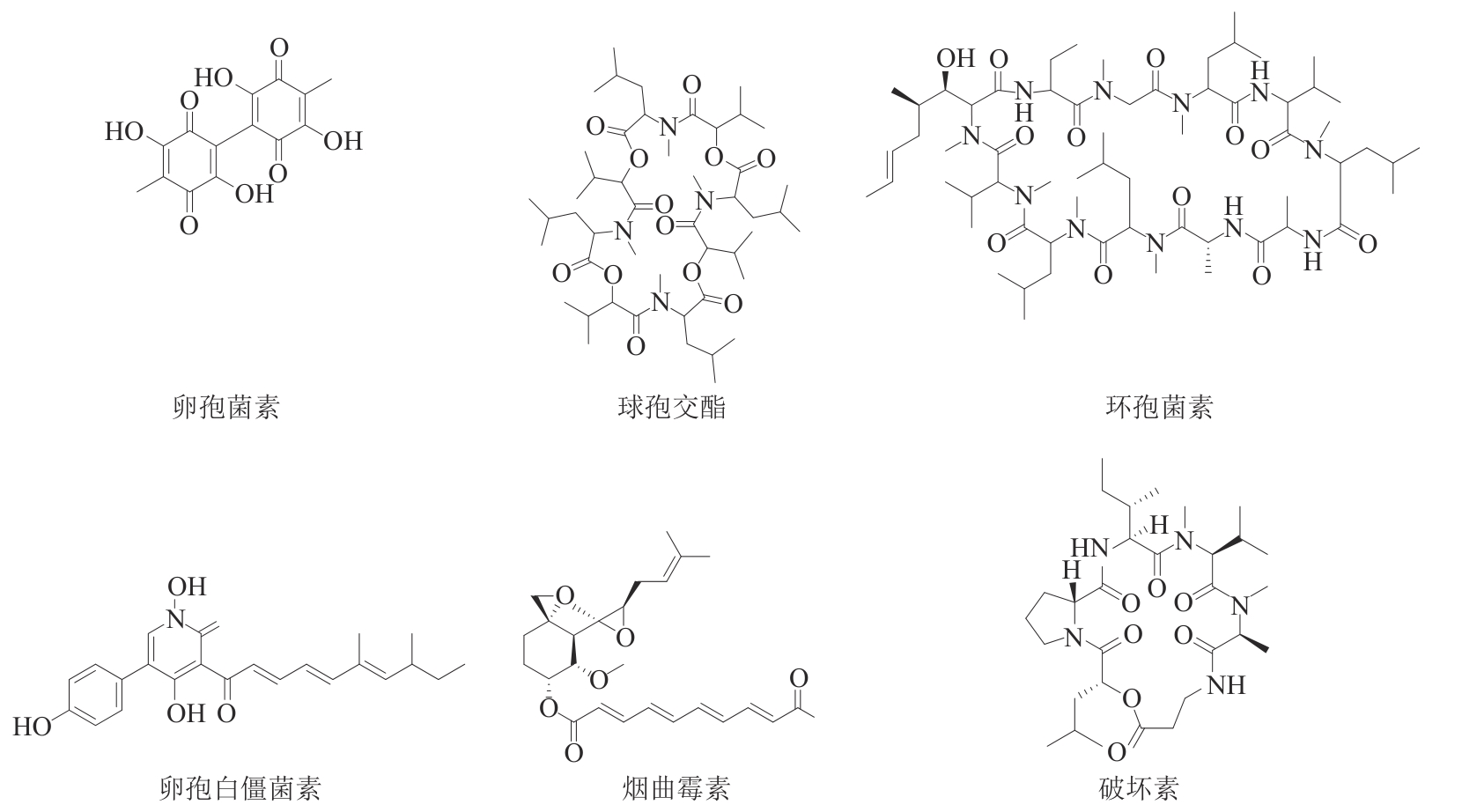
图1 常见的几种具有杀虫或抑菌等活性的微生物次级代谢产物
Fig. 1 Some secondary metabolites with insecticidal or bacteriostatic activities from microorganism
| 群体感应信号 | 信号分子结构 | 微生物 |
|---|---|---|
| AHLs | 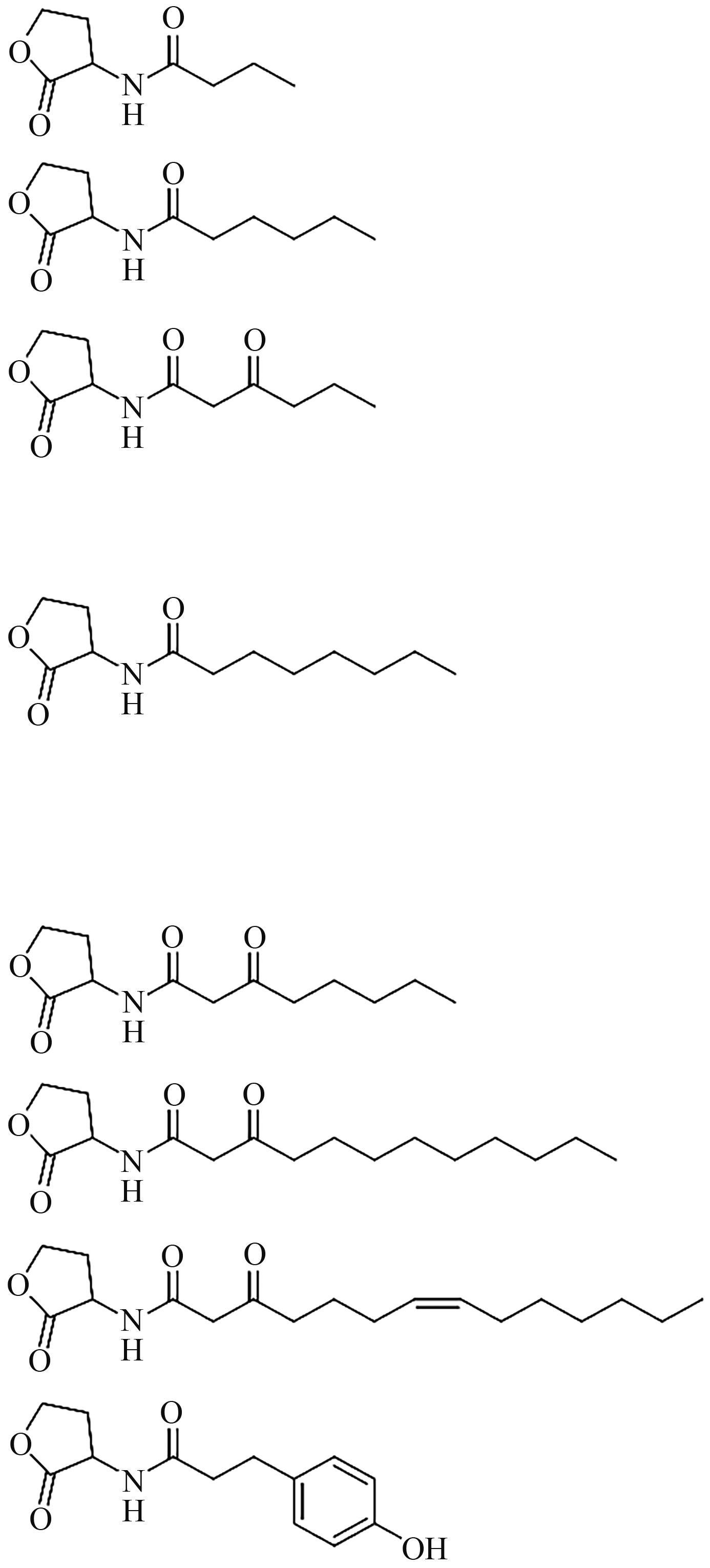 | Pesudomonas aeruginosa |
| Chromobacterium violaceum | ||
| Vibrio fischeri,Pectobacterium atrosepticum,Pectobacterium carotovorum,Pesudomonas syringae | ||
| Urkhoderia cepacian,Agrobacterium tumefaciens,Burkholderia glumae,Gloeothece sp.,Vibrio fischeri | ||
| Agrobacterium tumefaciens,Pectobacterium atrosepticum | ||
| Pesudomonas aeruginosa | ||
| Rhizobium leguminosarum,Vibrio harveyi | ||
| Rhodopesudomonas palustris | ||
| AIs | 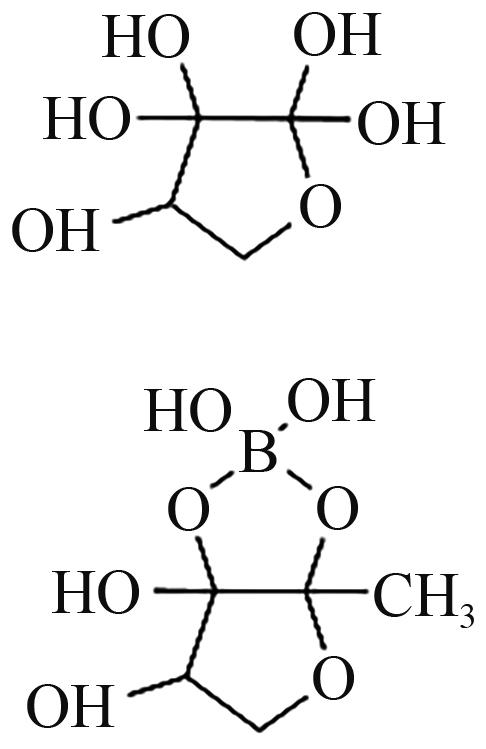 | Salmonella typhimurium |
| Vibrio harveyi | ||
| 扩散信号因子(diffusible signal factors,DSFs) | 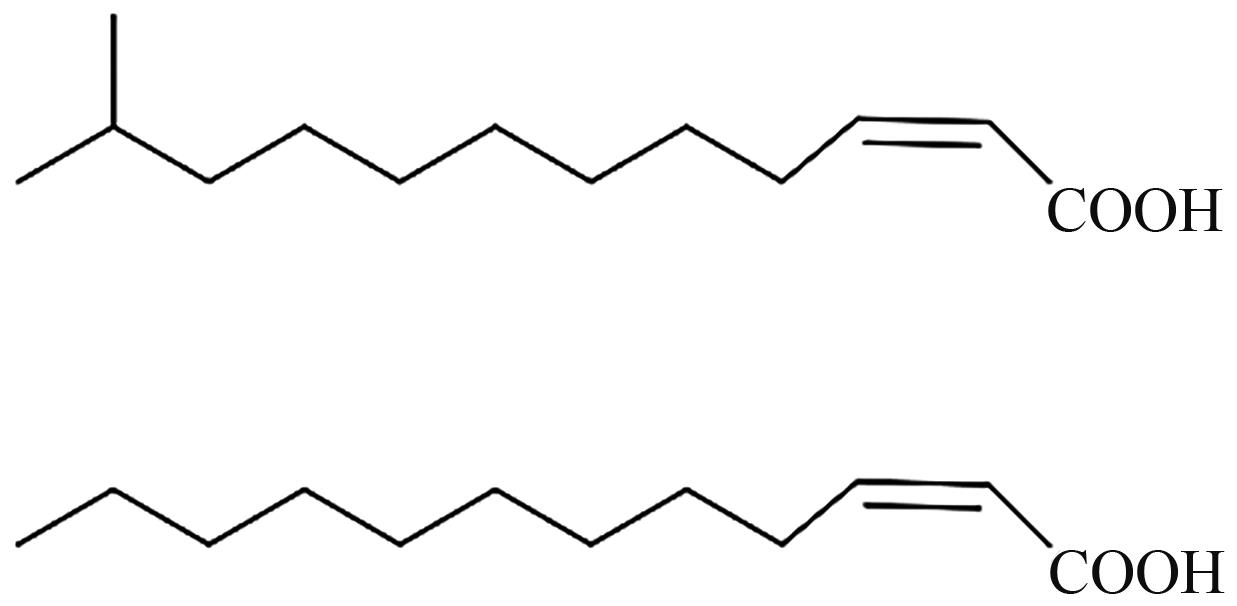 | Xanthomonas campestris |
| Xylella fastidiosa |
表1 代表性微生物群体感应信号及化学结构
Table 1 Chemical structures of some quorum-sensing signals and molecules present in some microorganisms
| 群体感应信号 | 信号分子结构 | 微生物 |
|---|---|---|
| AHLs | | Pesudomonas aeruginosa |
| Chromobacterium violaceum | ||
| Vibrio fischeri,Pectobacterium atrosepticum,Pectobacterium carotovorum,Pesudomonas syringae | ||
| Urkhoderia cepacian,Agrobacterium tumefaciens,Burkholderia glumae,Gloeothece sp.,Vibrio fischeri | ||
| Agrobacterium tumefaciens,Pectobacterium atrosepticum | ||
| Pesudomonas aeruginosa | ||
| Rhizobium leguminosarum,Vibrio harveyi | ||
| Rhodopesudomonas palustris | ||
| AIs | | Salmonella typhimurium |
| Vibrio harveyi | ||
| 扩散信号因子(diffusible signal factors,DSFs) | | Xanthomonas campestris |
| Xylella fastidiosa |
| [1] | 王博轩,陈佳鑫,蔡佳君,等.海洋链霉菌隐性次级代谢产物基因簇激活的研究进展[J].生物技术进展,2025,15(1):19-26. |
| WANG B X, CHEN J X, CAI J J, et al.. Research progress on metabolites of marine Streptomyces under the strategy of activating silencing genes[J]. Curr. Biotechnol., 2025, 15(1): 19-26. | |
| [2] | 黄艳,胡建伟,朱红惠.粘细菌次生代谢产物中大环类化合物的研究进展[J].生物技术进展,2012,2(4):263-269. |
| HUANG Y, HU J W, ZHU H H. Research progress in macrocyclic compounds of secondary metabolites from myxobacteria[J]. Curr. Biotechnol., 2012, 2(4): 263-269. | |
| [3] | 陈巧莉,黄杰,陈森瑜,等.海洋链霉菌次级代谢产物研究进展[J].生物技术进展,2023,13(6):844-852. |
| CHEN Q L, HUANG J, CHEN S Y, et al.. Research progress on secondary metabolites of marine Streptomyces [J]. Curr. Biotechnol., 2023, 13(6): 844-852. | |
| [4] | BLIN K, SHAW S, AUGUSTIJN H E, et al.. antiSMASH 7.0: new and improved predictions for detection, regulation, chemical structures and visualisation[J]. Nucleic Acids Res., 2023, 51(W1): 46-50 |
| [5] | ROZE L V, CHANDA A, LINZ J E. Compartmentalization and molecular traffic in secondary metabolism: a new understanding of established cellular processes[J]. Fungal Genet. Biol., 2011, 48(1): 35-48. |
| [6] | ZHANG L, FASOYIN O E, MOLNÁR I, et al.. Secondary metabolites from hypocrealean entomopathogenic fungi: novel bioactive compounds[J]. Nat. Prod. Rep., 2020, 37(9): 1181-1206. |
| [7] | PEDRINI N. Molecular interactions between entomopathogenic fungi (Hypocreales) and their insect host: perspectives from stressful cuticle and hemolymph battlefields and the potential of dual RNA sequencing for future studies[J]. Fungal Biol., 2018, 122(6): 538-545. |
| [8] | MACHELEIDT J, MATTERN D J, FISCHER J, et al.. Regulation and role of fungal secondary metabolites[J]. Annu. Rev. Genet., 2016, 50: 371-392. |
| [9] | KELLER N P. Translating biosynthetic gene clusters into fungal armor and weaponry[J]. Nat. Chem. Biol., 2015, 11(9): 671-677. |
| [10] | SCHERLACH K, HERTWECK C. Mediators of mutualistic microbe-microbe interactions[J]. Nat. Prod. Rep., 2018, 35(4): 303-308. |
| [11] | KELLER N P. Fungal secondary metabolism: regulation, function and drug discovery[J]. Nat. Rev. Microbiol., 2019, 17(3): 167-180. |
| [12] | ZEILINGER S, GUPTA V K, DAHMS T E S, et al.. Friends or foes? Emerging insights from fungal interactions with plants[J]. FEMS Microbiol. Rev., 2016, 40(2): 182-207. |
| [13] | MOLNÁR I, GIBSON D M, KRASNOFF S B. Secondary metabolites from entomopathogenic hypocrealean fungi[J]. Nat. Prod. Rep., 2010, 27(9): 1241-1275. |
| [14] | LIU B L, TZENG Y M. Development and applications of destruxins: a review[J]. Biotechnol. Adv., 2012, 30(6): 1242-1254. |
| [15] | RAPPLEYE C A, EISSENBERG L G, GOLDMAN W E. Histoplasma capsulatumα-(1, 3)-glucan blocks innate immune recognition by the β-glucan receptor[J]. Proc. Natl. Acad. Sci. USA, 2007, 104(4): 1366-1370. |
| [16] | AKOUMIANAKI T, KYRMIZI I, VALSECCHI I, et al.. Aspergillus cell wall melanin blocks LC3-associated phagocytosis to promote pathogenicity[J]. Cell Host Microbe, 2016, 19(1): 79-90. |
| [17] | POYNTNER C, MIRASTSCHIJSKI U, STERFLINGER K, et al.. Transcriptome study of an Exophiala dermatitidis PKS1 mutant on an ex vivo skin model: is melanin important for infection?[J/OL]. Front. Microbiol., 2018, 9: 1457[2025-09-27]. . |
| [18] | ZHAO Y, DING J, YUAN W, et al.. Production of a fungal furocoumarin by a polyketide synthase gene cluster confers the chemo-resistance of Neurospora crassa to the predation by fungivorous arthropods[J]. Environ. Microbiol., 2017, 19(10): 3920-3929. |
| [19] | SPRAKER J E, SANCHEZ L M, LOWE T M, et al.. Ralstonia solanacearum lipopeptide induces chlamydospore development in fungi and facilitates bacterial entry into fungal tissues[J]. ISME J., 2016, 10(9): 2317-2330. |
| [20] | FAN Y, LIU X, KEYHANI N O, et al.. Regulatory cascade and biological activity of Beauveria bassiana oosporein that limits bacterial growth after host death[J]. Proc. Natl. Acad. Sci. USA, 2017, 114(9): 1578-1586. |
| [21] | KHALID S, BACCILE J A, SPRAKER J E, et al.. NRPS-derived isoquinolines and lipopetides mediate antagonism between plant pathogenic fungi and bacteria[J]. ACS Chem. Biol., 2018, 13(1): 171-179. |
| [22] | OH D C, POULSEN M, CURRIE C R, et al.. Dentigerumycin: a bacterial mediator of an ant-fungus symbiosis[J]. Nat. Chem. Biol., 2009, 5(6): 391-393. |
| [23] | DHODARY B, SCHILG M, WIRTH R, et al.. Secondary metabolites from Escovopsis weberi and their role in attacking the garden fungus of leaf-cutting ants[J]. Chemistry, 2018, 24(17): 4445-4452. |
| [24] | TOMASZ A, HOTCHKISS R D. Regulation of the transformability of pneumococcal cultures by macromolecular cell products[J]. Proc. Natl. Acad. Sci. USA, 1964, 51(3): 480-487. |
| [25] | NEALSON K H, PLATT T, HASTINGS J W. Cellular control of the synthesis and activity of the bacterial luminescent system[J]. J. Bacteriol., 1970, 104(1): 313-322. |
| [26] | EBERHARD A, BURLINGAME A L, EBERHARD C, et al.. Structural identification of autoinducer of Photobacterium fischeri luciferase[J]. Biochemistry, 1981, 20(9): 2444-2449. |
| [27] | DONG Y H, WANG L Y, ZHANG L H. Quorum-quenching microbial infections: mechanisms and implications[J]. Philos. Trans. R. Soc. Lond. B Biol. Sci., 2007, 362(1483): 1201-1211. |
| [28] | PAPENFORT K, BASSLER B L. Quorum sensing signal-response systems in gram-negative bacteria[J]. Nat. Rev. Microbiol., 2016, 14(9): 576-588. |
| [29] | SCHUSTER M, LOSTROH C P, OGI T, et al.. Identification, timing, and signal specificity of Pseudomonas aeruginosa quorum-controlled genes: a transcriptome analysis[J]. J. Bacteriol., 2003, 185(7): 2066-2079. |
| [30] | WAGNER V E, BUSHNELL D, PASSADOR L, et al.. Microarray analysis of Pseudomonas aeruginosa quorum-sensing regulons: effects of growth phase and environment[J]. J. Bacteriol., 2003, 185(7): 2080-2095. |
| [31] | KATO J Y, FUNA N, WATANABE H, et al.. Biosynthesis of gamma-butyrolactone autoregulators that switch on secondary metabolism and morphological development in Streptomyces [J]. Proc. Natl. Acad. Sci. USA, 2007, 104(7): 2378-2383. |
| [32] | WANG J, WANG W, WANG L, et al.. A novel role of 'pseudo'γ-butyrolactone receptors in controlling γ-butyrolactone biosynthesis in Streptomyces [J]. Mol. Microbiol., 2011, 82(1): 236-250. |
| [33] | LEE J, WU J, DENG Y, et al.. A cell-cell communication signal integrates quorum sensing and stress response[J]. Nat. Chem. Biol., 2013, 9(5): 339-343. |
| [34] | CHEN H, FUJITA M, FENG Q, et al.. Tyrosol is a quorum-sensing molecule in Candida albicans [J]. Proc. Natl. Acad. Sci. USA, 2004, 101(14): 5048-5052. |
| [35] | CRUZ J M, DOMÍNGUEZ J M, DOMÍNGUEZ H, et al.. Dimorphic behaviour of Debaryomyces hansenii grown on barley bran acid hydrolyzates[J]. Biotechnol. Lett., 2000, 22(7): 605-610. |
| [36] | GORI K, MORTENSEN H D, ARNEBORG N, et al.. Ammonia production and its possible role as a mediator of communication for Debaryomyces hansenii and other cheese-relevant yeast species[J]. J. Dairy Sci., 2007, 90(11): 5032-5041. |
| [37] | HOMER C M, SUMMERS D K, GORANOV A I, et al.. Intracellular action of a secreted peptide required for fungal virulence[J]. Cell Host Microbe, 2016, 19(6): 849-864. |
| [38] | TIAN X, HE G J, HU P, et al.. Cryptococcus neoformans sexual reproduction is controlled by a quorum sensing peptide[J]. Nat. Microbiol., 2018, 3(6): 698-707. |
| [39] | RAINA S, ODELL M, KESHAVARZ T. Quorum sensing as a method for improving sclerotiorin production in Penicillium sclerotiorum [J]. J. Biotechnol., 2010, 148(2-3): 91-98. |
| [40] | JI G, BEAVIS R C, NOVICK R P. Cell density control of staphylococcal virulence mediated by an octapeptide pheromone[J]. Proc. Natl. Acad. Sci. USA, 1995, 92(26): 12055-12059. |
| [41] | MAYVILLE P, JI G, BEAVIS R, et al.. Structure-activity analysis of synthetic autoinducing thiolactone peptides from Staphylococcus aureus responsible for virulence[J]. Proc. Natl. Acad. Sci. USA, 1999, 96(4): 1218-1223. |
| [42] | TAKAHASHI M, IWASAKI S, KOBAYASHI H, et al.. Studies on macrocyclic lactone antibiotics. XI. anti-mitotic and anti-tubulin activity of new antitumor antibiotics, rhizoxin and its homologues[J]. J. Antibiot., 1987, 40(1): 66-72. |
| [43] | LINIGER M, NEUHAUS C M, ALTMANN K H. Ring-closing metathesis approaches towards the total synthesis of rhizoxins[J/OL]. Molecules, 2020, 25 (19): 4527[2025-09-12]. . |
| [44] | PARTIDA-MARTINEZ L P, HERTWECK C. Pathogenic fungus harbours endosymbiotic bacteria for toxin production[J]. Nature, 2005, 437(7060): 884-888. |
| [45] | SCHERLACH K, BUSCH B, LACKNER G, et al.. Symbiotic cooperation in the biosynthesis of a phytotoxin[J]. Angew. Chem. Int. Ed., 2012, 51(38): 9615-9618. |
| [46] | PARTIDA-MARTINEZ L P, DE LOOSS C F, ISHIDA K, et al.. Rhizonin, the first mycotoxin isolated from the zygomycota, is not a fungal metabolite but is produced by bacterial endosymbionts[J]. Appl. Environ. Microbiol., 2007, 73(3): 793-797. |
| [47] | FRASES S, CHASKES S, DADACHOVA E, et al.. Induction by Klebsiella aerogenes of a melanin-like pigment in Cryptococcus neoformans [J]. Appl. Environ. Microbiol., 2006, 72(2): 1542-1550. |
| [48] | CALVO A M, GARDNER H W, KELLER N P. Genetic connection between fatty acid metabolism and sporulation in Aspergillus nidulans [J]. J. Biol. Chem., 2001, 276(28): 25766-25774. |
| [49] | ZHENG H, KIM J, LIEW M, et al.. Redox metabolites signal polymicrobial biofilm development via the NapA oxidative stress cascade in Aspergillus [J]. Curr. Biol., 2015, 25(1): 29-37. |
| [50] | STUDT L, WIEMANN P, KLEIGREWE K, et al.. Biosynthesis of fusarubins accounts for pigmentation of Fusarium fujikuroi perithecia[J]. Appl. Environ. Microbiol., 2012, 78(12): 4468-4480. |
| [51] | SCHINDLER D, NOWROUSIAN M. The polyketide synthase gene pks4 is essential for sexual development and regulates fruiting body morphology in Sordaria macrospora [J]. Fungal Genet. Biol., 2014, 68: 48-59. |
| [52] | LEONARD K J. Virulence, temperature optima, and competitive abilities of isolines of races T and O of Bipolaris maydis [J/OL]. Phytopathology, 1977, 77(10): 1273[2025-09-27]. . |
| [53] | EISENMAN H C, CASADEVALL A. Synthesis and assembly of fungal melanin[J]. Appl. Microbiol. Biotechnol., 2012, 93(3): 931-940. |
| [54] | SHUKLA S, PARK J, KIM D H, et al.. Total phenolic content, antioxidant, tyrosinase and α-glucosidase inhibitory activities of water soluble extracts of noble starter culture Doenjang, a Korean fermented soybean sauce variety[J]. Food Control, 2016, 59: 854-861. |
| [55] | SINGARAVELAN N, GRISHKAN I, BEHARAV A, et al.. Adaptive melanin response of the soil fungus Aspergillus niger to UV radiation stress at "Evolution Canyon", Mount Carmel, Israel[J/OL]. PloS ONE, 2008, 3 (8): e2993[2025-09-12]. |
| [56] | JACOBSON E S. Pathogenic roles for fungal melanins[J]. Clin. Microbiol. Rev., 2000, 13(4): 708-717. |
| [57] | ZHAO L, KIM J C, PAIK M J, et al.. A multifunctional and possible skin UV protectant, (3R)-5-hydroxymellein, produced by an endolichenic fungus isolated from Parmotrema austrosinense [J/OL]. Molecules, 2016, 22 (1): 26[2025-09-12]. . |
| [58] | 潘少婷,王博轩,陈佳鑫,等.海洋真菌来源的聚酮类化合物研究进展[J].生物技术进展,2024,14(6):993-1003. |
| PAN S T, WANG B X, CHEN J X, et al.. Research progress on polyketides from marine fungi[J]. Curr. Biotechnol., 2024, 14(6): 993-1003. | |
| [59] | YANG X, CHEN Y, ZHANG L, et al.. Melanin precursors mediated adaption to temperature changes in fungus and animal via inhibition of lipid-mediated ferroptosis[J]. Sci. China Life Sci., 2023, 66(8): 1800-1817. |
| [60] | LI S, WANG D, HE J, et al.. Thermophilic fungus uses anthraquinones to modulate ferrous excretion, sterol-mediated endocytosis, and iron storage in response to cold stress[J/OL]. Microb. Biotechnol., 2024, 17 (9): e70002[2025-09-12]. . |
| [1] | 吕明杰, 贾贵瑛, 李欣然, 郭亚宁, 李凯, 陈锐, 李亮. 作物实质性派生品种制度与判定方法研究进展[J]. 生物技术进展, 2025, 15(5): 764-772. |
| [2] | 刘莹莹, 李若薇, 王艺霏. 核酸检测试剂冻干技术及其评价方法研究进展[J]. 生物技术进展, 2025, 15(5): 804-811. |
| [3] | 赵靖悦, 温娟, 张荣秋, 张建梅. 抗逆转录病毒治疗对HIV感染者血液微生物组的影响分析[J]. 生物技术进展, 2025, 15(5): 921-929. |
| [4] | 舒玲, 包明威. 胃肠道在肥胖相关性高血压中的作用及研究进展[J]. 生物技术进展, 2025, 15(3): 426-431. |
| [5] | 赵天源, 王菁, 王雨露, 袁春森, 陈薛钗. 甜菜碱神经保护作用的研究进展[J]. 生物技术进展, 2025, 15(2): 220-225. |
| [6] | 武小琪, 宫文静, 李国玉, 李昂, 王继华, 崔迪. 微生物发酵中药的盲区与挑战:从菌种选择到质量控制[J]. 生物技术进展, 2025, 15(2): 201-211. |
| [7] | 汪苏洁, 顾梦丽, 陶界锰, 童治军, 郭俊佳, 金静静, 徐梦晓, 孟利军, 张剑锋, 曹培健, 卢鹏. 烟草疫霉拮抗菌XC-29的分离鉴定及其全基因组序列分析[J]. 生物技术进展, 2024, 14(6): 1004-1015. |
| [8] | 吴焕振, 杨野, 崔秀明, 刘源. 农业生物防治技术的现状及改进策略[J]. 生物技术进展, 2024, 14(5): 697-711. |
| [9] | 吴必聪, 焦博, 张雨, 郭鑫, 张誉, 罗晓红, 代蕾, 王强. 料液比对搅拌型UHT核桃酸奶品质特性的影响[J]. 生物技术进展, 2024, 14(4): 640-648. |
| [10] | 徐畅, 刘天一, 刘文佳, 张俐敏, 莫继先. 微生物胞外多糖的来源、生物合成及功能研究进展[J]. 生物技术进展, 2024, 14(3): 368-376. |
| [11] | 张桐萃, 姚若瑾, 王超, 吴佳乐, 李函擎, 王申涛. 葛根素对小鼠非酒精性脂肪肝保护作用的研究[J]. 生物技术进展, 2024, 14(3): 480-485. |
| [12] | 孙佳琪, 郭嘉, 张闯, 柳青, 王梓钰, 夏涵超, 钱步轩, 赵方方, 王棋, 刘剑锋, 刘相国. 亚磷酸脱氢酶在基因工程改造微生物和植物中的研究进展[J]. 生物技术进展, 2024, 14(2): 173-181. |
| [13] | 李华, 徐兰举, 黄学亮, 王亚如, 刁立琴, 于月欣. 组织保护剂对病毒核酸与豚鼠皮肤组织样本RNA的保存效果探究[J]. 生物技术进展, 2024, 14(1): 60-65. |
| [14] | 陈巧莉, 黄杰, 陈森瑜, 潘少婷, 唐灵芝, 洪璇. 海洋链霉菌次级代谢产物研究进展[J]. 生物技术进展, 2023, 13(6): 844-852. |
| [15] | 刘容麟, 王宁, 李岩异, 张卫婷. 低温保存技术在生物制品中的研究进展[J]. 生物技术进展, 2023, 13(4): 547-555. |
| 阅读次数 | ||||||
|
全文 |
|
|||||
|
摘要 |
|
|||||
