

生物技术进展 ›› 2026, Vol. 16 ›› Issue (1): 131-139.DOI: 10.19586/j.2095-2341.2025.0114
张梦华1,2( ), 曲远航2, 王培培2(), 董丽红2, 张家齐2, 付一帆2, 杨威2, 郭庆港2, 李社增2, 魏学军1()
收稿日期:2025-08-27
接受日期:2025-10-24
出版日期:2026-01-25
发布日期:2026-02-12
通讯作者:
王培培,魏学军
作者简介:张梦华 E-mail: 2324224390@qq.com
基金资助:
Menghua ZHANG1,2(), Yuanhang QU2, Peipei WANG2(), Lihong DONG2, Jiaqi ZHANG2, Yifan FU2, Wei YANG2, Qinggang GUO2, Shezeng LI2, Xuejun WEI1()
Received:2025-08-27
Accepted:2025-10-24
Online:2026-01-25
Published:2026-02-12
Contact:
Peipei WANG,Xuejun WEI
摘要:
贝莱斯芽孢杆菌(Bacillus velezensis)SD23LJ1314是一株对辣椒疫病(Phytophthora capsici)具有很好防效的生防菌,其发酵水平的高低直接影响田间防治效果。为提升该菌株的发酵水平,以菌体量为核心评价指标,采用平板计数法对8种常用工业培养基的发酵菌量进行比较,筛选出了SD23LJ1314发酵的最适基础培养基。在此基础上,通过单因素实验对11种工业发酵常用碳源和9种氮源进行优化,确定最优碳氮源;进一步采用Plackett-Burman实验设计,并结合Box-Behnken设计与响应面分析法,对最优碳氮源的添加浓度进行了精确优化。结果表明,果糖与酵母粉分别为最优碳源和氮源组合,最终确定的发酵培养基配方为果糖10.75 g·L-1、酵母粉21.48 g·L-1、NaCl 5.65 g·L-1、MnSO4·7H2O 0.71 g·L-1。在此优化条件下,该菌株的发酵菌量达到9.32×10⁹ CFU·mL-1,与基础培养基相比,菌体产量显著提高了31.6%。通过系列实验,明确了贝莱斯芽孢杆菌SD23LJ1314的高效发酵工艺,所获得的优化培养基配方及相关技术参数,为该生防菌的规模化生产奠定了坚实基础,对推动其应用于辣椒疫病的生物防治制剂开发具有重要价值。
中图分类号:
张梦华, 曲远航, 王培培, 董丽红, 张家齐, 付一帆, 杨威, 郭庆港, 李社增, 魏学军. 生防贝莱斯芽孢杆菌SD23LJ1314发酵培养基的筛选及优化[J]. 生物技术进展, 2026, 16(1): 131-139.
Menghua ZHANG, Yuanhang QU, Peipei WANG, Lihong DONG, Jiaqi ZHANG, Yifan FU, Wei YANG, Qinggang GUO, Shezeng LI, Xuejun WEI. Screening and Optimization of Fermentation Medium for Biocontrol Bacillus velezensis SD23LJ1314[J]. Current Biotechnology, 2026, 16(1): 131-139.
| 培养基编号 | 配方 |
|---|---|
| 1 | 玉米粉30.0 g·L-1、葡萄糖2.0 g·L-1、黄豆粉20.0 g·L-1、麸皮5.0 g·L-1、 NaCl 4.0 g·L-1 |
| 2 | 玉米粉30.0 g·L-1、黄豆粉30.0 g·L-1、K2HPO4·3H2O 4.0 g·L-1、MgSO4·7H2O 1.5 g·L-1 |
| 3 | 葡萄糖10.0 g·L-1、黄豆粉10.0 g·L-1、NaCl 5.0 g·L-1、MnSO4·7H2O·0.6 g·L-1 |
| 4 | 蛋白胨10.0 g·L-1、酵母浸膏5.0 g·L-1、葡萄糖1.0 g·L-1、K2HPO4·3H2O 0.2 g·L-1、MgSO4·7H2O 0.2 g·L-1 |
| 5 | 玉米粉50.0 g·L-1、葡萄糖8.0 g·L-1、豆粕粉20.0 g·L-1、麸皮20.0 g·L-1、NaCl 4.0 g·L-1 |
| 6 | 玉米粉17.0 g·L-1、葡萄糖10.0 g·L-1、黄豆粉23.0 g·L-1、麦芽糖10.0 g·L-1、酵母浸膏5.0 g·L-1 |
| 7 | 玉米粉5.0 g·L-1、葡萄糖3.0 g·L-1、豆饼粉5.0 g·L-1、鱼粉3.0 g·L-1 |
| 8 | 玉米粉40.0 g·L-1、豆饼粉30.0 g·L-1、酵母粉5.0 g·L-1、K2HPO4·3H2O 5.0 g·L-1、MgSO4·7H2O 1.5 g·L-1 |
表1 芽孢杆菌基础培养基
Table 1 Basic mediums for Bacillus
| 培养基编号 | 配方 |
|---|---|
| 1 | 玉米粉30.0 g·L-1、葡萄糖2.0 g·L-1、黄豆粉20.0 g·L-1、麸皮5.0 g·L-1、 NaCl 4.0 g·L-1 |
| 2 | 玉米粉30.0 g·L-1、黄豆粉30.0 g·L-1、K2HPO4·3H2O 4.0 g·L-1、MgSO4·7H2O 1.5 g·L-1 |
| 3 | 葡萄糖10.0 g·L-1、黄豆粉10.0 g·L-1、NaCl 5.0 g·L-1、MnSO4·7H2O·0.6 g·L-1 |
| 4 | 蛋白胨10.0 g·L-1、酵母浸膏5.0 g·L-1、葡萄糖1.0 g·L-1、K2HPO4·3H2O 0.2 g·L-1、MgSO4·7H2O 0.2 g·L-1 |
| 5 | 玉米粉50.0 g·L-1、葡萄糖8.0 g·L-1、豆粕粉20.0 g·L-1、麸皮20.0 g·L-1、NaCl 4.0 g·L-1 |
| 6 | 玉米粉17.0 g·L-1、葡萄糖10.0 g·L-1、黄豆粉23.0 g·L-1、麦芽糖10.0 g·L-1、酵母浸膏5.0 g·L-1 |
| 7 | 玉米粉5.0 g·L-1、葡萄糖3.0 g·L-1、豆饼粉5.0 g·L-1、鱼粉3.0 g·L-1 |
| 8 | 玉米粉40.0 g·L-1、豆饼粉30.0 g·L-1、酵母粉5.0 g·L-1、K2HPO4·3H2O 5.0 g·L-1、MgSO4·7H2O 1.5 g·L-1 |
| 水平 | 因素/(g·L-1) | |||||
|---|---|---|---|---|---|---|
| A:果糖 | B:酵母粉 | C | D:NaCl | E:MnSO4·7H2O | F | |
| -1 | 10 | 10 | - | 5.0 | 0.6 | - |
| 1 | 15 | 15 | - | 7.5 | 0.9 | - |
表2 PB试验因素水平表
Table 2 Factors and levels of Plackett-Burman experiment
| 水平 | 因素/(g·L-1) | |||||
|---|---|---|---|---|---|---|
| A:果糖 | B:酵母粉 | C | D:NaCl | E:MnSO4·7H2O | F | |
| -1 | 10 | 10 | - | 5.0 | 0.6 | - |
| 1 | 15 | 15 | - | 7.5 | 0.9 | - |
| 水平 | 因素/(g·L-1) | |||
|---|---|---|---|---|
| A:果糖 | B:酵母粉 | C:NaCl | D:MnSO4·7H2O | |
| -1 | 10.0 | 15.00 | 5.00 | 0.60 |
| 0 | 12.5 | 18.75 | 6.25 | 0.75 |
| 1 | 15.0 | 22.50 | 7.50 | 0.90 |
表3 响应曲面试验因素水平表
Table 3 Factors and level design of Box-Behnken experiment
| 水平 | 因素/(g·L-1) | |||
|---|---|---|---|---|
| A:果糖 | B:酵母粉 | C:NaCl | D:MnSO4·7H2O | |
| -1 | 10.0 | 15.00 | 5.00 | 0.60 |
| 0 | 12.5 | 18.75 | 6.25 | 0.75 |
| 1 | 15.0 | 22.50 | 7.50 | 0.90 |
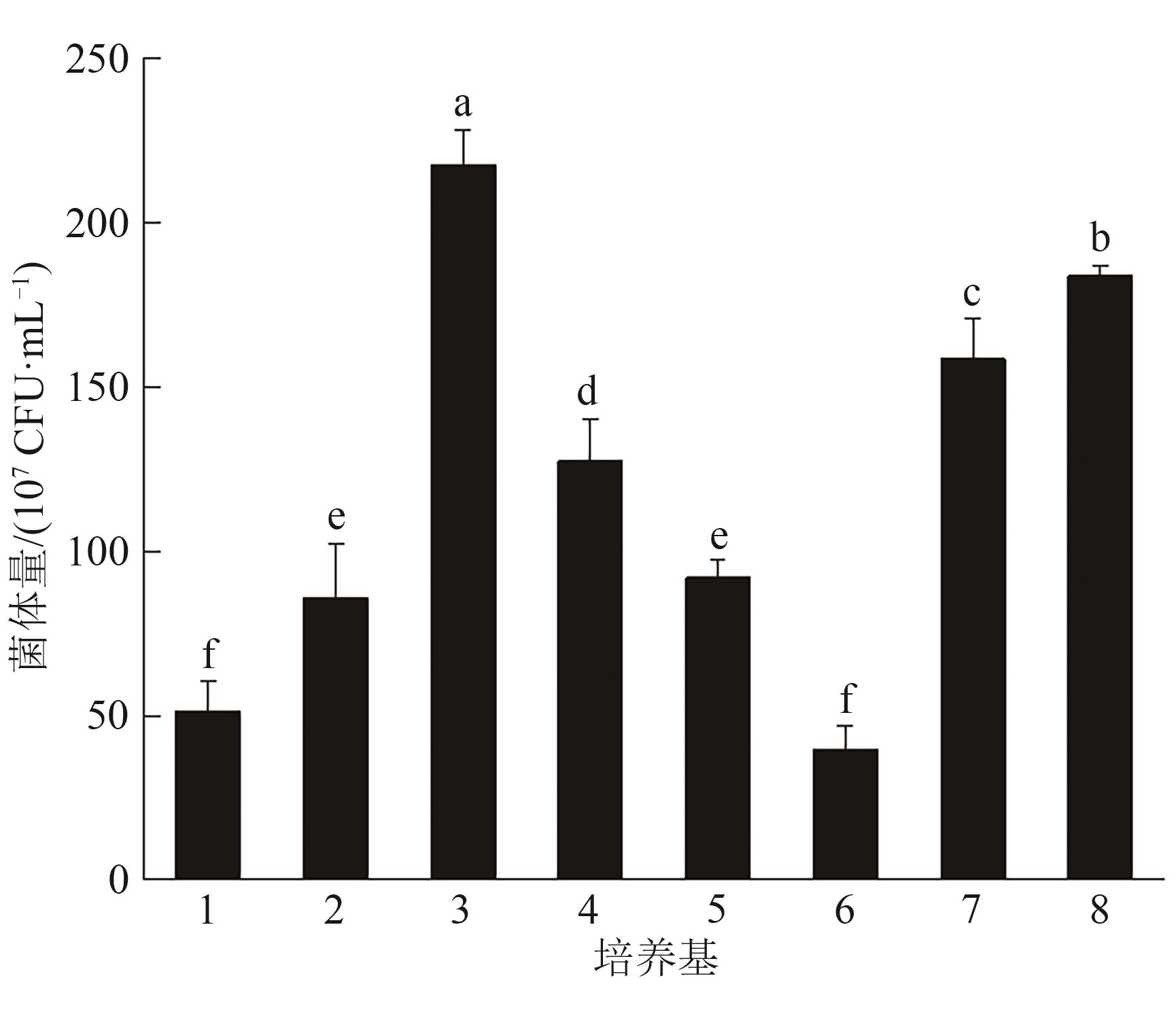
图1 不同基础培养基对贝莱斯芽孢杆菌SD23LJ1314菌株菌体量的影响注:图中培养基序号所对应培养基同表1,不同小写字母表示在P<0.05水平上具有统计学意义。
Fig. 1 Effect of different basic mediums on the thallus concentration of B. velezensis strain SD23LJ1314
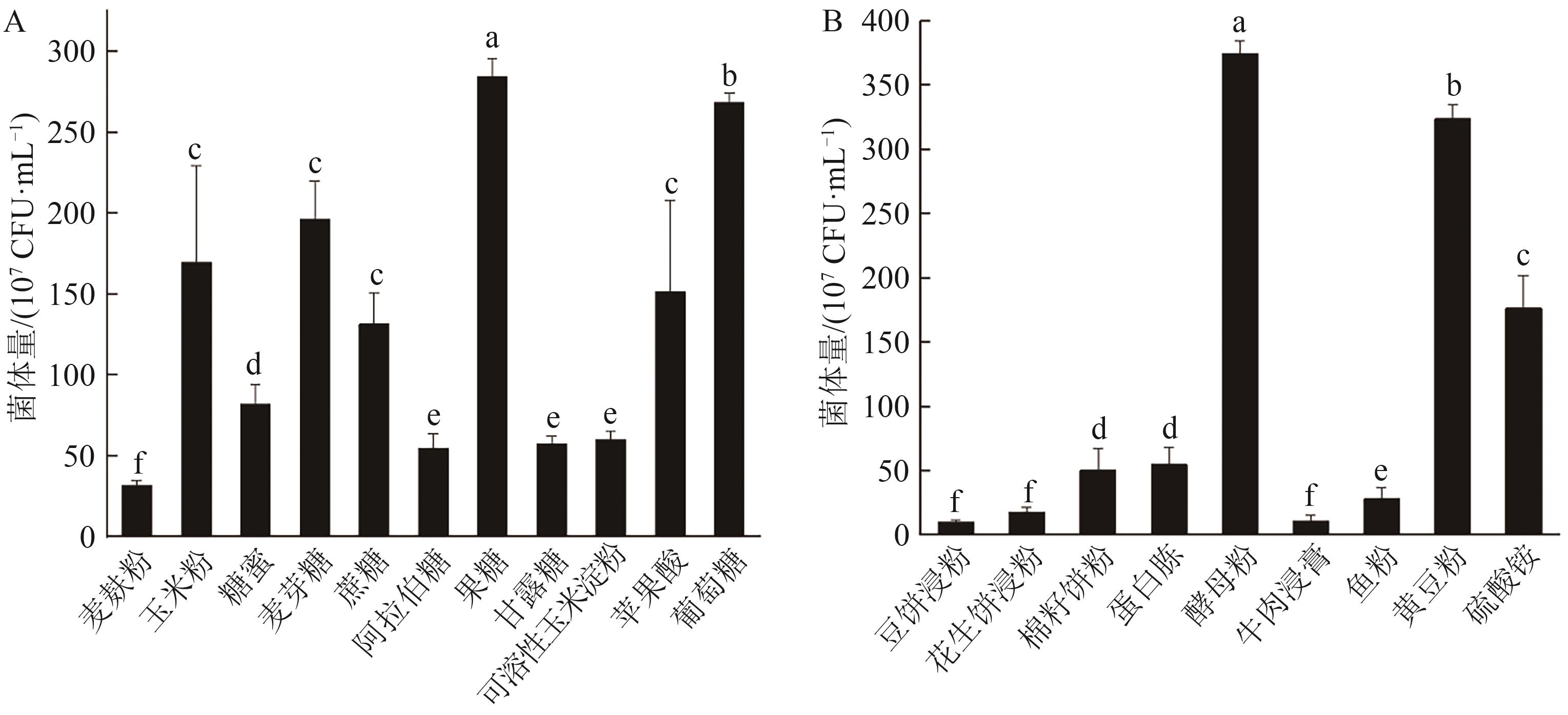
图2 不同碳源和氮源对贝莱斯芽孢杆菌SD23LJ1314菌体量的影响A:不同碳源对菌体量的影响;B:不同氮源对菌体量的影响。图中不同小写字母表示在P<0.05水平上具有统计学意义。
Fig. 2 Thallus concentrations of B. velezensis strain SD23LJ1314 in basic medium supplemented with different carbon and nitrogen sources
| 编号 | A:果糖/(g·L-1) | B:酵母粉/(g·L-1) | D:NaCl/(g·L-1) | E:MnSO4·7H2O/(g·L-1) | 菌体量/(107 CFU·mL-1) |
|---|---|---|---|---|---|
| 1 | 15.0 | 15.0 | 7.5 | 0.6 | 178.00 |
| 2 | 10.0 | 15.0 | 7.5 | 0.6 | 712.40 |
| 3 | 10.0 | 10.0 | 5.0 | 0.9 | 445.20 |
| 4 | 15.0 | 15.0 | 5.0 | 0.9 | 133.60 |
| 5 | 15.0 | 10.0 | 7.5 | 0.9 | 44.50 |
| 6 | 15.0 | 10.0 | 7.5 | 0.6 | 89.10 |
| 7 | 15.0 | 15.0 | 5.0 | 0.9 | 160.30 |
| 8 | 10.0 | 15.0 | 7.5 | 0.9 | 801.40 |
| 9 | 10.0 | 15.0 | 5.0 | 0.6 | 756.90 |
| 10 | 30.0 | 10.0 | 5.0 | 0.6 | 356.20 |
| 11 | 15.0 | 10.0 | 5.0 | 0.6 | 106.90 |
| 12 | 10.0 | 10.0 | 7.5 | 0.9 | 400.70 |
表4 Plackett-Burman试验设计与菌体量响应
Table 4 Experimental designs of Plackett-Burman and corresponding thallus concentrations
| 编号 | A:果糖/(g·L-1) | B:酵母粉/(g·L-1) | D:NaCl/(g·L-1) | E:MnSO4·7H2O/(g·L-1) | 菌体量/(107 CFU·mL-1) |
|---|---|---|---|---|---|
| 1 | 15.0 | 15.0 | 7.5 | 0.6 | 178.00 |
| 2 | 10.0 | 15.0 | 7.5 | 0.6 | 712.40 |
| 3 | 10.0 | 10.0 | 5.0 | 0.9 | 445.20 |
| 4 | 15.0 | 15.0 | 5.0 | 0.9 | 133.60 |
| 5 | 15.0 | 10.0 | 7.5 | 0.9 | 44.50 |
| 6 | 15.0 | 10.0 | 7.5 | 0.6 | 89.10 |
| 7 | 15.0 | 15.0 | 5.0 | 0.9 | 160.30 |
| 8 | 10.0 | 15.0 | 7.5 | 0.9 | 801.40 |
| 9 | 10.0 | 15.0 | 5.0 | 0.6 | 756.90 |
| 10 | 30.0 | 10.0 | 5.0 | 0.6 | 356.20 |
| 11 | 15.0 | 10.0 | 5.0 | 0.6 | 106.90 |
| 12 | 10.0 | 10.0 | 7.5 | 0.9 | 400.70 |
| 自由度 | 平方和 | 均方 | F | P | |
|---|---|---|---|---|---|
| 模型 | 4 | 785 619 | 196 405 | 23.06 | 0.001 |
| 线性 | 4 | 785 619 | 196 405 | 23.06 | 0.001 |
| 果糖(A) | 1 | 635 013 | 635 013 | 74.55 | 0.001 |
| 酵母粉(B) | 1 | 140 853 | 140 853 | 16.54 | 0.005 |
| NaCl(D) | 1 | 5 947 | 5 947 | 0.70 | 0.431 |
| MnSO4·7H2O(E) | 1 | 3 806 | 3 806 | 0.45 | 0.525 |
| 误差 | 2 | 59 629 | 8 518 | ||
| 合计 | 11 | 845 248 | |||
| R2=0.929 5 | R |
表5 PB试验方差分析结果
Table 5 Analysis of variance of results of Plackett-Burman experiment
| 自由度 | 平方和 | 均方 | F | P | |
|---|---|---|---|---|---|
| 模型 | 4 | 785 619 | 196 405 | 23.06 | 0.001 |
| 线性 | 4 | 785 619 | 196 405 | 23.06 | 0.001 |
| 果糖(A) | 1 | 635 013 | 635 013 | 74.55 | 0.001 |
| 酵母粉(B) | 1 | 140 853 | 140 853 | 16.54 | 0.005 |
| NaCl(D) | 1 | 5 947 | 5 947 | 0.70 | 0.431 |
| MnSO4·7H2O(E) | 1 | 3 806 | 3 806 | 0.45 | 0.525 |
| 误差 | 2 | 59 629 | 8 518 | ||
| 合计 | 11 | 845 248 | |||
| R2=0.929 5 | R |
| 编号 | 果糖/(g·L-1) | 酵母粉/(g·L-1) | NaCl/(g·L-1) | MnSO4·7H2O/(g·L-1) | 响应值/(107 CFU·mL-1) |
|---|---|---|---|---|---|
| 1 | 12.5 | 18.75 | 5.00 | 0.60 | 756.90 |
| 2 | 10.0 | 18.75 | 7.50 | 0.75 | 445.24 |
| 3 | 12.5 | 15.00 | 6.25 | 0.60 | 463.05 |
| 4 | 12.5 | 18.75 | 6.25 | 0.75 | 801.42 |
| 5 | 12.5 | 18.75 | 5.00 | 0.90 | 774.71 |
| 6 | 10.0 | 18.75 | 6.25 | 0.90 | 427.43 |
| 7 | 12.5 | 15.00 | 7.50 | 0.75 | 471.95 |
| 8 | 15.0 | 18.75 | 6.25 | 0.90 | 623.33 |
| 9 | 12.5 | 22.50 | 5.00 | 0.75 | 765.81 |
| 10 | 15.0 | 15.00 | 6.25 | 0.75 | 427.43 |
| 11 | 12.5 | 18.75 | 6.25 | 0.75 | 819.23 |
| 12 | 12.5 | 22.50 | 6.25 | 0.60 | 792.52 |
| 13 | 10.0 | 22.50 | 6.25 | 0.75 | 400.71 |
| 14 | 10.0 | 18.75 | 5.00 | 0.75 | 409.62 |
| 15 | 12.5 | 18.75 | 6.25 | 0.75 | 810.33 |
| 16 | 10.0 | 15.00 | 6.25 | 0.75 | 267.14 |
| 17 | 15.0 | 18.75 | 5.00 | 0.75 | 667.85 |
| 18 | 12.5 | 15.00 | 5.00 | 0.75 | 463.05 |
| 19 | 15.0 | 18.75 | 6.25 | 0.60 | 650.04 |
| 20 | 12.5 | 22.50 | 6.25 | 0.90 | 783.62 |
| 21 | 10.0 | 18.75 | 6.25 | 0.60 | 427.43 |
| 22 | 15.0 | 22.50 | 6.25 | 0.75 | 765.81 |
| 23 | 15.0 | 18.75 | 7.50 | 0.75 | 641.14 |
| 24 | 12.5 | 18.75 | 7.50 | 0.60 | 774.71 |
| 25 | 12.5 | 15.00 | 6.25 | 0.90 | 471.95 |
| 26 | 12.5 | 18.75 | 6.25 | 0.75 | 87.58 |
| 27 | 12.5 | 18.75 | 6.25 | 0.75 | 805.88 |
| 28 | 12.5 | 22.50 | 7.50 | 0.75 | 756.90 |
| 29 | 12.5 | 18.75 | 7.50 | 0.90 | 779.16 |
表6 响应曲面试验设计及结果
Table 6 The design and results of response surface experiment
| 编号 | 果糖/(g·L-1) | 酵母粉/(g·L-1) | NaCl/(g·L-1) | MnSO4·7H2O/(g·L-1) | 响应值/(107 CFU·mL-1) |
|---|---|---|---|---|---|
| 1 | 12.5 | 18.75 | 5.00 | 0.60 | 756.90 |
| 2 | 10.0 | 18.75 | 7.50 | 0.75 | 445.24 |
| 3 | 12.5 | 15.00 | 6.25 | 0.60 | 463.05 |
| 4 | 12.5 | 18.75 | 6.25 | 0.75 | 801.42 |
| 5 | 12.5 | 18.75 | 5.00 | 0.90 | 774.71 |
| 6 | 10.0 | 18.75 | 6.25 | 0.90 | 427.43 |
| 7 | 12.5 | 15.00 | 7.50 | 0.75 | 471.95 |
| 8 | 15.0 | 18.75 | 6.25 | 0.90 | 623.33 |
| 9 | 12.5 | 22.50 | 5.00 | 0.75 | 765.81 |
| 10 | 15.0 | 15.00 | 6.25 | 0.75 | 427.43 |
| 11 | 12.5 | 18.75 | 6.25 | 0.75 | 819.23 |
| 12 | 12.5 | 22.50 | 6.25 | 0.60 | 792.52 |
| 13 | 10.0 | 22.50 | 6.25 | 0.75 | 400.71 |
| 14 | 10.0 | 18.75 | 5.00 | 0.75 | 409.62 |
| 15 | 12.5 | 18.75 | 6.25 | 0.75 | 810.33 |
| 16 | 10.0 | 15.00 | 6.25 | 0.75 | 267.14 |
| 17 | 15.0 | 18.75 | 5.00 | 0.75 | 667.85 |
| 18 | 12.5 | 15.00 | 5.00 | 0.75 | 463.05 |
| 19 | 15.0 | 18.75 | 6.25 | 0.60 | 650.04 |
| 20 | 12.5 | 22.50 | 6.25 | 0.90 | 783.62 |
| 21 | 10.0 | 18.75 | 6.25 | 0.60 | 427.43 |
| 22 | 15.0 | 22.50 | 6.25 | 0.75 | 765.81 |
| 23 | 15.0 | 18.75 | 7.50 | 0.75 | 641.14 |
| 24 | 12.5 | 18.75 | 7.50 | 0.60 | 774.71 |
| 25 | 12.5 | 15.00 | 6.25 | 0.90 | 471.95 |
| 26 | 12.5 | 18.75 | 6.25 | 0.75 | 87.58 |
| 27 | 12.5 | 18.75 | 6.25 | 0.75 | 805.88 |
| 28 | 12.5 | 22.50 | 7.50 | 0.75 | 756.90 |
| 29 | 12.5 | 18.75 | 7.50 | 0.90 | 779.16 |
| 自由度 | 平方和 | 均方 | F | P | |
|---|---|---|---|---|---|
| R2=0.982 9 | R | ||||
| 模型 | 14 | 1 045 707.11 | 74 693.37 | 56.774 05 | 7.29E-10 |
| A-果糖 | 1 | 205 408.33 | 205 408.33 | 156.129 8 | 5.56E-09 |
| B-酵母粉 | 1 | 304 008.33 | 304 008.33 | 231.075 2 | 4.27E-10 |
| C-NaCl | 1 | 102.08 | 102.08 | 0.077 593 | 0.784 658 |
| D-MnSO4·7H2O | 1 | 2.08 | 2.08 | 0.001 584 | 0.968 82 |
| AB | 1 | 13 225.00 | 13 225.00 | 10.052 26 | 0.006 808 |
| AC | 1 | 1 225.00 | 1 225.00 | 0.931 116 | 0.350 946 |
| AD | 1 | 225 | 225 | 0.171 021 | 0.685 471 |
| BC | 1 | 100 | 100 | 0.076 01 | 0.786 808 |
| BD | 1 | 100 | 100 | 0.076 01 | 0.786 808 |
| C | 1 | 56.25 | 56.25 | 0.042 755 | 0.839 164 |
| A2 | 1 | 425 236.77 | 425 236.77 | 323.220 3 | 4.54E-11 |
| B2 | 1 | 168 223.25 | 168 223.25 | 127.865 7 | 2E-08 |
| C2 | 1 | 9 325.45 | 9 325.45 | 7.088 228 | 0.018 575 |
| D2 | 1 | 8 136.26 | 8 136.26 | 6.184 332 | 0.026 123 |
| 误差 | 14 | 18 418.75 | 1 315.63 | ||
| 纯误差 | 4 | 250 | 62.5 | ||
| 合计 | 28 | 2 199 749.66 | 1 211 445.30 | ||
表7 Box-Behnken试验方差分析结果
Table 7 Analysis of variance of the results of Box-Behnken experiment
| 自由度 | 平方和 | 均方 | F | P | |
|---|---|---|---|---|---|
| R2=0.982 9 | R | ||||
| 模型 | 14 | 1 045 707.11 | 74 693.37 | 56.774 05 | 7.29E-10 |
| A-果糖 | 1 | 205 408.33 | 205 408.33 | 156.129 8 | 5.56E-09 |
| B-酵母粉 | 1 | 304 008.33 | 304 008.33 | 231.075 2 | 4.27E-10 |
| C-NaCl | 1 | 102.08 | 102.08 | 0.077 593 | 0.784 658 |
| D-MnSO4·7H2O | 1 | 2.08 | 2.08 | 0.001 584 | 0.968 82 |
| AB | 1 | 13 225.00 | 13 225.00 | 10.052 26 | 0.006 808 |
| AC | 1 | 1 225.00 | 1 225.00 | 0.931 116 | 0.350 946 |
| AD | 1 | 225 | 225 | 0.171 021 | 0.685 471 |
| BC | 1 | 100 | 100 | 0.076 01 | 0.786 808 |
| BD | 1 | 100 | 100 | 0.076 01 | 0.786 808 |
| C | 1 | 56.25 | 56.25 | 0.042 755 | 0.839 164 |
| A2 | 1 | 425 236.77 | 425 236.77 | 323.220 3 | 4.54E-11 |
| B2 | 1 | 168 223.25 | 168 223.25 | 127.865 7 | 2E-08 |
| C2 | 1 | 9 325.45 | 9 325.45 | 7.088 228 | 0.018 575 |
| D2 | 1 | 8 136.26 | 8 136.26 | 6.184 332 | 0.026 123 |
| 误差 | 14 | 18 418.75 | 1 315.63 | ||
| 纯误差 | 4 | 250 | 62.5 | ||
| 合计 | 28 | 2 199 749.66 | 1 211 445.30 | ||
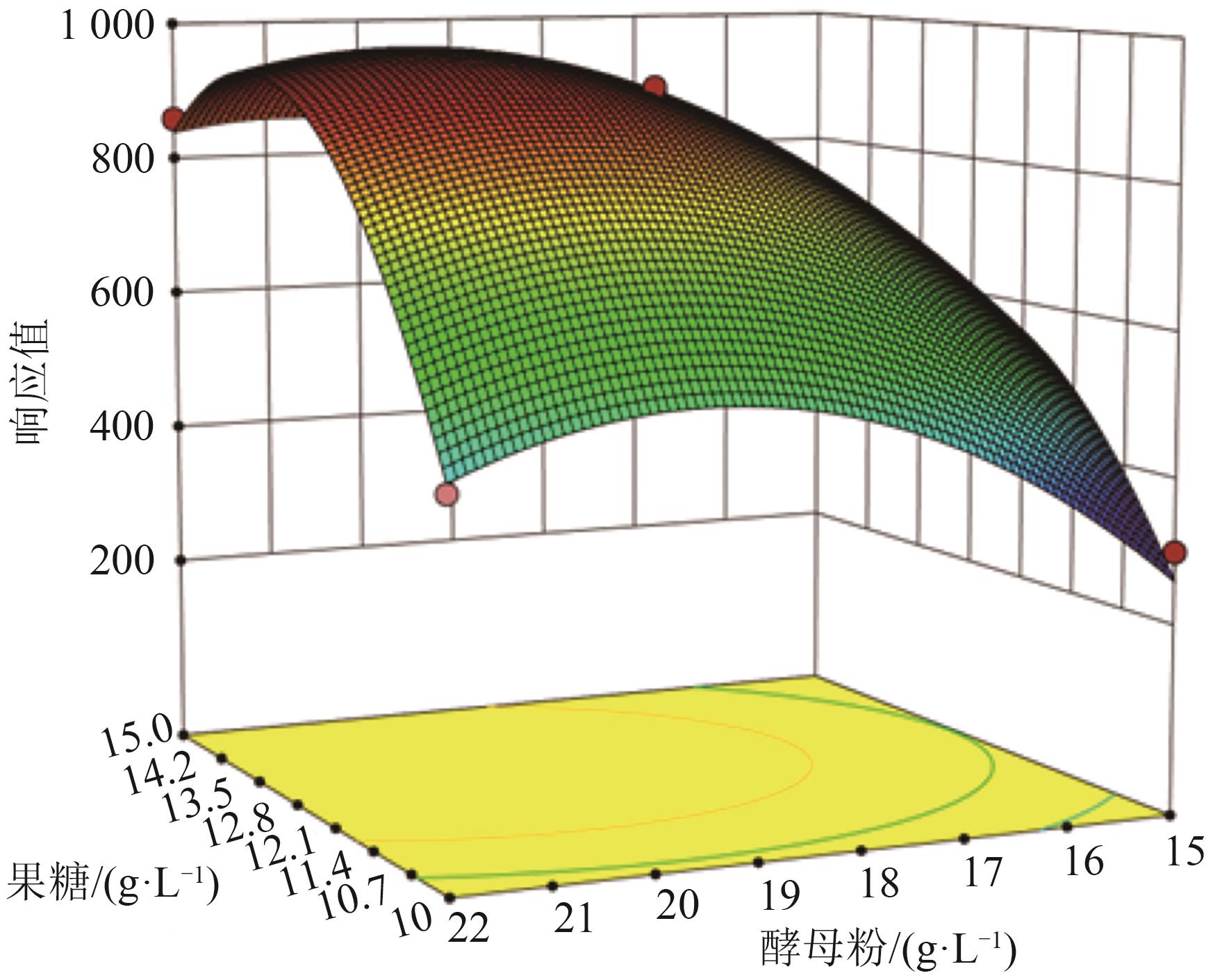
图3 果糖和酵母粉响应曲面图
Fig. 3 Fructose and yeast powder response surface chart
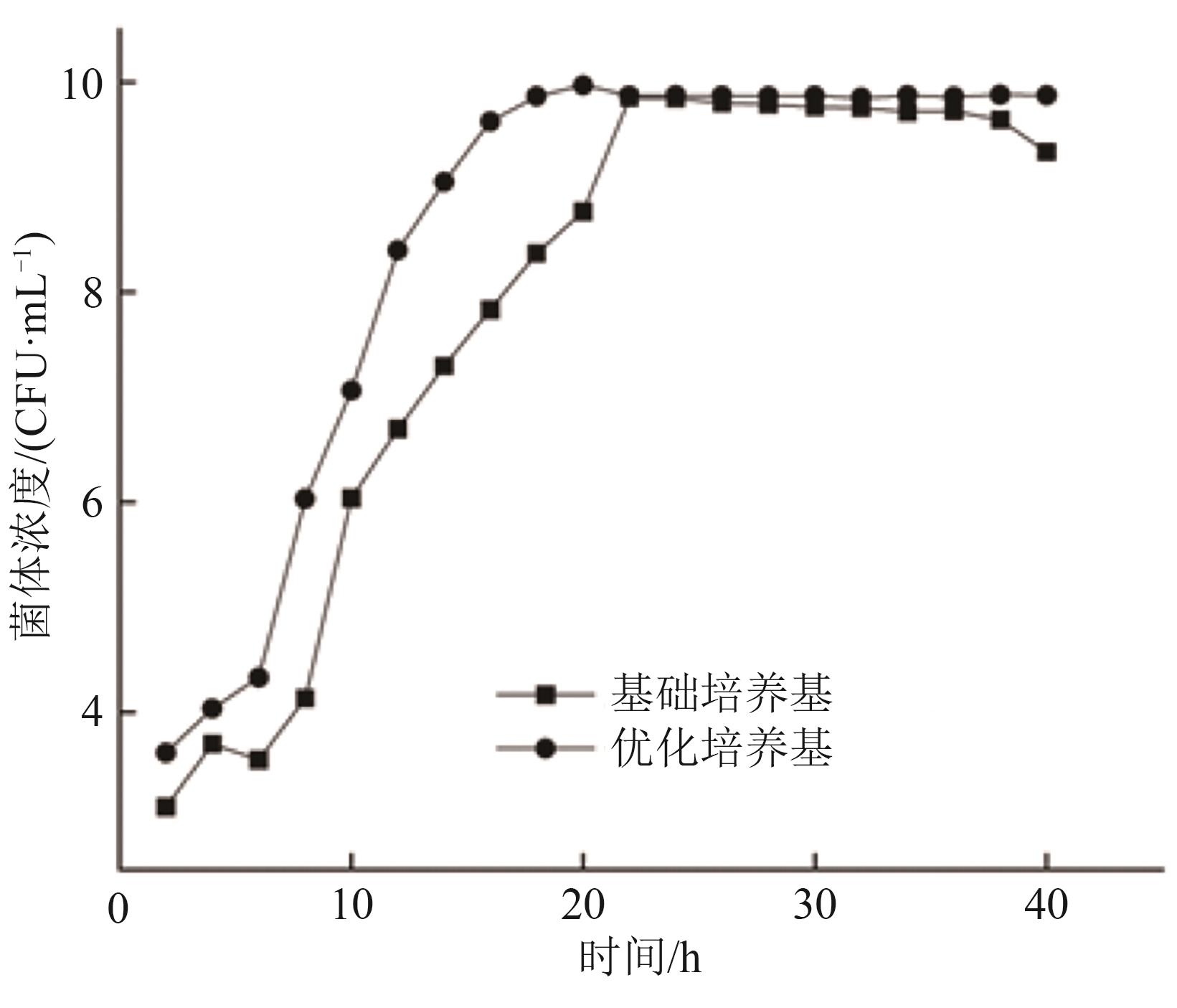
图4 贝莱斯芽孢杆菌SD23LJ1314菌株的生长曲线
Fig. 4 Growth curve of B. velezensis SD23LJ1314
| [1] | 张慧,许宁,曹丽茹,等.我国微生物农药的研发与应用研究进展[J].农药学学报,2023,25(4):769-778. |
| ZHANG H, XU N, CAO L R, et al.. Review on research and utilization of microbial pesticides in China[J]. Chin. J. Pestic. Sci., 2023, 25(4): 769-778. | |
| [2] | 李铮,王艳,晋玲,等.短小芽孢杆菌DST27发酵培养基及发酵条件的优化[J].农药,2024,63(7):500-506. |
| LI Z, WANG Y, JIN L, et al.. Optimization of fermentation medium and conditions for Bacillus pumilus DST27[J]. Agrochemicals, 2024, 63(7): 500-506. | |
| [3] | 孙昊,董素芬,李雪,等.小麦茎基腐病生防菌P61的分离鉴定及发酵条件筛选[J].植物保护学报,2025,52(2):366-378. |
| SUN H, DONG S F, LI X, et al.. Isolation and identification of biocontrol bacterium P61 against wheat stem rot and screening of fermentation conditions[J]. J. Plant Prot., 2025, 52(2): 366-378. | |
| [4] | ZENG X, WANG H, HE L, et al.. Medium optimization of carbon and nitrogen sources for the production of eucalyptene A and xyloketal A from Xylaria sp. 2508 using response surface methodology[J]. Process. Biochem., 2006, 41(2): 293-298. |
| [5] | RAO Y K, TSAY K J, WU W S, et al.. Medium optimization of carbon and nitrogen sources for the production of spores from Bacillus amyloliquefaciens B128 using response surface methodology[J]. Process. Biochem., 2007, 42(4): 535-541. |
| [6] | 孙松,韩慧敏,高玉平,等.解淀粉芽胞杆菌CY3的分离鉴定、发酵条件筛选及其对烟草镰刀菌根腐病的防治效果评价[J].中国生物防治学报,2025,41(4):916-926. |
| SUN S, HAN H M, GAO Y P, et al.. Screening, identification and fermentation condition optimization of Bacillus amyloliquefaciens CY3 and its control effects on Fusarium root rot of tobacco[J]. Chin. J. Biol. Control, 2025, 41(4): 916-926. | |
| [7] | 张荣胜,黄如宇,乔俊卿,等.贝莱斯芽胞杆菌Jt84高产伊枯草菌素的发酵优化[J].中国生物防治学报,2025,41(1):80-90. |
| ZHANG R S, HUANG R Y, QIAO J Q, et al.. Optimization of fermentation for iturin high production of Bacillus velezensis Jt84[J]. Chin. J. Biol. Control, 2025, 41(1): 80-90. | |
| [8] | 高晓晶,张祝兰,林仙菊,等.基于响应面法优化环孢菌素A发酵工艺的研究[J].生物技术进展,2025,15(3):518-525. |
| GAO X J, ZHANG Z L, LIN X J, et al.. Optimization of fermentation culture conditions for cyclosporine a using response surface method[J]. Curr. Biotechnol., 2025, 15(3): 518-525. | |
| [9] | 盖宏宇.辣椒疫病生防菌和辣椒促生菌的筛选及应用[D].保定:河北农业大学,2024. |
| [10] | YASEEN Y, GANCEL F, BÉCHET M, et al.. Study of the correlation between fengycin promoter expression and its production by Bacillus subtilis under different culture conditions and the impact on surfactin production[J]. Arch. Microbiol., 2017, 199(10): 1371-1382. |
| [11] | 刘春红,张丽霞,李燕,等.枯草芽胞杆菌B201产芽孢培养基优化[J].中国生物防治学报,2016,32(5):650-656. |
| LIU C H, ZHANG L X, LI Y, et al.. Optimization of sporulation medium of Bacillus subtilis B201[J]. Chin. J. Biol. Control, 2016, 32(5): 650-656. | |
| [12] | 张丽霞.枯草芽孢杆菌B908发酵工艺优化研究[D].呼和浩特:内蒙古农业大学,2006. |
| [13] | JIN H, ZHANG X, LI K, et al.. Direct bio-utilization of untreated rapeseed meal for effective iturin A production by Bacillus subtilis in submerged fermentation[J/OL]. PLoS One, 2014, 9(10): e111171[2025-12-21]. . |
| [14] | 卢彩鸽,董红平,张殿朋,等.解淀粉芽胞杆菌MH71摇瓶发酵培养基及发酵条件优化[J].中国生物防治学报,2015,31(3):369-377. |
| LU C G, DONG H P, ZHANG D P, et al.. Optimization of fermentation medium components and cultural conditions for Bacillus amyloliquefaciens MH71 in flask[J]. Chin. J. Biol. Control, 2015, 31(3): 369-377. | |
| [15] | 朱峰,王继春,田成丽,等.枯草芽胞杆菌GB519发酵液菌体数量和芽胞率检测方法的比较[J].东北农业科学,2019,44(6):49-52. |
| ZHU F, WANG J C, TIAN C L, et al.. Methods comparison for detecting sporular amount and sporulation efficiency of Bacillus subtilis GB519[J]. J. Northeast. Agric. Sci., 2019, 44(6): 49-52. | |
| [16] | 竺利红,邱海萍,项慧娟,等.山核桃内生细菌ZL34的鉴定、抑菌活性及发酵培养基优化[J].中国生物防治学报,2024,40(4):894-904. |
| ZHU L H, QIU H P, XIANG H J, et al.. Identification, antimicrobial activity, and optimization of fermentation medium of endophytic bacterium strain ZL34 from Carya cathayensis [J]. Chin. J. Biol. Control, 2024, 40(4): 894-904. | |
| [17] | 曲远航,郭庆港,李社增,等.生防枯草芽孢杆菌HMB19198发酵培养基的筛选及优化[J].农药学学报,2022,24(3):509-519. |
| QU Y H, GUO Q G, LI S Z, et al.. Screening and optimization of Bacillus subtilis HMB19198 fermentation medium[J]. Chin. J. Pestic. Sci., 2022, 24(3): 509-519. | |
| [18] | 刘芳,权婷婷,王开梅,等.响应面法优化梨黑斑病生防链霉菌SZF-179发酵培养基[J].中国生物防治学报,2024,40(4):936-947. |
| LIU F, QUAN T T, WANG K M, et al.. Optimization of fermentation media through response surface methodology for Streptomyces odonnellii SZF-179 against Alternaria alternata [J]. Chin. J. Biol. Control, 2024, 40(4): 936-947. | |
| [19] | 杨昌发,唐彩艳,孙冰,等.橘绿木霉GF-11发酵刺梨渣的响应面法优化[J].中国生物防治学报,2024,40(2):448-457. |
| YANG C F, TANG C Y, SUN B, et al.. Optimization of solid-state fermentation process of Trichoderma citrinoviride GF-11 on Rosa roxburghii tratt pomace by response surface methodology[J]. Chin. J. Biol. Control, 2024, 40(2): 448-457. | |
| [20] | 乔俊卿,孙凯,刘永锋,等.芽胞杆菌工程菌株B9BD产表面活性素发酵培养基优化[J].中国生物防治学报,2022,38(2):383-392. |
| QIAO J Q, SUN K, LIU Y F, et al.. Optimization of fermentation medium for the production of surfactin by engineered strain B9BD of Bacillus subtilis [J]. Chin. J. Biol. Control, 2022, 38(2): 383-392. | |
| [21] | 韩德权,王莘.微生物发酵工艺学原理[M].北京:化学工业出版社,2013. |
| [22] | 范寒雪,邹世杰,章圣龙,等.嗜冷假单胞菌BYAU-6的分离及低温秸秆降解能力解析[J].微生物学报,2025,65(8):3273-3286. |
| FAN H X, ZOU S J, ZHANG S L, et al.. Isolation of Pseudomonas psychrophila BYAU-6 capable of degrading straw at low temperatures[J]. Acta Microbiol. Sin., 2025, 65(8): 3273-3286. | |
| [23] | 宋琦,宋晓雅,焦永鑫,等.防御假单胞菌FD6对番茄灰霉病菌的抑菌活性及其培养条件优化[J].园艺学报,2025,52(9):2545-2553. |
| SONG Q, SONG X Y, JIAO Y X, et al.. Antifungal activity of Pseudomonas protegens FD6 against Botrytis cinerea and optimization of its culture conditions[J]. Acta Hortic. Sin., 2025, 52(9): 2545-2553. | |
| [24] | ABD-ELHALEM B T, EL-SAWY M, GAMAL R F, et al.. Production of amylases from Bacillus amyloliquefaciens under submerged fermentation using some agro-industrial by-products[J]. Ann. Agric. Sci., 2015, 60(2): 193-202. |
| [25] | 刘悦,翟乾行,刘雪微,等.降解莠去津和乙草胺的原生质体融合菌株RH-92的构建及其培养条件优化[J].农药学学报,2025,27(3):424-434. |
| LIU Y, ZHAI Q H, LIU X W, et al.. Construction of protoplast fusion strain RH-92 for degrading atrazine and acetochlor and optimization of its culture conditions[J]. Chin. J. Pestic. Sci., 2025, 27(3): 424-434. |
| [1] | 王博文, 王金星, 邱成尧, 秦庆宪, 王菊香, 姚博, 李红艳, 谭官鑫, 杨应伟, 姬广海. 贝莱斯芽孢杆菌联合含钙土壤调理剂对烟草青枯病的防治[J]. 生物技术进展, 2024, 14(5): 839-847. |
| [2] | 段平成, 郑凯, 张宇宏, 张国丽, 孙国清. 拮抗菌BJB01抗黄萎病的抗病效果评价[J]. 生物技术进展, 2023, 13(6): 913-918. |
| [3] | 张立华, 王一樊, 张旭阳, 刘千盈, 高思琦, 焦健. 响应面分析法优化酶法提取红景天苷的工艺研究[J]. 生物技术进展, 2023, 13(3): 441-448. |
| [4] | 王英燕,陈文娜,贾存江,房树标,秦斌,朱正乔. 发酵法生产制备番茄红素的工艺研究[J]. 生物技术进展, 2020, 10(3): 320-327. |
| [5] | 石江传,石佳,于明晓,赵伟学,徐昊,徐磊. 响应面法优化火麻仁油微胶囊喷雾干燥工艺的研究[J]. 生物技术进展, 2020, 10(2): 198-204. |
| [6] | 赵彭年,杨德玉,王加友,丁一凡,安鹏,王远. 一株亚硝化细菌的分离鉴定及其发酵工艺优化[J]. 生物技术进展, 2019, 9(1): 69-77. |
| [7] | 胡琴汉,汪伟,罗应彪,杜芳,仰榴青,赵婷. 响应面分析法优化超声波辅助酶法提取南五味子多糖工艺的研究[J]. 生物技术进展, 2018, 8(4): 351-357. |
| [8] | 郑大恒,王未,李倩,陈瑶,张伟杰,赵婷4,仰榴青4. 响应面法优化玫瑰茄粗多糖提取工艺及其抗氧化活性的研究[J]. 生物技术进展, 2018, 8(2): 161-168. |
| [9] | 郑威,周迎红,刘金龙4. 拟青霉A20140822发酵生产虫草素工艺的响应面优化研究[J]. 生物技术进展, 2017, 7(6): 625-631. |
| [10] | 赵倩彦,姚允聪,闫静,姬谦龙. 果实发酵液作为肥料的功效研究进展[J]. 生物技术进展, 2017, 7(2): 135-138. |
| [11] | 赵鹤飞,夏泉鸣,邱勇隽,王耀松,蒋丽华,赵黎明 . 生物基尼龙聚丁内酰胺单体γ-氨基丁酸的纯化工艺研究[J]. 生物技术进展, 2014, 4(5): 368-372. |
| 阅读次数 | ||||||
|
全文 |
|
|||||
|
摘要 |
|
|||||
