

生物技术进展 ›› 2026, Vol. 16 ›› Issue (3): 454-484.DOI: 10.19586/j.2095-2341.2026.0087
王晓雨1( ), 崔林1, 刘淼2, 罗会颖1, 姚斌1, 王晓璐1()
收稿日期:2026-04-02
接受日期:2026-04-17
出版日期:2026-05-25
发布日期:2026-07-14
通信作者:
王晓璐
作者简介:王晓雨 E-mail: wxy121502@126.com;
基金资助:
Xiaoyu WANG1(), Lin CUI1, Miao LIU2, Huiying LUO1, Bin YAO1, Xiaolu WANG1()
Received:2026-04-02
Accepted:2026-04-17
Online:2026-05-25
Published:2026-07-14
Contact:
Xiaolu WANG
摘要:
化石能源的大量使用导致大气中的二氧化碳(CO2)浓度不断升高,所引发的全球温室效应乃至粮食危机威胁着人类社会的繁荣稳定。随着合成生物学技术的发展,利用微生物细胞工厂将CO2转化为高值产品不但有望缓解气候恶化,还能够产生经济效益。首先介绍了自养和异养微生物的碳固定途径和策略以及用于CO2资源化利用的底盘微生物菌株。而后,总结了以CO2为原料的产物合成领域的研究进展。在此基础上,进一步归纳了提升产物产量的代谢工程手段及发酵技术。最后对CO2资源化利用研究领域的未来发展趋势进行了展望。综述期望为推动基于微生物细胞工厂的CO2转化技术的发展助力,也为以CO2为原料的工业产品制造研究提供策略及技术参考。
中图分类号:
王晓雨, 崔林, 刘淼, 罗会颖, 姚斌, 王晓璐. 基于微生物细胞工厂的二氧化碳资源化利用研究进展[J]. 生物技术进展, 2026, 16(3): 454-484.
Xiaoyu WANG, Lin CUI, Miao LIU, Huiying LUO, Bin YAO, Xiaolu WANG. Research Advances on the Resource Utilization of Carbon Dioxide Based on Microbial Cell Factories[J]. Current Biotechnology, 2026, 16(3): 454-484.

图1 天然好氧固碳途径
Fig. 1 Natural aerobic carbon fixation pathway
| 固碳途径 | 反应数 | 固定1 mol CO2的ATP/NAD(P)H消耗(mol/mol) | 典型微生物 | 好氧/厌氧 |
|---|---|---|---|---|
| 卡尔文循环 | 11 | 3/2 | 蓝细菌 钩虫贪铜菌 | 好氧 |
| 3-羟基丙酸双循环 | 16 | 1.67/1.67 | 橙色绿弯菌 | 好氧 |
| 3-羟基丙酸/4-羟基丁酸循环 | 16 | 2/2 | 勤奋生金球菌 | 好氧 |
| 还原性甘氨酸途径 | 6 | 2/4 | 亚磷酸盐氧化菌 脱硫弧菌 | 厌氧 |
| 还原性三羧酸循环途径 | 9 | 1/2 | 热变形菌 硫化叶菌 | 厌氧 |
| 还原性乙酰辅酶A途径 | 8 | 0.5/2 | 产甲烷菌 产乙酸菌 | 厌氧 |
| 二羧酸/4-羟基丁酸循环 | 14 | 1.5/2 | 热变形菌目 除硫球菌 | 厌氧 |
表1 天然固碳途径[15]
Table 1 Natural carbon fixation pathways[15]
| 固碳途径 | 反应数 | 固定1 mol CO2的ATP/NAD(P)H消耗(mol/mol) | 典型微生物 | 好氧/厌氧 |
|---|---|---|---|---|
| 卡尔文循环 | 11 | 3/2 | 蓝细菌 钩虫贪铜菌 | 好氧 |
| 3-羟基丙酸双循环 | 16 | 1.67/1.67 | 橙色绿弯菌 | 好氧 |
| 3-羟基丙酸/4-羟基丁酸循环 | 16 | 2/2 | 勤奋生金球菌 | 好氧 |
| 还原性甘氨酸途径 | 6 | 2/4 | 亚磷酸盐氧化菌 脱硫弧菌 | 厌氧 |
| 还原性三羧酸循环途径 | 9 | 1/2 | 热变形菌 硫化叶菌 | 厌氧 |
| 还原性乙酰辅酶A途径 | 8 | 0.5/2 | 产甲烷菌 产乙酸菌 | 厌氧 |
| 二羧酸/4-羟基丁酸循环 | 14 | 1.5/2 | 热变形菌目 除硫球菌 | 厌氧 |
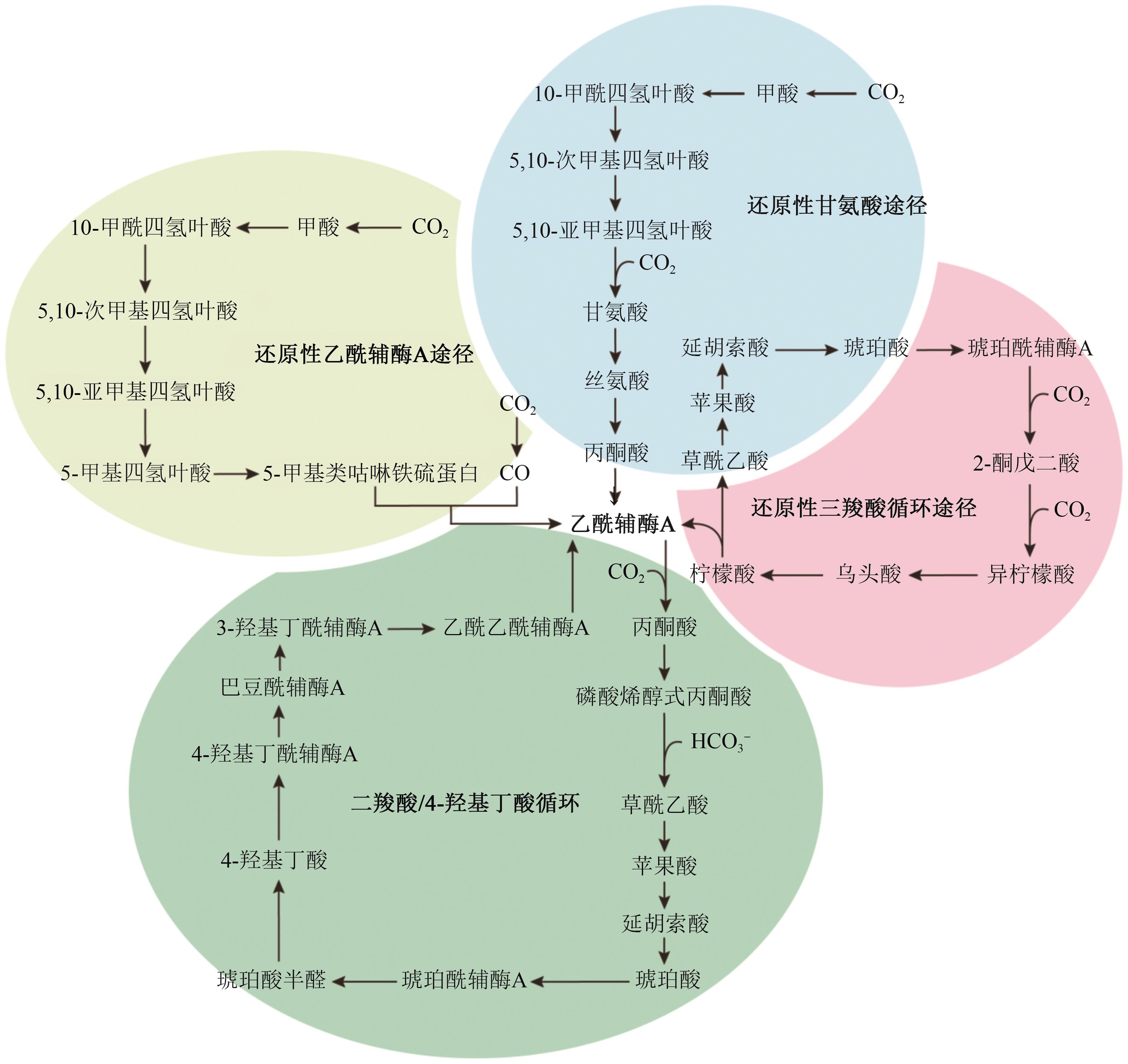
图2 天然厌氧固碳途径
Fig. 2 Natural anaerobic carbon fixation pathway
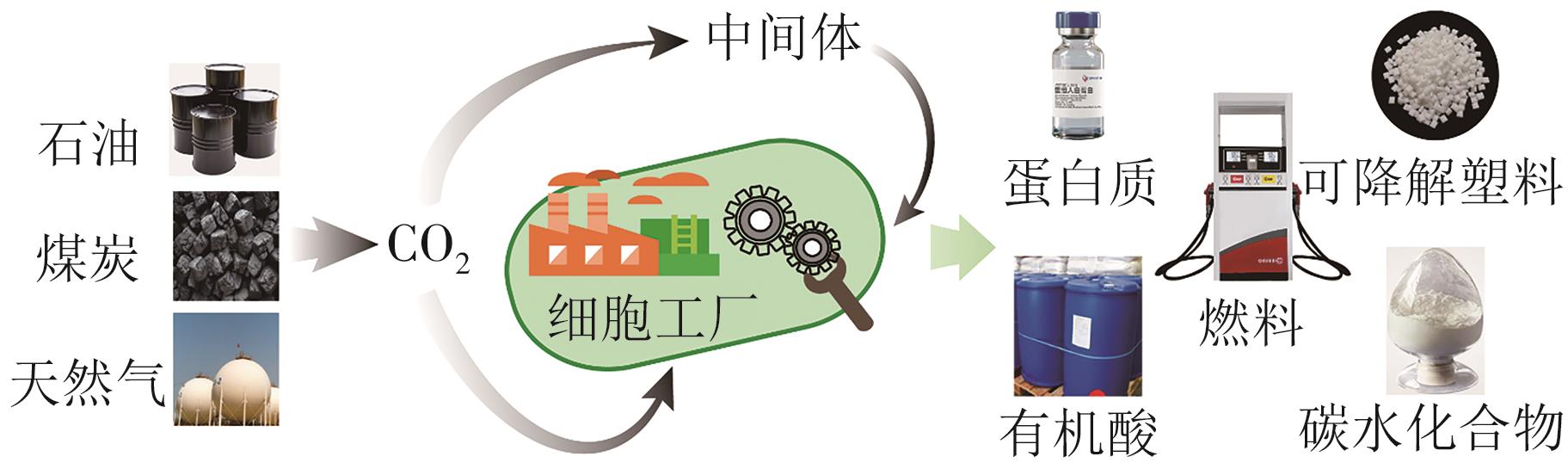
图3 基于CO2原料的产物合成
Fig. 3 Product synthesis from CO2 feedstock
| 产物类别 | 产物 | 宿主 | 文献 | 产物类别 | 产物 | 宿主 | 文献 |
|---|---|---|---|---|---|---|---|
| 重组蛋白 | 人乳铁蛋白 | 莱茵衣藻 | [ | 色素 | 玉米黄质 | 莱茵衣藻 | [ |
| 成纤维细胞生长因子-2 | 集胞藻PCC 6803 | [ | 虾青素 | 莱茵衣藻 | [ | ||
| 人源水通道蛋白9 | 类球红细菌 | [ | 虾青素 | 集胞藻PCC 6803 | [ | ||
| 植酸酶 | 钩虫贪铜菌 | [ | 岩藻黄素 | 三角褐指藻 | [ | ||
| 乳蛋白 | 毕赤酵母菌 | [ | 靛蓝 | 集胞藻PCC 6803 | [ | ||
| 单细胞蛋白 | — | 三角褐指藻 | [ | 番茄红素 | 类球红细菌 | [ | |
| — | 细长聚球藻PCC 7942 | [ | 番茄红素 | 钩虫贪铜菌 | [ | ||
| — | 类球红细菌 | [ | 脂肪酸 | 游离脂肪酸 | 集胞藻PCC 6803 | [ | |
| — | 钩虫贪铜菌 | [ | 十二烷酸 | 钩虫贪铜菌 | [ | ||
| — | 乙醇梭菌 | [ | 碳链长度8-20脂肪酸 | 酿酒酵母 | [ | ||
| — | 酿酒酵母 | [ | 烃类 | 烷烃 | 细长聚球藻PCC 11801 | [ | |
| 可降解塑料 | PHB | 三角褐指藻 | [ | 法尼烯 | 细长聚球藻UTEX 2973 | [ | |
| PHB | 聚球藻PCC 7002 | [ | 甲烷 | 马尔堡甲烷嗜热杆菌 | [ | ||
| PHB | 钩虫贪铜菌 | [ | 醇类 | 乙醇 | 聚球藻PCC 7002 | [ | |
| PHB | 乙醇梭菌 | [ | 乙醇 | 乙醇梭菌 | [ | ||
| PHB | 海沼甲烷球菌 | [ | 异丙醇 | 钩虫贪铜菌 | [ | ||
| PHB | 细长聚球藻PCC 7942和普里斯特氏菌混合菌 | [ | 异丙醇 | 伍氏醋酸杆菌 | [ | ||
| 聚乳酸 | 细长聚球藻PCC7942 | [ | 正丁醇 | 沼泽红假单胞菌 | [ | ||
| 有机酸 | D-乳酸 | 莱茵衣藻 | [ | 异丁醇 | 集胞藻PCC 6803 | [ | |
| L-乳酸 | 集胞藻PCC 6803 | [ | 2-甲基-1-丁醇 | 细长聚球藻PCC 7942 | [ | ||
| D-乳酸 | 伍氏醋酸杆菌 | [ | 正己醇 | 乙醇梭菌 | [ | ||
| 乳酸、衣康酸 | 毕赤酵母 | [ | 碳水化合物 | 淀粉 | 莱茵衣藻 | [ | |
| 琥珀酸 | 集胞藻PCC 6803 | [ | 淀粉 | 解脂耶氏酵母 | [ | ||
| 苹果酸 | 集胞藻PCC 6803 | [ | 糖原 | 聚球藻PCC 7002 | [ | ||
| 3-羟基丙酸 | 钩虫贪铜菌 | [ | 蔗糖 | 细长聚球藻PCC 7942 | [ | ||
| 3-羟基丁酸 | 杨氏梭菌 | [ | 葡萄糖 | 细长聚球藻PCC 7942 | [ | ||
| 氨基酸 | 色氨酸 | 集胞藻PCC 6803 | [ | 葡萄糖 | 钩虫贪铜菌 | [ | |
| 甘氨酸 | 杨氏梭菌 | [ | 葡萄糖 | 酿酒酵母 | [ | ||
| 赖氨酸 | 聚球藻PCC 7002 | [ | 糖醇 | 肌醇 | 细长聚球藻UTEX 2973 | [ | |
| 萜类 | β-蒎烯 | 三角褐指藻 | [ | 肌醇 | 钩虫贪铜菌 | [ | |
| 角鲨烯 | 细长聚球藻PCC 7942 | [ | 甘露醇 | 细长聚球藻PCC 7942 | [ | ||
| α-葎草烯 | 钩虫贪铜菌 | [ | 甘露醇 | 钩虫贪铜菌 | [ | ||
| 异戊二烯 | 扬氏梭菌 | [ | 透明质酸 | 细长聚球藻PCC 7942 | [ | ||
| β-法尼烯 | 解脂耶氏酵母 | [ |
表2 基于CO2原料的代表性产物
Table 2 Representative products using CO2 as raw material
| 产物类别 | 产物 | 宿主 | 文献 | 产物类别 | 产物 | 宿主 | 文献 |
|---|---|---|---|---|---|---|---|
| 重组蛋白 | 人乳铁蛋白 | 莱茵衣藻 | [ | 色素 | 玉米黄质 | 莱茵衣藻 | [ |
| 成纤维细胞生长因子-2 | 集胞藻PCC 6803 | [ | 虾青素 | 莱茵衣藻 | [ | ||
| 人源水通道蛋白9 | 类球红细菌 | [ | 虾青素 | 集胞藻PCC 6803 | [ | ||
| 植酸酶 | 钩虫贪铜菌 | [ | 岩藻黄素 | 三角褐指藻 | [ | ||
| 乳蛋白 | 毕赤酵母菌 | [ | 靛蓝 | 集胞藻PCC 6803 | [ | ||
| 单细胞蛋白 | — | 三角褐指藻 | [ | 番茄红素 | 类球红细菌 | [ | |
| — | 细长聚球藻PCC 7942 | [ | 番茄红素 | 钩虫贪铜菌 | [ | ||
| — | 类球红细菌 | [ | 脂肪酸 | 游离脂肪酸 | 集胞藻PCC 6803 | [ | |
| — | 钩虫贪铜菌 | [ | 十二烷酸 | 钩虫贪铜菌 | [ | ||
| — | 乙醇梭菌 | [ | 碳链长度8-20脂肪酸 | 酿酒酵母 | [ | ||
| — | 酿酒酵母 | [ | 烃类 | 烷烃 | 细长聚球藻PCC 11801 | [ | |
| 可降解塑料 | PHB | 三角褐指藻 | [ | 法尼烯 | 细长聚球藻UTEX 2973 | [ | |
| PHB | 聚球藻PCC 7002 | [ | 甲烷 | 马尔堡甲烷嗜热杆菌 | [ | ||
| PHB | 钩虫贪铜菌 | [ | 醇类 | 乙醇 | 聚球藻PCC 7002 | [ | |
| PHB | 乙醇梭菌 | [ | 乙醇 | 乙醇梭菌 | [ | ||
| PHB | 海沼甲烷球菌 | [ | 异丙醇 | 钩虫贪铜菌 | [ | ||
| PHB | 细长聚球藻PCC 7942和普里斯特氏菌混合菌 | [ | 异丙醇 | 伍氏醋酸杆菌 | [ | ||
| 聚乳酸 | 细长聚球藻PCC7942 | [ | 正丁醇 | 沼泽红假单胞菌 | [ | ||
| 有机酸 | D-乳酸 | 莱茵衣藻 | [ | 异丁醇 | 集胞藻PCC 6803 | [ | |
| L-乳酸 | 集胞藻PCC 6803 | [ | 2-甲基-1-丁醇 | 细长聚球藻PCC 7942 | [ | ||
| D-乳酸 | 伍氏醋酸杆菌 | [ | 正己醇 | 乙醇梭菌 | [ | ||
| 乳酸、衣康酸 | 毕赤酵母 | [ | 碳水化合物 | 淀粉 | 莱茵衣藻 | [ | |
| 琥珀酸 | 集胞藻PCC 6803 | [ | 淀粉 | 解脂耶氏酵母 | [ | ||
| 苹果酸 | 集胞藻PCC 6803 | [ | 糖原 | 聚球藻PCC 7002 | [ | ||
| 3-羟基丙酸 | 钩虫贪铜菌 | [ | 蔗糖 | 细长聚球藻PCC 7942 | [ | ||
| 3-羟基丁酸 | 杨氏梭菌 | [ | 葡萄糖 | 细长聚球藻PCC 7942 | [ | ||
| 氨基酸 | 色氨酸 | 集胞藻PCC 6803 | [ | 葡萄糖 | 钩虫贪铜菌 | [ | |
| 甘氨酸 | 杨氏梭菌 | [ | 葡萄糖 | 酿酒酵母 | [ | ||
| 赖氨酸 | 聚球藻PCC 7002 | [ | 糖醇 | 肌醇 | 细长聚球藻UTEX 2973 | [ | |
| 萜类 | β-蒎烯 | 三角褐指藻 | [ | 肌醇 | 钩虫贪铜菌 | [ | |
| 角鲨烯 | 细长聚球藻PCC 7942 | [ | 甘露醇 | 细长聚球藻PCC 7942 | [ | ||
| α-葎草烯 | 钩虫贪铜菌 | [ | 甘露醇 | 钩虫贪铜菌 | [ | ||
| 异戊二烯 | 扬氏梭菌 | [ | 透明质酸 | 细长聚球藻PCC 7942 | [ | ||
| β-法尼烯 | 解脂耶氏酵母 | [ |
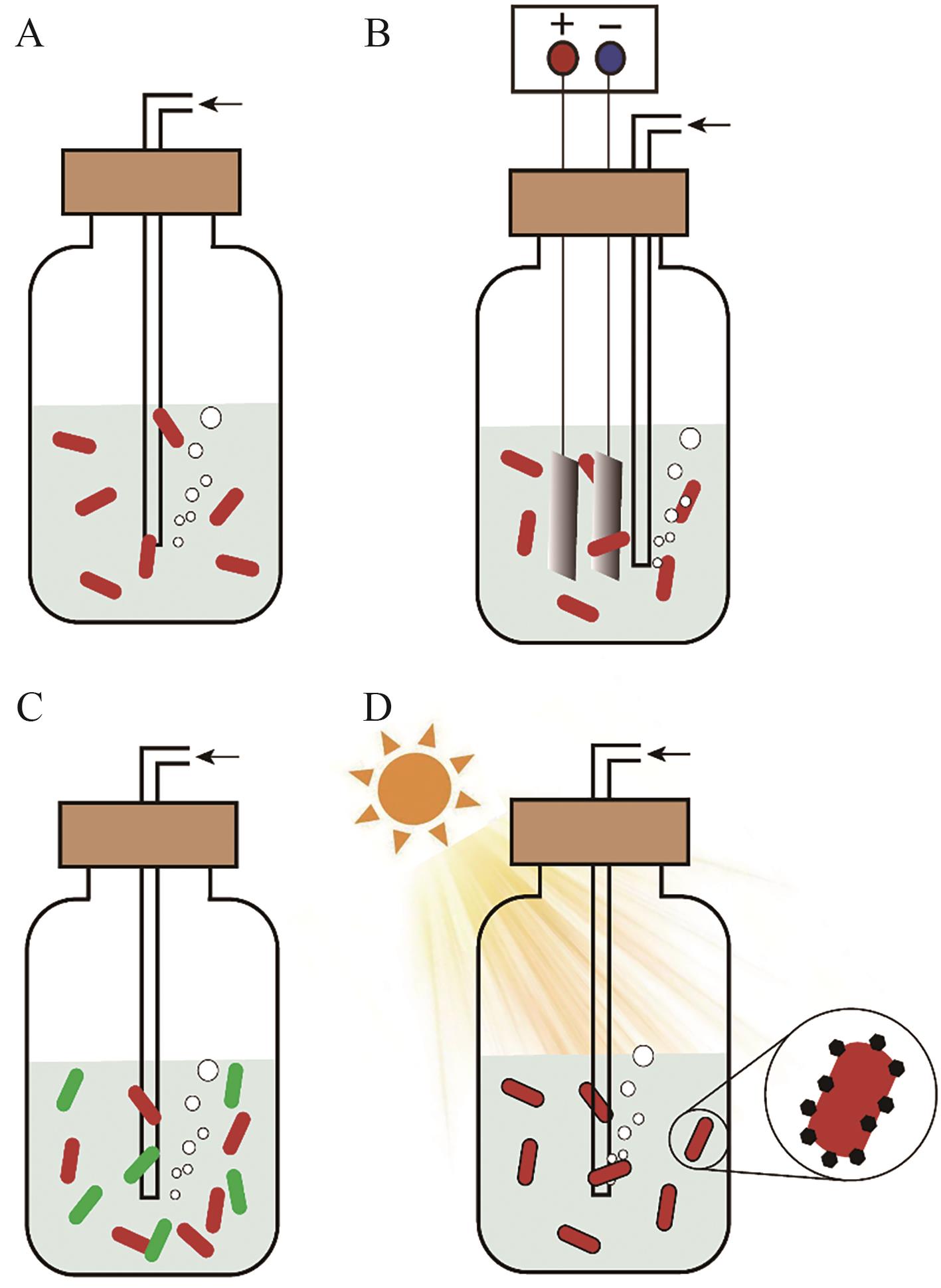
图4 固碳微生物细胞工厂发酵策略A:混合气体发酵;B:电化学-微生物复合体系发酵;C:混合菌株发酵;D:光催化剂-微生物复合体系发酵
Fig. 4 Fermentation strategies of carbon-fixing microbial cell factories
| [1] | 汪淑贤, 方嘉煜, 张延平, 等. 天然甲醇化学品细胞工厂改造进展与展望[J]. 生物工程学报, 2024, 40(8): 2747-2760. |
| WANG S X, FANG J Y, ZHANG Y P, et al.. Progress and perspectives of natural cell factories for chemical production from methanol[J]. Chin. J. Biotechnol., 2024, 40(8): 2747-2760. | |
| [2] | LI Z, XIN X, XIONG B, et al.. Engineering the Calvin-Benson-Bassham cycle and hydrogen utilization pathway of Ralstonia eutropha for improved autotrophic growth and polyhydroxybutyrate production[J/OL]. Microb. Cell Fact., 2020, 19(1): 228[2026-02-25]. . |
| [3] | 朱超,高敬,冯歆然. 习近平主席宣布的“中国承诺”彰显负责任大国担当[EB/OL].(2025-09-26)[2026-02-15]. . |
| [4] | 胡贵鹏, 宋伟, 高聪, 等. 异养微生物固定CO2的合成生物学研究进展[J]. 生物工程学报, 2022, 38(4): 1339-1350. |
| HU G P, SONG W, GAO C, et al.. Advances in synthetic biology of CO2 fixation by heterotrophic microorganisms[J]. Chin. J. Biotechnol., 2022, 38(4): 1339-1350. | |
| [5] | GÜR T M. Carbon dioxide emissions, capture, storage and utilization: review of materials, processes and technologies[J/OL]. Prog. Energy Combust. Sci., 2022, 89: 100965[2026-02-25]. . |
| [6] | WANG Y, CUI L, DING L, et al.. Unlocking the potential of Cupriavidus necator H16 as a platform for bioproducts production from carbon dioxide[J/OL]. World J. Microbiol. Biotechnol., 2024, 40(12): 389[2026-02-25]. . |
| [7] | ALISSANDRATOS A, EASTON C J. Biocatalysis for the application of CO2 as a chemical feedstock[J]. Beilstein J. Org. Chem., 2015, 11: 2370-2387. |
| [8] | SHI S, WANG Y, QIAO W, et al.. Challenges and opportunities in the third-generation biorefinery[J]. Chin. Sci. Bull., 2023, 68(19): 2489-2503. |
| [9] | 陶雨萱, 郭亮, 高聪, 等. 代谢工程改造微生物固定二氧化碳研究进展[J]. 化工进展, 2023, 42(1): 40-52. |
| TAO Y X, GUO L, GAO C, et al.. Progress in metabolic engineering of microorganisms for CO2 fixation[J]. Chem. Ind. Eng. Prog., 2023, 42(1): 40-52. | |
| [10] | ZHENG T, ZHANG M, WU L, et al.. Upcycling CO2 into energy-rich long-chain compounds via electrochemical and metabolic engineering[J]. Nat. Catal., 2022, 5(5): 388-396. |
| [11] | VENKATA MOHAN S, MODESTRA J A, AMULYA K, et al.. A circular bioeconomy with biobased products from CO2 sequestration[J]. Trends Biotechnol., 2016, 34(6): 506-519. |
| [12] | SCHWANDER T, SCHADA VON B L, BURGENER S, et al.. A synthetic pathway for the fixation of carbon dioxide in vitro[J].Science, 2016,354(6314): 900-904. |
| [13] | 胡章, 李思东. 生物固碳途径及其进化[J]. 广东化工, 2010, 37(10): 62-63+77. |
| HU Z, LI S D. Biological carbon fixation pathways and their evolution[J]. Guangdong Chem. Ind., 2010, 37(10): 62-63+77. | |
| [14] | 张文昌. 细长聚球藻PCC 7942卡尔文循环关键酶的亚细胞定位特性研究[D]. 济南: 山东师范大学, 2022. |
| [15] | XIAO L, LIU G, GONG F, et al.. A minimized synthetic carbon fixation cycle[J]. ACS Catal., 2022, 12(1): 799-808. |
| [16] | BAR-EVEN A, FLAMHOLZ A, NOOR E, et al.. Thermodynamic constraints shape the structure of carbon fixation pathways[J]. Biochim. Biophys. Acta, Bioenerg., 2012, 1817(9): 1646-1659. |
| [17] | STRAUSS G, FUCHS G. Enzymes of a novel autotrophic CO2 fixation pathway in the phototrophic bacterium Chloroflexus aurantiacus, the 3-hydroxypropionate cycle[J]. Eur. J. Biochem., 1993, 215(3): 633-643. |
| [18] | ZARZYCKI J, FUCHS G. Coassimilation of organic substrates via the autotrophic 3-hydroxypropionate bi-cycle in Chloroflexus aurantiacus [J]. Appl. Environ. Microbiol., 2011, 77(17): 6181-6188. |
| [19] | 宋浩, 张妍, 刘其敬. 无机纳米材料-微生物杂合系统的研究进展[J]. 天津大学学报(自然科学与工程技术版), 2026, 59(1): 1-16. |
| SONG H, ZHANG Y, LIU Q J. Design and construction of inorganic nanomaterial-microorganism hybrid systems[J]. J. Tianjin Univ. Sci. Technol., 2026, 59(1): 1-16. | |
| [20] | HÜGLER M, MENENDEZ C, SCHÄGGER H, et al.. Malonyl-coenzyme a reductase from Chloroflexus aurantiacus, a key enzyme of the 3-hydroxypropionate cycle for autotrophic CO2 Fixation[J]. J. Bacteriol., 2002, 184(9): 2404-2410. |
| [21] | BERG I A, KOCKELKORN D, BUCKEL W, et al.. A 3-hydroxypropionate/4-hydroxybutyrate autotrophic carbon dioxide assimilation pathway in Archaea[J]. Science, 2007, 318(5857): 1782-1786. |
| [22] | FUCHS G. Alternative pathways of carbon dioxide fixation: insights into the early evolution of life?[J]. Annu. Rev. Microbiol., 2011, 65: 631-658. |
| [23] | GONG F, ZHU H, ZHANG Y, et al.. Biological carbon fixation: From natural to synthetic[J]. J. CO2 Util., 2018, 28: 221-227. |
| [24] | FIGUEROA I A, BARNUM T P, SOMASEKHAR P Y, et al.. Metagenomics-guided analysis of microbial chemolithoautotrophic phosphite oxidation yields evidence of a seventh natural CO2 fixation pathway[J/OL]. Proc. Natl. Acad. Sci. USA, 2018, 115(1): E92-E101[2026-02-25]. . |
| [25] | CLAASSENS N J, BORDANABA-FLORIT G, COTTON C A R, et al.. Replacing the Calvin cycle with the reductive Glycine pathway in Cupriavidus necator [J]. Metab. Eng., 2020, 62: 30-41. |
| [26] | DRONSELLA B, ORSI E, SCHULZ-MIRBACH H, et al.. One-carbon fixation via the synthetic reductive Glycine pathway exceeds yield of the Calvin cycle[J]. Nat. Microbiol., 2025, 10(3): 646-653. |
| [27] | STEFFENS L, PETTINATO E, STEINER T M, et al.. High CO2 levels drive the TCA cycle backwards towards autotrophy[J]. Nature, 2021, 592(7856): 784-788. |
| [28] | FAST A G, PAPOUTSAKIS E T. Stoichiometric and energetic analyses of non-photosynthetic CO2-fixation pathways to support synthetic biology strategies for production of fuels and chemicals[J]. Curr. Opin. Chem. Eng., 2012, 1(4): 380-395. |
| [29] | DE JONGE N, POULSEN J S, VECHI N T, et al.. Wood-Ljungdahl pathway utilisation during in situ H2 biomethanation[J/OL]. Sci. Total Environ., 2022, 806: 151254[2026-02-25]. . |
| [30] | SOUSA F L, MARTIN W F. Biochemical fossils of the ancient transition from geoenergetics to bioenergetics in prokaryotic one carbon compound metabolism[J]. Biochim. Biophys. Acta, 2014, 1837(7): 964-981. |
| [31] | KUMAR M, SUNDARAM S, GNANSOUNOU E, et al.. Carbon dioxide capture, storage and production of biofuel and biomaterials by bacteria: a review[J]. Bioresour. Technol., 2018, 247: 1059-1068. |
| [32] | HUBER H, GALLENBERGER M, JAHN U, et al.. A dicarboxylate/4-hydroxybutyrate autotrophic carbon assimilation cycle in the hyperthermophilic archaeum Ignicoccus hospitalis [J]. Proc. Natl. Acad. Sci. USA, 2008, 105(22): 7851-7856. |
| [33] | 蔡韬, 刘玉万, 朱蕾蕾, 等. 二氧化碳人工生物转化[J]. 生物工程学报, 2022, 38(11): 4101-4114. |
| CAI T, LIU Y W, ZHU L L, et al.. Artificial bioconversion of carbon dioxide[J]. Chin. J. Biotechnol., 2022, 38(11): 4101-4114. | |
| [34] | CHERRY J M, BALL C, WENG S, et al.. Genetic and physical maps of Saccharomyces cerevisiae [J]. Nature, 1997, 387(6632): 67-73. |
| [35] | LIN L, HE X, ZHANG X G, et al.. A nanocomposite of bismuth clusters and Bi2O2CO3 sheets for highly efficient electrocatalytic reduction of CO2 to formate[J/OL]. Angew. Chem. Int. Ed., 2023, 62(3): e202214959[2026-02-25]. . |
| [36] | HANN E C, OVERA S, HARLAND-DUNAWAY M, et al.. A hybrid inorganic-biological artificial photosynthesis system for energy-efficient food production[J]. Nat. Food, 2022, 3(6): 461-471. |
| [37] | CUI H, LIU W, MA C, et al.. Converting CO2 to single-cell protein via an integrated electrocatalytic-biosynthetic system[J/OL]. Appl. Catal. B Environ. Energy, 2024, 350: 123946[2026-02-25]. . |
| [38] | HEGNER R, NEUBERT K, KRONER C, et al.. Coupled electrochemical and microbial catalysis for the production of polymer bricks[J]. ChemSusChem, 2020, 13(19): 5295-5300. |
| [39] | ZHANG P, CHEN K, XU B, et al.. Chem-bio interface design for rapid conversion of CO2 to bioplastics in an integrated system[J]. Chem, 2022, 8(12): 3363-3381. |
| [40] | BI H, WANG K, XU C, et al.. Biofuel synthesis from carbon dioxide via a bio-electrocatalysis system[J/OL]. Chem. Catal., 2023, 3(3): 100557[2026-02-25]. . |
| [41] | GUZMÁN H, SALOMONE F, BATUECAS E, et al.. How to make sustainable CO2 conversion to methanol: thermocatalytic versus electrocatalytic technology[J/OL]. Chem. Eng. J., 2021, 417: 127973[2026-02-25]. . |
| [42] | LYU X, CUI S, CHEN J, et al.. Cascaded de novo biosynthesis of lacto-proteins from CO2 by engineered Pichia pastoris [J]. Green Chem., 2023, 25(14): 5460-5469. |
| [43] | ZHANG Y, SUN W, SONG R, et al.. Chemo-biological synthesis of L-lactic acid from solar methanol[J]. Artif. Photosynth., 2025, 1(4): 204-213. |
| [44] | LÖWE H, HOBMEIER K, MOOS M, et al.. Photoautotrophic production of polyhydroxyalkanoates in a synthetic mixed culture of Synechococcus elongatus cscB and Pseudomonas putida cscAB[J/OL]. Biotechnol. Biofuels, 2017, 10(1): 190[2026-02-25]. . |
| [45] | 张丽, 宋馨宇, 陈磊, 等. 光合微生物混菌体系的应用和研究进展[J]. 生物工程学报, 2020, 36(4): 652-665. |
| ZHANG L, SONG X Y, CHEN L, et al.. Recent progress in photosynthetic microbial co-culture systems[J]. Chin. J. Biotechnol., 2020, 36(4): 652-665. | |
| [46] | GU W, WU S, LIU X, et al.. Algal-bacterial consortium promotes carbon sink formation in saline environment[J]. J. Adv. Res., 2024, 60: 111-125. |
| [47] | MARÍN D, MÉNDEZ L, SUERO I, et al.. Anaerobic digestion of food waste coupled with biogas upgrading in an outdoors algal-bacterial photobioreactor at pilot scale[J/OL]. SSRN Electron. J., 2022: 324[2026-02-25]. . |
| [48] | OSMAN D M, MOHAMMADY N G E, FAKHRY E M, et al.. Fungal-assisted microalgae for promoting growth[J]. Alex. J. Sci. Technol., 2024: 87-98. |
| [49] | ZORN S M F E, REIS C E R, SILVA M B, et al.. Consortium growth of filamentous fungi and microalgae: evaluation of different cultivation strategies to optimize cell harvesting and lipid accumulation[J/OL]. Energies, 2020, 13(14): 3648[2026-02-25]. . |
| [50] | CHEN W, PARK Y K, STUDENÁ L, et al.. Synthetic, marine, light-driven, autotroph-heterotroph co-culture system for sustainable β-caryophyllene production[J/OL]. Bioresour. Technol., 2024, 410: 131232[2026-02-25]. . |
| [51] | MOLITOR B, MISHRA A, ANGENENT L T. Power-to-protein: converting renewable electric power and carbon dioxide into single cell protein with a two-stage bioprocess[J]. Energy Environ. Sci., 2019, 12(12): 3515-3521. |
| [52] | HU P, CHAKRABORTY S, KUMAR A, et al.. Integrated bioprocess for conversion of gaseous substrates to liquids[J]. Proc. Natl. Acad. Sci. USA, 2016, 113(14): 3773-3778. |
| [53] | LIU J, WANG X, DAI G, et al.. Microbial chassis engineering drives heterologous production of complex secondary metabolites[J/OL]. Biotechnol. Adv., 2022, 59: 107966[2026-02-25]. . |
| [54] | MUKHERJEE B, MORONEY J V. Algal carbon dioxide concentrating mechanisms[M]. Encyclopedia of Life Sciences Chichester: John Wiley Sons, 2020: 1-12. |
| [55] | NADUTHODI M I S, CLAASSENS N J, D'ADAMO S, et al.. Synthetic biology approaches to enhance microalgal productivity[J]. Trends Biotechnol., 2021, 39(10): 1019-1036. |
| [56] | DEVIRAM G, MATHIMANI T, ANTO S, et al.. Applications of microalgal and cyanobacterial biomass on a way to safe, cleaner and a sustainable environment[J/OL]. J. Clean. Prod., 2020, 253: 119770[2026-02-25]. . |
| [57] | LEONG Y K, CHEW K W, CHEN W H, et al.. Reuniting the biogeochemistry of algae for a low-carbon circular bioeconomy[J]. Trends Plant Sci., 2021, 26(7): 729-740. |
| [58] | 何涛, 罗业燊, 郭泽宇, 等. 光合细菌在水产养殖环境中的应用研究进展与展望[J/OL]. 微生物学通报, doi:10.13344/j.microbiol.china.250385 [2026-02-25]. . |
| HE T, LUO Y S, GUO Z Y, et al.. Application and mechanisms of photosynthetic bacteria in aquaculture environments: a review[J/OL]. Microbiol. China, doi:10.13344/j.microbiol.china.250385 [2026-02-25]. . | |
| [59] | WONG T S. Carbon dioxide capture and utilization using biological systems: opportunities and challenges[J/OL]. J. Bioprocess. Biotech., 2014, 4(3): 1000e119[2026-02-25]. . |
| [60] | MAJHI B K. Cyanobacteria: Photosynthetic cell factories for biofuel production[J]. J. Bioresour. Bioprod., 2025, 10(2): 128-144. |
| [61] | ATSUMI S, HIGASHIDE W, LIAO J C. Direct photosynthetic recycling of carbon dioxide to isobutyraldehyde[J]. Nat. Biotechnol., 2009, 27(12): 1177-1180. |
| [62] | ANGERMAYR S A, VAN DER WOUDE A D, CORREDDU D, et al.. Exploring metabolic engineering design principles for the photosynthetic production of lactic acid by Synechocystis sp. PCC6803[J/OL]. Biotechnol. Biofuels, 2014, 7(1): 99[2026-02-25]. . |
| [63] | LEE H J, LEE J, LEE S M, et al.. Direct conversion of CO2 to α-farnesene using metabolically engineered Synechococcus elongatus PCC 7942[J]. J. Agric. Food Chem., 2017, 65(48): 10424-10428. |
| [64] | MADHU S, SENGUPTA A, SARNAIK A P, et al.. Expanding the synthetic biology repertoire of a fast-growing Cyanobacterium Synechococcus elongatus PCC 11801[J]. Biotechnol. Bioeng., 2024, 121(9): 2974-2980. |
| [65] | TOEPEL J, KARANDE R, KLÄHN S, et al.. Cyanobacteria as whole-cell factories: current status and future prospectives[J/OL]. Curr. Opin. Biotechnol., 2023, 80: 102892[2026-02-25]. . |
| [66] | LARIMER F W, CHAIN P, HAUSER L, et al.. Complete genome sequence of the metabolically versatile photosynthetic bacterium Rhodopseudomonas palustris [J]. Nat. Biotechnol., 2004, 22(1): 55-61. |
| [67] | MADIGAN M T, JUNG D O. An overview of purple bacteria: systematics, physiology, and habitats[M]// The Purple Phototrophic Bacteria. Dordrecht: Springer Netherlands, 2009: 1-15. |
| [68] | SAPER G, KALLMANN D, CONZUELO F, et al.. Live cyanobacteria produce photocurrent and hydrogen using both the respiratory and photosynthetic systems[J/OL]. Nat. Commun., 2018, 9: 2168[2026-02-25]. . |
| [69] | GUAN C J, JI Y J, HU J L, et al.. Biotransformation of rutin using crude enzyme from Rhodopseudomonas palustris [J]. Curr. Microbiol., 2017, 74(4): 431-436. |
| [70] | ZHANG Y, YUAN J. CRISPR/Cas12a-mediated genome engineering in the photosynthetic bacterium Rhodobacter capsulatus [J]. Microb. Biotechnol., 2021, 14(6): 2700-2710. |
| [71] | LI Z, LI W, GAO X, et al.. Systematic engineering to enhance valencene production in Rhodobacter sphaeroides [J/OL]. Bioresour. Bioprocess, 2025, 12(1): 100[2026-02-25]. . |
| [72] | ZHANG Y, SONG X, LAI Y, et al.. High-yielding terpene-based biofuel production in Rhodobacter capsulatus [J]. ACS Synth. Biol., 2021, 10(6): 1545-1552. |
| [73] | LI M, NING P, SUN Y, et al.. Characteristics and application of Rhodopseudomonas palustris as a microbial cell factory[J/OL]. Front. Bioeng. Biotechnol., 2022, 10: 897003[2026-02-25]. . |
| [74] | MATASSA S, BOON N, VERSTRAETE W. Resource recovery from used water: the manufacturing abilities of hydrogen-oxidizing bacteria[J]. Water Res., 2015, 68: 467-478. |
| [75] | PANICH J, FONG B, SINGER S W. Metabolic engineering of Cupriavidus necator H16 for sustainable biofuels from CO2 [J]. Trends Biotechnol., 2021, 39(4): 412-424. |
| [76] | MORLINO M S, SERNA GARCÍA R, SAVIO F, et al.. Cupriavidus necator as a platform for polyhydroxyalkanoate production: an overview of strains, metabolism, and modeling approaches[J/OL]. Biotechnol. Adv., 2023, 69: 108264[2026-02-25]. . |
| [77] | LI H, OPGENORTH P H, WERNICK D G, et al.. Integrated electromicrobial conversion of CO2 to higher alcohols[J/OL]. Science, 2012, 335(6076): 1596[2026-02-25]. . |
| [78] | SCHUCHMANN K, MÜLLER V. Autotrophy at the thermodynamic limit of life: a model for energy conservation in acetogenic bacteria[J]. Nat. Rev. Microbiol., 2014, 12(12): 809-821. |
| [79] | 王弘铭, 李婉麒, 顾阳. 产乙酸菌及其在一碳气体生物增值转化中的应用[J/OL]. 化工进展, 1-17[2026-02-25]. . |
| WANG H M, LI W Q, GU Y. Acetogenic bacteria and their roles in the bioconversion and value-added utilization of one-carbon gases[J/OL]. Chem. Ind. Eng. Pro., 1-17[2026-02-25]. . | |
| [80] | 姚伦, 周雍进. 一碳化合物生物利用和转化研究进展[J]. 化工进展, 2023, 42(1): 16-29. |
| YAO L, ZHOU Y J. Progress in microbial utilization of one-carbon feedstocks for biomanufacturing[J]. Chem. Ind. Eng. Prog., 2023, 42(1): 16-29. | |
| [81] | MOCK J, ZHENG Y, MUELLER A P, et al.. Energy conservation associated with ethanol formation from H2 and CO2 in Clostridium autoethanogenum involving electron bifurcation[J]. J. Bacteriol., 2015, 197(18): 2965-2980. |
| [82] | 安苗苗, 蔺祥淏, 梁瑞娜, 等. 碳源对产甲烷菌群调控及产甲烷能力的影响[J]. 生物技术通报, 2025, 41(6): 355-366. |
| AN M M, LIN X H, LIANG R N, et al.. Effect of carbon source in methanogenic communities regulation and methane production capacity[J]. Biotechnol. Bull., 2025, 41(6): 355-366. | |
| [83] | 赵生庚, 苏建平, 李叶青. 碳量子点强化产甲烷菌生物甲烷化研究进展[J]. 化工学报, 2026, 77(1): 114-125. |
| ZHAO S G, SU J P, LI Y Q. Research progress on carbon quantum dots-enhanced biomethanation by methanogens[J]. CIESC J., 2026, 77(1): 114-125. | |
| [84] | 张娜, 尹雪峰, 王子琛, 等. 微生物增产煤层气作用机理及影响因素研究进展[J]. 过程工程学报, 2024, 24(6): 636-646. |
| ZHANG N, YIN X F, WANG Z C, et al.. Research progress on the mechanism and influencing factors of microorganisms to increase coalbed methane production[J]. Chin. J. Proc. Eng., 2024, 24(6): 636-646. | |
| [85] | 易悦, 周卓, 黄艳, 等. 我国产甲烷古菌研究进展与展望[J]. 微生物学报, 2023, 63(5): 1796-1814. |
| YI Y, ZHOU Z, HUANG Y, et al.. Methanogen research in China: current status and prospective[J]. Acta Microbiol. Sin., 2023, 63(5): 1796-1814. | |
| [86] | ANTONOVSKY N, GLEIZER S, NOOR E, et al.. Sugar synthesis from CO2 in Escherichia coli [J]. Cell, 2016, 166(1): 115-125. |
| [87] | BEN-NISSAN R, MILSHTEIN E, PAHL V, et al.. Autotrophic growth of Escherichia coli is achieved by a small number of genetic changes[J/OL]. eLife,2024,12:e88793[2026-02-25]. . |
| [88] | WANG K, DA Y, BI H, et al.. A one-carbon chemicals conversion strategy to produce precursor of biofuels with Saccharomyces cerevisiae [J]. Renew. Energy, 2023, 208: 331-340. |
| [89] | GASSLER T, SAUER M, GASSER B, et al.. The industrial yeast Pichia pastoris is converted from a heterotroph into an autotroph capable of growth on CO2 [J]. Nat. Biotechnol., 2020, 38(2): 210-216. |
| [90] | KRUYER N S, PERALTA-YAHYA P. Advancing the potential for the production of chemicals from carbon dioxide in Escherichia coli [J]. Biochemistry, 2020, 59(6): 731-732. |
| [91] | SANDERS J, HOFFMANN S A, GREEN A P, et al.. New opportunities for genetic code expansion in synthetic yeast[J/OL]. Curr. Opin. Biotechnol., 2022, 75: 102691[2026-02-25]. . |
| [92] | 栾韬, 尹梦琦, 王明, 等. 酿酒酵母细胞器区室化合成化学品的研究进展[J]. 生物工程学报, 2023, 39(6): 2334-2358. |
| LUAN T, YIN M Q, WANG M, et al.. Advances in the production of chemicals by organelle compartmentalization in Saccharomyces cerevisiae [J]. Chin. J. Biotechnol., 2023, 39(6): 2334-2358. | |
| [93] | SILVA N ADA, SRIKRISHNAN S. Introduction and expression of genes for metabolic engineering applications in Saccharomyces cerevisiae [J]. FEMS Yeast Res., 2012, 12(2): 197-214. |
| [94] | XIN X, LIU D F, LIU S C, et al.. Redesigned pathway for De novo synthesis of vanillin and co-conversion of multiple renewable substrates in Saccharomyces cerevisiae [J]. JACS Au, 2025, 5(3): 1133-1145. |
| [95] | 孙涛, 孙美莉, 陆然, 等. 合成生物学改造酵母驱动丁二酸绿色生物制造[J]. 化工学报, 2024, 75(4): 1382-1393. |
| SUN T, SUN M L, LU R, et al.. Synthetic biology of yeasts drives green biomanufacturing of succinic acid[J]. CIESC J., 2024, 75(4): 1382-1393. | |
| [96] | CELIŃSKA E. "Fight-flight-or-freeze"-how Yarrowia lipolytica responds to stress at molecular level?[J]. Appl. Microbiol. Biotechnol., 2022, 106(9): 3369-3395. |
| [97] | MIN LEE S, YOUNG LEE J, HAHN J S, et al.. Engineering of Yarrowia lipolytica as a platform strain for producing adipic acid from renewable resource[J/OL]. Bioresour. Technol., 2024, 391: 129920[2026-02-25]. . |
| [98] | ZHANG G, CHEN J, WANG Y, et al.. Metabolic engineering of Yarrowia lipolytica for Zeaxanthin production[J]. J. Agric. Food Chem., 2023, 71(37): 13828-13837. |
| [99] | YAN C X, ZHANG Y, YANG W Q, et al.. Universal and unique strategies for the production of polyunsaturated fatty acids in industrial oleaginous microorganisms[J/OL]. Biotechnol. Adv., 2024, 70: 108298[2026-02-25]. . |
| [100] | HUANG L G, XIAO B W, WANG W J, et al.. Multiplex modification of Yarrowia lipolytica for enhanced erythritol biosynthesis from glycerol through modularized metabolic engineering[J]. Bioprocess Biosyst. Eng., 2023, 46(9): 1351-1363. |
| [101] | MENG J, LIU S, GAO L, et al.. Economical production of Pichia pastoris single cell protein from methanol at industrial pilot scale[J/OL]. Microb. Cell Fact., 2023, 22(1): 198[2026-02-25]. . |
| [102] | RASCHMANOVÁ H, WENINGER A, KNEJZLÍK Z, et al.. Engineering of the unfolded protein response pathway in Pichia pastoris: enhancing production of secreted recombinant proteins[J]. Appl. Microbiol. Biotechnol., 2021, 105(11): 4397-4414. |
| [103] | ZHU T, SUN H, WANG M, et al.. Pichia pastoris as a versatile cell factory for the production of industrial enzymes and chemicals: current status and future perspectives[J/OL]. Biotechnol. J., 2019, 14(6): 1800694[2026-02-25]. . |
| [104] | GONG Z, CHEN J, JIAO X, et al.. Genome-scale metabolic network models for industrial microorganisms metabolic engineering: current advances and future prospects[J/OL]. Biotechnol. Adv., 2024, 72: 108319[2026-02-25]. . |
| [105] | FANG Y, WANG J, MA W, et al.. Rebalancing microbial carbon distribution for L-threonine maximization using a thermal switch system[J]. Metab. Eng., 2020, 61: 33-46. |
| [106] | YUAN X J, CHEN W J, MA Z X, et al.. Rewiring the native methanol assimilation metabolism by incorporating the heterologous ribulose monophosphate cycle into Methylorubrum extorquens [J]. Metab. Eng., 2021, 64: 95-110. |
| [107] | MO X H, ZHANG H, WANG T M, et al.. Establishment of CRISPR interference in Methylorubrum extorquens and application of rapidly mining a new phytoene desaturase involved in carotenoid biosynthesis[J]. Appl. Microbiol. Biotechnol., 2020, 104(10): 4515-4532. |
| [108] | ZHANG H, CHEN S, LIU Z, et al.. Engineering methylorubrum extorquens for the biosynthesis of d-lactic acid from methanol[J]. ACS Sustainable Chem. Eng., 2025, 13(32): 12946-12956. |
| [109] | QUYNH LE H T, ANH MAI D H, NA J G, et al.. Development of Methylorubrum extorquens AM1 as a promising platform strain for enhanced violacein production from co-utilization of methanol and acetate[J]. Metab. Eng., 2022, 72: 150-160. |
| [110] | YANG J, ZHANG C T, YUAN X J, et al.. Metabolic engineering of Methylobacterium extorquens AM1 for the production of butadiene precursor[J/OL]. Microb. Cell Fact., 2018, 17(1): 194[2026-02-25]. . |
| [111] | 陆佳滢, 王玉明, 李咸伟, 等. 钢铁废气中二氧化碳的微生物固定与转化机制研究进展[J]. 中国环境科学, 2024, 44(9): 5248-5262. |
| LU J Y, WANG Y M, LI X W, et al.. Advances in microbial fixation and conversion mechanisms of carbon dioxide derived from steel off-gas[J]. China Environ. Sci., 2024, 44(9): 5248-5262. | |
| [112] | 朱文, 胡又佳, 谢丽萍. 毕赤酵母高效表达外源蛋白的相关策略及研究进展[J]. 中国医药工业杂志, 2018, 49(4): 417-425. |
| ZHU W, HU Y J, XIE L P. Related strategies and research progress of efficient expression of heterologous proteins in Pichia pastoris [J]. Chin. J. Pharm., 2018, 49(4): 417-425. | |
| [113] | 聂珂珂, 刘英, 王仕楷, 等. 异源蛋白在枯草芽孢杆菌中高效表达策略研究进展[J]. 生物加工过程, 2025, 23(2): 212-225. |
| NIE K K, LIU Y, WANG S K, et al.. Recent progress on efficient expression strategies of heterologous proteins in Bacillus subtilis [J]. Chin. J. Bioprocess Eng., 2025, 23(2): 212-225. | |
| [114] | DE GRAHL I, ROUT S S, MAPLE-GRØDEM J, et al.. Development of a constitutive and an auto-inducible high-yield expression system for recombinant protein production in the microalga Nannochloropsis oceanica [J]. Appl. Microbiol. Biotechnol., 2020, 104(20): 8747-8760. |
| [115] | BERNDT A J, SMALLEY T N, REN B, et al.. Recombinant production of a functional SARS-CoV-2 spike receptor binding domain in the green algae Chlamydomonas reinhardtii [J/OL]. PLoS One, 2021, 16(11): e0257089[2026-02-25]. . |
| [116] | ROUT S S, DE GRAHL I, YU X, et al.. Production of a viral surface protein in Nannochloropsis oceanica for fish vaccination against infectious pancreatic necrosis virus[J]. Appl. Microbiol. Biotechnol., 2022, 106(19): 6535-6549. |
| [117] | LU S, HOU Y, YAN S, et al.. Integrated bioprocess engineering of Chlamydomonas reinhardtii for sustainable production of human lactoferrin via direct air-captured CO2 conversion[J/OL]. Bioresour. Technol., 2026, 450: 134437[2026-02-25]. . |
| [118] | MAJHI B K, MELIS A. Recombinant protein synthesis and isolation of human interferon alpha-2 in cyanobacteria[J/OL]. Bioresour. Technol., 2024, 400: 130664[2026-02-25]. . |
| [119] | MAJHI B K, MELIS A. Engineering fibroblast growth factor-2 (FGF2) production in cyanobacteria[J]. ACS Synth. Biol., 2025, 14(10): 3978-3989. |
| [120] | 朱婵, 施定基, 何培民, 等. 转基因聚球藻7942的vp19基因表达效率及其光合生理特性研究[J]. 上海农业学报, 2021, 37(4): 36-41. |
| ZHU C, SHI D J, HE P M, et al.. Expression efficiency of vp19 gene in transgenic Synechococcus sp. PCC 7942 and its photosynthetic physiological characteristics[J]. Acta Agric. Shanghai, 2021, 37(4): 36-41. | |
| [121] | KATZKE N, ARVANI S, BERGMANN R, et al.. A novel T7 RNA polymerase dependent expression system for high-level protein production in the phototrophic bacterium Rhodobacter capsulatus [J]. Protein Expr. Purif., 2010, 69(2): 137-146. |
| [122] | ERBAKAN M, CURTIS B S, NIXON B T, et al.. Advancing Rhodobacter sphaeroides as a platform for expression of functional membrane proteins[J]. Protein Expr. Purif., 2015, 115: 109-117. |
| [123] | ARHAR S, RAUTER T, STOLTERFOHT-STOCK H, et al.. CO2-based production of phytase from highly stable expression plasmids in Cupriavidus necator H16[J/OL]. Microb. Cell Fact., 2024, 23(1): 9[2026-02-25]. . |
| [124] | TANG R, XU R, GAO X, et al.. Production of α-amylase from gluconate and carbon dioxide by protein synthesis and secretion optimization in Cupriavidus necator H16[J/OL]. Bioresour. Technol., 2025, 416: 131744[2026-02-25]. . |
| [125] | TANG R, WENG C, PENG X, et al.. Metabolic engineering of Cupriavidus necator H16 for improved chemoautotrophic growth and PHB production under oxygen-limiting conditions[J]. Metab. Eng., 2020, 61: 11-23. |
| [126] | 吴信, 吴凡, 张哲瑞, 等. 单细胞蛋白的生物创制策略[J/OL]. 科学通报, 2025, doi:10.1360/csb-2025-5387[2026-02-25]. . |
| WU X, WU F, ZHANG Z, et al.. Comprehensive progress of biocreation strategies for single-cell protein[J/OL]. Chin. Sci. Bull., 2025, doi:10.1360/csb-2025-5387[2026-02-25]. . | |
| [127] | ISMAIL S, GIACINTI G, RAYNAUD C D, et al.. Impact of the environmental parameters on single cell protein production and composition by Cupriavidus necator [J]. J. Biotechnol., 2024, 388: 83-95. |
| [128] | AL-MUDHAFR A. Microbiological sources and nutritional value of single cell protein (SCP)[J]. Nutr. Food Proc., 2019, 2(2): 1-2. |
| [129] | JANSSEN M, WIJFFELS R H, BARBOSA M J. Microalgae based production of single-cell protein[J/OL]. Curr. Opin. Biotechnol., 2022, 75: 102705[2026-02-25]. . |
| [130] | LU X, YANG S, HE Y, et al.. Nutritional value and productivity potential of the marine microalgae Nitzschia laevis, Phaeodactylum tricornutum and Isochrysis galbana [J/OL]. Mar. Drugs, 2024, 22(9): 386[2026-02-25]. . |
| [131] | LE T P L, SAMARATHUNGA J, STRAZDINS K, et al.. Characterisation of water-soluble Nannochloropsis oceanica protein fractions: physical and functional properties[J]. Sustainable Food Technol., 2025, 3(6): 2226-2238. |
| [132] | FANARI F, GONZALEZ J, CLARET A, et al.. Partial replacement of soybean protein (30%) with Nannochloropsis oceanica in broiler diets: effects on growth performance and meat quality[J/OL]. Foods, 2026, 15(4): 760[2026-02-25]. . |
| [133] | NAWAZ T, GU L, FAHAD S, et al.. Sustainable protein production through genetic engineering of cyanobacteria and use of atmospheric N2 gas[J/OL]. Food Energy Secur., 2024, 13(2): e536[2026-02-25]. . |
| [134] | KOYANDE A K, CHEW K W, RAMBABU K, et al.. Microalgae: a potential alternative to health supplementation for humans[J]. Food Sci. Hum. Wellness, 2019, 8(1): 16-24. |
| [135] | LAKATOS G E, CICCHI B, BALESTRA F, et al.. Growth and hydrogen production of the Cyanobacterium synechocystis sp. PCC 6803 in a marine salt medium[J/OL]. Front. Mar. Sci., 2026, 12: 1654421[2026-02-25]. . |
| [136] | REYES M L E, HERNANDEZ A I, DOS SANTOS AZEVEDO R, et al.. Effect of dietary supplementation with the Cyanobacterium Synechococcus elongatus PCC 7942 on the brain transcriptome of zebrafish (Danio rerio)[J/OL]. Fish Physiol. Biochem., 2025, 51(5): 157[2026-02-25]. . |
| [137] | GONZÁLEZ CÁMARA S J, KIBOR S, OLYSLAEGERS S, et al.. Purple bacteria as sustainable nutraceutical ingredient in aquafeed: the case of guppies[J/OL]. Anim. Feed. Sci. Technol., 2025, 326: 116394[2026-02-25]. . |
| [138] | LIAO Z, GONG Y, WANG Z, et al.. Effects of dietary Rhodobacter sphaeroides protein substitution of fishmeal and coenzyme Q10 supplementation on growth performance, intestinal microbiota and stress tolerance of litopenaeus vannamei in acute low salinity[J/OL]. Front. Mar. Sci., 2022, 9: 851649[2026-02-25]. . |
| [139] | POULAIN A J, NEWMAN D K. Rhodobacter capsulatus catalyzes light-dependent Fe(II) oxidation under anaerobic conditions as a potential detoxification mechanism[J]. Appl. Environ. Microbiol., 2009, 75(21): 6639-6646. |
| [140] | KIM J K, LEE B K. Mass production of Rhodopseudomonas palustris as diet for aquaculture[J]. Aquac. Eng., 2000, 23(4): 281-293. |
| [141] | LEE Y J, MOON B C, LEE D K, et al.. Sustainable production of microbial protein from carbon dioxide in the integrated bioelectrochemical system using recycled nitrogen sources[J/OL]. Water Res., 2025, 268: 122576[2026-02-25]. . |
| [142] | 王继彤, 耿仕夏, 马世峰, 等. 新型饲用单细胞蛋白研究进展及质量控制思考[J]. 饲料工业, 2025, 46(21): 24-30. |
| WANG J T, GENG S X, MA S F, et al.. Research progress and quality control of novel single-cell protein for feeding[J]. Feed. Ind., 2025, 46(21): 24-30. | |
| [143] | CHEN J, WANG H, YUAN H, et al.. Effects of dietary Clostridium autoethanogenum protein on the growth, disease resistance, intestinal digestion, immunity and microbiota structure of Litopenaeus vannamei reared at different water salinities[J/OL]. Front. Immunol., 2022, 13: 1034994[2026-02-25]. . |
| [144] | WU Y, WANG J, JIA M, et al.. Clostridium autoethanogenum protein inclusion in the diet for broiler: enhancement of growth performance, lipid metabolism, and gut microbiota[J/OL]. Front. Vet. Sci., 2022, 9: 1028792[2026-02-25]. . |
| [145] | BORRELLE S B, RINGMA J, LAW K L, et al.. Predicted growth in plastic waste exceeds efforts to mitigate plastic pollution[J]. Science, 2020, 369(6510): 1515-1518. |
| [146] | MADADI R, MALJAEE H, SERAFIM L S, et al.. Microalgae as contributors to produce biopolymers[J/OL]. Mar. Drugs, 2021, 19(8): 466[2026-02-25]. . |
| [147] | HEMPEL F, BOZARTH A S, LINDENKAMP N, et al.. Microalgae as bioreactors for bioplastic production[J/OL]. Microb. Cell Fact., 2011, 10(1): 81[2026-02-25]. . |
| [148] | INABE K, HIDESE R, KATO Y, et al.. Introduction of acetyl-phosphate bypass and increased culture temperatures enhanced growth-coupled poly-hydroxybutyrate production in the marine Cyanobacterium synechococcus sp. PCC7002[J]. Metab. Eng., 2025, 88: 228-239. |
| [149] | ROH H, LEE J S, CHOI H I, et al.. Improved CO2-derived polyhydroxybutyrate (PHB) production by engineering fast-growing Cyanobacterium Synechococcus elongatus UTEX 2973 for potential utilization of flue gas[J/OL]. Bioresour. Technol., 2021, 327: 124789[2026-02-25]. . |
| [150] | MONROY I, BUITRÓN G. Production of polyhydroxybutyrate by pure and mixed cultures of purple non-sulfur bacteria: a review[J]. J. Biotechnol., 2020, 317: 39-47. |
| [151] | HOŞAFCı E, ATEŞ C, VOLKAN A E, et al.. Effect of pH and salinity on photofermentative hydrogen and poly-hydroxybutyric acid production via Rhodobacter capsulatus YO3[J]. Int. J. Hydrog. Energy, 2025, 118: 331-342. |
| [152] | RANAIVOARISOA T O, SINGH R, RENGASAMY K, et al.. Towards sustainable bioplastic production using the photoautotrophic bacterium Rhodopseudomonas palustris TIE-1[J]. J. Ind. Microbiol. Biotechnol., 2019, 46(9): 1401-1417. |
| [153] | GUZMÁN-LAGUNES F, MARTÍNEZ-DLCRUZ L, WONGSIRICHOT P, et al.. Production of polyhydroxybutyrate by coupled saccharificatio-fermentation of inulin[J]. Bioprocess Biosyst. Eng., 2024, 47(1): 119-129. |
| [154] | DI STADIO G, ORITA I, NAKAMURA R, et al.. Gas fermentation combined with water electrolysis for production of polyhydroxyalkanoate copolymer from carbon dioxide by engineered Ralstonia eutropha [J/OL]. Bioresour. Technol., 2024, 394: 130266[2026-02-25]. . |
| [155] | FLÜCHTER S, FOLLONIER S, SCHIEL-BENGELSDORF B, et al.. Anaerobic production of poly(3-hydroxybutyrate) and its precursor 3-hydroxybutyrate from synthesis gas by autotrophic clostridia[J]. Biomacromolecules, 2019, 20(9): 3271-3282. |
| [156] | DE SOUZA PINTO LEMGRUBER R, VALGEPEA K, TAPPEL R, et al.. Systems-level engineering and characterisation of Clostridium autoethanogenum through heterologous production of poly-3-hydroxybutyrate (PHB)[J]. Metab. Eng., 2019, 53: 14-23. |
| [157] | HÖFELE F, DÜRRE P. Production of potential substitutes for conventional plastics using metabolically engineered Acetobacterium woodii [J/OL]. Fermentation, 2023, 9(9): 799[2026-02-25]. . |
| [158] | THEVASUNDARAM K, GALLAGHER J J, CHERNG F, et al.. Engineering nonphotosynthetic carbon fixation for production of bioplastics by methanogenic archaea[J/OL]. Proc. Natl. Acad. Sci. USA, 2022, 119(23): e2118638119[2026-02-25]. . |
| [159] | BAI X, ZHANG M, ZHANG G, et al.. Synthetic microbial consortium enabling CO2 conversion to bioplastic polyhydroxybutyrate: synergy between Synechococcus elongatus PCC 7942 and Priestia aryabhattai [J]. ACS EST Eng., 2026, 6(3): 1184-1194. |
| [160] | 胡彪, 黄吉东, 苑凯, 等. 我国聚乳酸产业发展现状及对策建议[J]. 塑料工业, 2025, 53(11): 10-16+41. |
| HU B, HUANG J D, YUAN K, et al.. Development statuses and countermeasures of Chinese polylactic acid industry[J]. China Plast. Ind., 2025, 53(11): 10-16+41. | |
| [161] | TAN C, TAO F, XU P. Direct carbon capture for the production of high-performance biodegradable plastics by cyanobacterial cell factories[J]. Green Chem., 2022, 24(11): 4470-4483. |
| [162] | 禹伟, 高教琪, 周雍进. 一碳生物转化合成有机酸的研究进展[J]. 合成生物学, 2024, 5(5): 1169-1188. |
| YU W, GAO J Q, ZHOU Y J. Bioconversion of one carbon feedstocks for producing organic acids[J]. Synth. Biol. J., 2024, 5(5): 1169-1188. | |
| [163] | HUSIC D W, TOLBERT N E. Anaerobic formation of d-lactate and partial purification and characterization of a pyruvate reductase from Chlamydomonas reinhardtii [J]. Plant Physiol., 1985, 78(2): 277-284. |
| [164] | ANGERMAYR S A, PASZOTA M, HELLINGWERF K J. Engineering a cyanobacterial cell factory for production of lactic acid[J]. Appl. Environ. Microbiol., 2012, 78(19): 7098-7106. |
| [165] | MOOK A, BECK M H, BAKER J P, et al.. Autotrophic lactate production from H2 + CO2 using recombinant and fluorescent FAST-tagged Acetobacterium woodii strains[J]. Appl. Microbiol. Biotechnol., 2022, 106(4): 1447-1458. |
| [166] | BAUMSCHABL M, ATA Ö, MITIC B M, et al.. Conversion of CO2 into organic acids by engineered autotrophic yeast[J/OL]. Proc. Natl. Acad. Sci. USA, 2022, 119(47): e2211827119[2026-02-25]. . |
| [167] | DURALL C, KUKIL K, HAWKES J A, et al.. Production of succinate by engineered strains of Synechocystis PCC 6803 overexpressing phosphoenolpyruvate carboxylase and a glyoxylate shunt[J/OL]. Microb. Cell Fact., 2021, 20(1): 39[2026-02-25]. . |
| [168] | SENGUPTA S, JAISWAL D, SENGUPTA A, et al.. Metabolic engineering of a fast-growing Cyanobacterium Synechococcus elongatus PCC 11801 for photoautotrophic production of succinic acid[J/OL]. Biotechnol. Biofuels, 2020, 13(1): 89[2026-02-25]. . |
| [169] | LI L, ZHOU X, GAO Z, et al.. Production of succinate with two CO2 fixation reactions from fatty acids in Cupriavidus necator H16[J/OL]. Microb. Cell Fact., 2024, 23(1): 194[2026-02-25]. . |
| [170] | BATTAGLINO B, DU W, PAGLIANO C, et al.. Channeling anabolic side products toward the production of nonessential metabolites: stable malate production in Synechocystis sp. PCC6803[J]. ACS Synth. Biol., 2021, 10(12): 3518-3526. |
| [171] | SALINAS A, MCGREGOR C, IRORERE V, et al.. Metabolic engineering of Cupriavidus necator H16 for heterotrophic and autotrophic production of 3-hydroxypropionic acid[J]. Metab. Eng., 2022, 74: 178-190. |
| [172] | JIA D, HE M, TIAN Y, et al.. Metabolic engineering of gas-fermenting Clostridium ljungdahlii for efficient co-production of isopropanol, 3-hydroxybutyrate, and ethanol[J]. ACS Synth. Biol., 2021, 10(10): 2628-2638. |
| [173] | DESHPANDE A, VUE J, MORGAN J. Combining random mutagenesis and metabolic engineering for enhanced tryptophan production in Synechocystis sp. strain PCC 6803[J]. Appl. Environ. Microbiol., 2020, 86(9): e02816-e02819. |
| [174] | BOTO S T, BARDL B, HARNISCH F, et al.. Microbial electrosynthesis with Clostridium ljungdahlii benefits from hydrogen electron mediation and permits a greater variety of products[J]. Green Chem., 2023, 25(11): 4375-4386. |
| [175] | WANG B, BABELE P K, CROCKETT M N, et al.. Targeted metabolomics-guided rational refinement of cyanobacterial metabolism enables enhanced photosynthetic production of L-lysine[J]. Metab. Eng., 2025, 92: 136-147. |
| [176] | DHAKAL D, CHEN M, LUESCH H, et al.. Heterologous production of cyanobacterial compounds[J/OL]. J. Ind. Microbiol. Biotechnol., 2021, 48(3-4): kuab003[2026-02-25]. . |
| [177] | WANG J, ANWAR M, LI J, et al.. Engineering a complete mevalonate pathway in Chlamydomonas reinhardtii for enhanced isoprenoid production[J/OL]. Algal Res., 2025, 88: 103987[2026-02-25]. . |
| [178] | CANINI D, MARTINI F, CAZZANIGA S, et al.. Genetic engineering of Nannochloropsis oceanica to produce canthaxanthin and ketocarotenoids[J/OL]. Microb. Cell Fact., 2024, 23(1): 322[2026-02-25]. . |
| [179] | CHOI S Y, WANG J Y, KWAK H S, et al.. Improvement of squalene production from CO2 in Synechococcus elongatus PCC 7942 by metabolic engineering and scalable production in a photobioreactor[J]. ACS Synth. Biol., 2017, 6(7): 1289-1295. |
| [180] | YANG R, ZHU L, LI T, et al.. Photosynthetic conversion of CO2 into pinene using engineered Synechococcus sp. PCC 7002[J/OL]. Front. Bioeng. Biotechnol., 2021, 9: 779437[2026-02-25]. . |
| [181] | RAUTELA A, YADAV I, GANGWAR A, et al.. Photosynthetic production of α-farnesene by engineered Synechococcus elongatus UTEX 2973 from carbon dioxide[J/OL]. Bioresour. Technol., 2024, 396: 130432[2026-02-25]. . |
| [182] | LEE S, LEE YRIM, LEE W H, et al.. Valorization of CO2 to β-farnesene in Rhodobacter sphaeroides [J/OL]. Bioresour. Technol., 2022, 363: 127955[2026-02-25]. . |
| [183] | KRIEG T, SYDOW A, FAUST S, et al.. CO2 to terpenes: autotrophic and electroautotrophic α-humulene production with Cupriavidus necator [J]. Angew. Chem. Int. Ed., 2018, 57(7): 1879-1882. |
| [184] | TANG R, GAO X, DAI C, et al.. Sustainable production of β-caryophyllene from fructose and carbon dioxide in Cupriavidus necator H16 through pathway enhancement and global regulatory optimization[J/OL]. Bioresour. Technol., 2026, 447: 134263[2026-02-25]. . |
| [185] | DINER B A, FAN J, SCOTCHER M C, et al.. Synthesis of heterologous mevalonic acid pathway enzymes in Clostridium ljungdahlii for the conversion of fructose and of syngas to mevalonate and isoprene[J/OL]. Appl. Environ. Microbiol., 2018, 84: 01723-17[2026-02-25]. . |
| [186] | 安迎锋, 许淑敏, 高嵩, 等. 用于色素合成的微生物细胞工厂的研究进展[J]. 微生物学杂志, 2025, 45(3): 1-20. |
| AN Y F, XU S M, GAO S, et al.. Research progress of engineering microbial cell factories for pigment production[J]. J. Microbiol., 2025, 45(3): 1-20. | |
| [187] | BAEK K, YU J, JEONG J, et al.. Photoautotrophic production of macular pigment in a Chlamydomonas reinhardtii strain generated by using DNA-free CRISPR-Cas9 RNP-mediated mutagenesis[J]. Biotechnol. Bioeng., 2018, 115(3): 719-728. |
| [188] | SARNAIK A, NAMBISSAN V, PANDIT R, et al.. Recombinant Synechococcus elongatus PCC 7942 for improved Zeaxanthin production under natural light conditions[J]. Algal Res., 2018, 36: 139-151. |
| [189] | SONG S, FUHAID LAL, FORTUNATO L, et al.. Green metabolic engineering of Synechocystis sp. PCC 6803 for efficient production and sustainable extraction of β-cryptoxanthin and Zeaxanthin[J/OL]. Microb. Cell Fact., 2026, 25(1): 38[2026-02-25]. . |
| [190] | AMENDOLA S, KNEIP J S, MEYER F, et al.. Metabolic engineering for efficient ketocarotenoid accumulation in the green microalga Chlamydomonas reinhardtii [J]. ACS Synth. Biol., 2023, 12(3): 820-831. |
| [191] | LIU Y, CUI Y, CHEN J, et al.. Metabolic engineering of Synechocystis sp. PCC6803 to produce astaxanthin[J/OL]. Algal Res., 2019, 44: 101679[2026-02-25]. . |
| [192] | MAHDI A V, WITTMANN D N, HANAMGHAR S S, et al.. Testing eukaryotic routes for heterologous production of ketocarotenoids in cyanobacteria[J/OL]. Sustain. Microbiol., 2025, 2(2): qvaf008[2026-02-25]. . |
| [193] | BETTERLE N, GASPAROTTO E, BATTAGINI E, et al.. Engineering of the fast-growing Cyanobacterium synechococcus sp. PCC 11901 to synthesize astaxanthin[J/OL]. Biotechnol. Biofuels Bioprod., 2025, 18(1): 28[2026-02-25]. . |
| [194] | TANAKA K, LAN J C, KONDO A, et al.. Metabolic engineering and cultivation strategies for efficient production of fucoxanthin and related carotenoids[J/OL]. Appl. Microbiol. Biotechnol., 2025, 109(1): 57[2026-02-25]. . |
| [195] | SONG Q, LIU C, XU R, et al.. Enhancement of fucoxanthin accumulation in Phaeodactylum tricornutum by light quality and intensity shift strategy[J/OL]. Chem. Eng. J., 2025, 505: 159388[2026-02-25]. . |
| [196] | LOPRETE G, RUBERT D, BELLUSCI F, et al.. Greening the production of indigo blue exploiting light and a recombinant Synechocystis sp. PCC6803 strain expressing the enzyme mFMO[J/OL]. Microb. Biotechnol., 2025, 18(5): e70146[2026-02-25]. . |
| [197] | SU A, CHI S, LI Y, et al.. Metabolic redesign of Rhodobacter sphaeroides for lycopene production[J]. J. Agric. Food Chem., 2018, 66(23): 5879-5885. |
| [198] | WU H, PAN H, LI Z, et al.. Efficient production of lycopene from CO2 via microbial electrosynthesis[J/OL]. Chem. Eng. J., 2022, 430: 132943[2026-02-25]. . |
| [199] | KANG N K, KOH H G, CHOI Y, et al.. Bioconversion of CO2 into valuable bioproducts via synthetic modular co-culture of engineered Chlamydomonas reinhardtii and Escherichia coli [J]. Metab. Eng., 2025, 90: 57-66. |
| [200] | 冯叨, 高教琪, 龚志伟, 等. 多形汉逊酵母代谢改造生产脂肪酸及发酵条件优化[J]. 生物工程学报, 2022, 38 (2): 760-771. |
| FENG D, GAO J, GONG Z, et al.. Production of fatty acids by engineered Ogataea polymorpha [J].Chin. J. Biotechnol., 2022, 38 2: 760-771 | |
| [201] | KAWAHARA A, SATO Y, SAITO Y, et al.. Free fatty acid production in the Cyanobacterium synechocystis sp. PCC 6803 is enhanced by deletion of the cyAbrB2 transcriptional regulator[J]. J. Biotechnol., 2016, 220: 1-11. |
| [202] | WŁODARCZYK A, SELÃO T T, NORLING B, et al.. Newly discovered Synechococcus sp. PCC 11901 is a robust cyanobacterial strain for high biomass production[J/OL]. Commun. Biol., 2020, 3(1): 215[2026-02-25]. . |
| [203] | TONG X, OH E K, LEE B H, et al.. Production of long-chain free fatty acids from metabolically engineered Rhodobacter sphaeroides heterologously producing periplasmic phospholipase A2 in dodecane-overlaid two-phase culture[J/OL]. Microb. Cell Fact., 2019, 18(1): 20[2026-02-25]. . |
| [204] | MISHRA S, PERKOVICH P M, MITCHELL W P, et al.. Expanding the synthetic biology toolbox of Cupriavidus necator for establishing fatty acid production[J/OL]. J. Ind. Microbiol. Biotechnol., 2024, 51: kuae008[2026-02-25]. . |
| [205] | CHU N, LIANG Q, JIANG Y, et al.. Microbial electrochemical platform for the production of renewable fuels and chemicals[J/OL]. Biosens. Bioelectron., 2020, 150: 111922[2026-02-25]. . |
| [206] | PARVEEN H, GARG V, PACHAURI P, et al.. Unlocking the potential of unique genes in cyanobacterial alkane synthesis[J]. Metab. Eng., 2026, 94: 136-152. |
| [207] | SRIVASTAVA V, SARNAIK A P, WANGIKAR P P. Metabolic engineering of rapidly growing Synechococcus elongatus strains for phototrophic production of alkanes[J/OL]. Biotechnol. Prog., 2025, 41(1): e3509[2026-02-25]. . |
| [208] | CRÉPIN L, LOMBARD E, GUILLOUET S E. Metabolic engineering of Cupriavidus necator for heterotrophic and autotrophic alka(e)ne production[J]. Metab. Eng., 2016, 37: 92-101. |
| [209] | LEE S, LEE Y, LEE W H, et al.. Valorization of CO2 to β-farnesene in Rhodobacter sphaeroides [J/OL]. Bioresour. Technol., 2022, 363: 127955[2026-02-25]. . |
| [210] | FRONTERA P, MACARIO A, FERRARO M, et al.. Supported catalysts for CO2 methanation: a review[J/OL]. Catalysts, 2017, 7(2): 59[2026-02-25]. . |
| [211] | ORTHOFER M, HOFMANN W, RITTMANN S K R, et al.. A high-pressure bioreactor system for the cultivation of Methanothermobacter marburgensis on advanced growth media for sustainable energy applications[J/OL]. Sci. Rep., 2025, 15: 35519[2026-02-25]. . |
| [212] | ZHOU L, GAO J, CHEN L G, et al.. Bioconversion of CO2 to methane energy by Methanococcus maripaludis in newly-designed bioreactor system: kinetic characteristics, parameter optimization and grid-quality production[J/OL]. Bioresour. Technol., 2026, 439: 133283[2026-02-25]. . |
| [213] | GAO Z, ZHAO H, LI Z, et al.. Photosynthetic production of ethanol from carbon dioxide in genetically engineered cyanobacteria[J]. Energy Environ. Sci., 2012, 5(12): 9857-9865. |
| [214] | KOPKA J, SCHMIDT S, DETHLOFF F, et al.. Systems analysis of ethanol production in the genetically engineered Cyanobacterium synechococcus sp. PCC 7002[J/OL]. Biotechnol. Biofuels, 2017, 10(1): 56[2026-02-25]. . |
| [215] | HEFFERNAN J K, VALGEPEA K, DE SOUZA PINTO LEMGRUBER R, et al.. Enhancing CO2-valorization using Clostridium autoethanogenum for sustainable fuel and chemicals production[J/OL]. Front. Bioeng. Biotechnol., 2020, 8: 204[2026-02-25]. . |
| [216] | SCHOENMAKERS P, RAD R, IHL A, et al.. Isopropanol production from carbon dioxide by Cupriavidus necator using a zero-gap cell with culture broth as catholyte[J/OL]. iScience, 2025, 28(8): 113018[2026-02-25]. . |
| [217] | HÖFELE F, SCHOCH T, OBERLIES C, et al.. Heterologous production of isopropanol using metabolically engineered Acetobacterium woodii strains[J/OL]. Bioengineering, 2023, 10(12): 1381[2026-02-25]. . |
| [218] | BAI W, RANAIVOARISOA T O, SINGH R, et al.. N-Butanol production by Rhodopseudomonas palustris TIE-1[J/OL]. Commun. Biol., 2021, 4: 1257[2026-02-25]. . |
| [219] | DAS M, MAITI S K. Photosynthetic isobutanol production by integrating pathway engineering with carbon sink removal in cyanobacteria under outdoor natural sunlight[J]. Bioprocess Biosyst. Eng., 2025, 48(11): 1861-1872. |
| [220] | SHEN C R, LIAO J C. Photosynthetic production of 2-methyl-1-butanol from CO2 in Cyanobacterium Synechococcus elongatus PCC7942 and characterization of the native acetohydroxyacid synthase[J]. Energy Environ. Sci., 2012, 5(11): 9574-9583. |
| [221] | VÖGELI B, SCHULZ L, GARG S, et al. Cell-free prototyping enables implementation of optimized reverse Synechococcus elongatus PCC 7942 and characterization of the native acetohydroxyacid synthase[J/OL]. Nat. Commun.,2022,13(1):3058[2026-02-25]. . |
| [222] | XU T, ZHONG Y, JIANG W, et al.. Gelatinization and pasting property of small granular starch from Chlamydomonas reinhardtii and its structural basis[J/OL]. Gels, 2026, 12(3): 241[2026-02-25]. . |
| [223] | SHI Z, XU Z, RONG W, et al.. Reprogramming yeast metabolism for customized starch-rich micro-grain through low-carbon microbial manufacturing[J/OL]. Nat. Commun., 2025, 16: 2784[2026-02-25]. . |
| [224] | AIKAWA S, NISHIDA A, HHO S, et al.. Glycogen production for biofuels by the euryhaline cyanobacteria Synechococcus sp. strain PCC 7002 from an oceanic environment[J/OL]. Biotechnol. Biofuels, 2014, 7(1): 88[2026-02-25]. . |
| [225] | DUCAT D C, AVELAR-RIVAS J A, WAY J C, et al.. Rerouting carbon flux to enhance photosynthetic productivity[J]. Appl. Environ. Microbiol., 2012, 78(8): 2660-2668. |
| [226] | BAI X, ZHANG G, XU L, et al.. Rewiring photosynthetic carbon flow: engineered cyanobacterial factories for sustainable carbohydrate production and carbon-negative biomanufacturing[J/OL]. Bioresour. Technol., 2025, 434: 132850[2026-02-25]. . |
| [227] | LIN P C, ZHANG F, PAKRASI H B. Enhanced production of sucrose in the fast-growing Cyanobacterium Synechococcus elongatus UTEX 2973[J/OL]. Sci. Rep., 2020, 10: 390[2026-02-25]. . |
| [228] | NANGLE S N, ZIESACK M, BUCKLEY S, et al.. Valorization of CO2 through lithoautotrophic production of sustainable chemicals in Cupriavidus necator [J]. Metab. Eng., 2020, 62: 207-220. |
| [229] | ZHANG S, SUN J, FENG D, et al.. Unlocking the potentials of cyanobacterial photosynthesis for directly converting carbon dioxide into glucose[J/OL]. Nat. Commun., 2023, 14: 3425[2026-02-25]. . |
| [230] | WANG X, LUO H, WANG Y, et al.. Direct conversion of carbon dioxide to glucose using metabolically engineered Cupriavidus necator [J/OL]. Bioresour. Technol., 2022, 362: 127806[2026-02-25]. . |
| [231] | WANG X, WANG K, WANG L, et al.. Engineering Cupriavidus necator H16 for heterotrophic and autotrophic production of myo-inositol[J/OL]. Bioresour. Technol., 2023, 368: 128321[2026-02-25]. . |
| [232] | WANG X, CHEN L, LIU J, et al.. Light-driven biosynthesis of myo-inositol directly from CO2 in Synechocystis sp. PCC 6803[J/OL]. Front. Microbiol., 2020, 11: 566117[2026-02-25]. . |
| [233] | SUN T, LI Z, LI S, et al.. Exploring and validating key factors limiting cyanobacteria-based CO2 bioconversion: case study to maximize myo-inositol biosynthesis[J/OL]. Chem. Eng. J., 2023, 452: 139158[2026-02-25]. . |
| [234] | HANKO E K R, SHERLOCK G, MINTON N P, et al.. Biosensor-informed engineering of Cupriavidus necator H16 for autotrophic D-mannitol production[J]. Metab. Eng., 2022, 72: 24-34. |
| [235] | PRITAM P, SARNAIK A P, WANGIKAR P P. Metabolic engineering of Synechococcus elongatus for photoautotrophic production of mannitol[J]. Biotechnol. Bioeng., 2023, 120(8): 2363-2370. |
| [236] | MADSEN M A, SEMERDZHIEV S, AMTMANN A, et al.. Engineering mannitol biosynthesis in Escherichia coli and Synechococcus sp. PCC 7002 using a green algal fusion protein[J]. ACS Synth. Biol., 2018, 7(12): 2833-2840. |
| [237] | BOHUTSKYI P, POMRANING K R, JENKINS J P, et al.. Mixed and membrane-separated culturing of synthetic cyanobacteria-yeast consortia reveals metabolic cross-talk mimicking natural cyanolichens[J/OL]. Sci. Rep., 2024, 14: 25303[2026-02-25]. . |
| [238] | SON J, LEE H J, WOO H M. CRISPRi-assisted metabolic engineering of cyanobacteria for photosynthetic hyaluronic acid from CO2 [J/OL]. J. Biol. Eng., 2025, 19(1): 26[2026-02-25]. . |
| [239] | 叶伟, 李芮, 姜卫红, 等. 二氧化碳微生物转化与体外酶催化体系研究进展[J]. 合成生物学, 2023, 4(6): 1223-1245. |
| YE W, LI R, JIANG W H, et al.. Microbial conversion and in vitro enzymatic catalysis for carbon dioxide utilization: a review[J]. Synth. Biol. J., 2023, 4(6): 1223-1245. | |
| [240] | HU G, LI Y, YE C, et al.. Engineering microorganisms for enhanced CO2 sequestration[J]. Trends Biotechnol., 2019, 37(5): 532-547. |
| [241] | LIANG F, ENGLUND E, LINDBERG P, et al.. Engineered cyanobacteria with enhanced growth show increased ethanol production and higher biofuel to biomass ratio[J]. Metab. Eng., 2018, 46: 51-59. |
| [242] | SHINDE S, SINGAPURI S, JIANG Z, et al.. Thermodynamics contributes to high limonene productivity in cyanobacteria[J/OL]. Metab. Eng. Commun., 2022, 14: e00193[2026-02-25]. . |
| [243] | RUFFING A M. Improved free fatty acid production in cyanobacteria with Synechococcus sp. PCC 7002 as host[J/OL]. Front. Bioeng. Biotechnol., 2014, 2: 17[2026-02-25]. . |
| [244] | LI M, XIA Q, LYU S, et al.. Enhanced CO2 capture for photosynthetic lycopene production in engineered Rhodopseudomonas palustris, a purple nonsulfur bacterium[J]. Green Chem., 2022, 24(19): 7500-7518. |
| [245] | KIM S, JANG Y J, GONG G, et al.. Engineering Cupriavidus necator H16 for enhanced lithoautotrophic poly(3-hydroxybutyrate) production from CO2 [J/OL]. Microb. Cell Fact., 2022, 21(1): 231[2026-02-25]. . |
| [246] | WU C, LO J, URBAN C, et al.. Acetyl-CoA synthesis through a bicyclic carbon-fixing pathway in gas-fermenting bacteria[J]. Nat. Synth., 2022, 1(8): 615-625. |
| [247] | YU H, LI X, DUCHOUD F, et al.. Augmenting the Calvin-Benson-Bassham cycle by a synthetic malyl-CoA-glycerate carbon fixation pathway[J/OL]. Nat. Commun., 2018, 9: 2008[2026-02-25]. . |
| [248] | HU G, ZHOU J, CHEN X, et al.. Engineering synergetic CO2-fixing pathways for malate production[J]. Metab. Eng., 2018, 47: 496-504. |
| [249] | ZHOU J, ZHANG F, MENG H, et al.. Introducing extra NADPH consumption ability significantly increases the photosynthetic efficiency and biomass production of cyanobacteria[J]. Metab. Eng., 2016, 38: 217-227. |
| [250] | LI M, LONG B, DAI S Y, et al.. Altered carbon partitioning enhances CO2 to terpene conversion in cyanobacteria[J/OL]. BioDesign Res., 2022, 2022: 9897425[2026-02-25]. . |
| [251] | THARASIRIVAT V, LIU X, LINDBLAD P, et al.. Synechocystis sp. PCC 6803 with ddh disruption and heterologous pk gene expression in the phosphoketolase pathway drives carbon flux toward polyhydroxybutyrate production[J/OL]. Biotechnol. Biofuels Bioprod., 2026: 27[2026-02-25]. . |
| [252] | WANG X, CHANG F, WANG T, et al.. Production of N-acetylglucosamine from carbon dioxide by engineering Cupriavidus necator H16[J/OL]. Bioresour. Technol., 2023, 379: 129024[2026-02-25]. . |
| [253] | SUN T, LI S, PEI G, et al.. Towards understanding the mechanism of N-hexane tolerance in Synechocystis sp. PCC 6803[J]. Chin. J. Chem. Eng., 2023, 59: 128-134. |
| [254] | ZHANG H, MA S, DOU X, et al.. Harnessing algal peroxisomes for efficient poly hydroxybutyrate production[J]. ACS Sustainable Chem. Eng., 2024, 12(8): 3312-3321. |
| [255] | MENG H, ZHANG W, ZHU H, et al.. Over-expression of an electron transport protein OmcS provides sufficient NADH for d-lactate production in Cyanobacterium [J/OL]. Biotechnol. Biofuels, 2021, 14(1): 109[2026-02-25]. . |
| [256] | PURDY H M, PFLEGER B F, REED J L. Introduction of NADH-dependent nitrate assimilation in Synechococcus sp. PCC 7002 improves photosynthetic production of 2-methyl-1-butanol and isobutanol[J]. Metab. Eng., 2022, 69: 87-97. |
| [257] | WINDHAGAUER M, ABBRIANO R M, PITTRICH D A, et al.. Phosphate-inducible poly-hydroxy butyrate production dynamics in CO2 supplemented upscaled cultivation of engineered Phaeodactylum tricornutum [J]. J. Appl. Phycol., 2022, 34(5): 2259-2270. |
| [258] | CHOT E, RAWAT G, GUPTA G K, et al.. Abiotic stress-induced enhanced pigment production and its multifaceted process optimization in fast-growing Synechococcus sp. PCC 11901[J/OL]. Syst. Microbiol. Biomanuf., 2025, 6(1): 17[2026-02-25]. . |
| [259] | XUE J, DEUTZMANN J S, MATIS N, et al.. Effects of CO2 and H2 limitations on Methanococcus maripaludis [J]. Microbiol. Spectr., 2025, 13(9): e00359-25[2026-02-25]. . |
| [260] | VLAEMINCK E, ACUÑA LOPEZ P, UITTERHAEGEN E, et al.. Pressure fermentation to boost CO2-based poly(3-hydroxybutyrate) production using Cupriavidus necator [J/OL]. Bioresour. Technol., 2024, 408: 131162[2026-02-25]. . |
| [261] | SHABESTARY K, HERNÁNDEZ H P, MIAO R, et al.. Cycling between growth and production phases increases cyanobacteria bioproduction of lactate[J]. Metab. Eng., 2021, 68: 131-141. |
| [262] | SALEHIZADEH H, YAN N, FARNOOD R. Recent advances in microbial CO2 fixation and conversion to value-added products[J/OL]. Chem. Eng. J., 2020, 390: 124584[2026-02-25]. . |
| [263] | LI Z, WU C, GAO X, et al.. Exogenous electricity flowing through cyanobacterial photosystem I drives CO2 valorization with high energy efficiency[J]. Energy Environ. Sci., 2021, 14(10): 5480-5490. |
| [264] | WANG D, LIANG Q, CHU N, et al.. Deciphering mixotrophic microbial electrosynthesis with shifting product spectrum by genome-centric metagenomics[J/OL]. Chem. Eng. J., 2023, 451: 139010[2026-02-25]. . |
| [265] | CESTELLOS-BLANCO S, ZHANG H, KIM J M, et al.. Photosynthetic semiconductor biohybrids for solar-driven biocatalysis[J]. Nat. Catal., 2020, 3(3): 245-255. |
| [266] | WANG B, JIANG Z, YU J C, et al.. Enhanced CO2 reduction and valuable C2+ chemical production by a CdS-photosynthetic hybrid system[J]. Nanoscale, 2019, 11(19): 9296-9301. |
| [267] | TREMBLAY P L, XU M, CHEN Y, et al.. Nonmetallic abiotic-biological hybrid photocatalyst for visible water splitting and carbon dioxide reduction[J/OL]. iScience, 2020, 23(1): 100784[2026-02-25]. . |
| [268] | JIN S, JEON Y, JEON M S, et al.. Acetogenic bacteria utilize light-driven electrons as an energy source for autotrophic growth[J/OL]. Proc. Natl. Acad. Sci. USA, 2021, 118(9): e2020552118[2026-02-25]. . |
| [269] | ZHANG Y, LIU X, ZHANG Y, et al.. Binding-enhanced organic semiconductor-bacteria hybrids for efficient visible light-driven CO2 conversion to bioplastics[J]. J. Am. Chem. Soc., 2025, 147(28): 25097-25106. |
| [270] | LE T T, CHOI H I, KIM J W, et al.. Cas9-mediated gene-editing frequency in microalgae is doubled by harnessing the interaction between importin α and phytopathogenic NLSs[J/OL]. Proc. Natl. Acad. Sci. USA, 2025, 122(10): e2415072122[2026-02-25]. . |
| [271] | ZHOU X, WANG X, LUO H, et al.. Exploiting heterologous and endogenous CRISPR-Cas systems for genome editing in the probiotic Clostridium butyricum [J]. Biotechnol. Bioeng., 2021, 118(7): 2448-2459. |
| [272] | YASAWONG M, SONGNGAMSUK T. Characterisation of growth parameters for the extremely acidophilic archaeon Ferroplasma acidiphilum DSM 12658 using a two-step turbidimetric growth measurement method[J/OL]. MethodsX, 2024, 13: 102953[2026-02-25]. . |
| [273] | SHANG G, CUI K, CAI W, et al.. A 20 L electrochemical continuous stirred-tank reactor for high rate microbial electrosynthesis of methane from CO2 [J/OL]. Chem. Eng. J., 2023, 451: 138898[2026-02-25]. . |
| [1] | 黎娟, 贺玉婷, 冶晓轩, 贾佳仪, 张耀辉, 张宏扬, 武陶. 微生物细胞工厂合成类胡萝卜素的代谢工程策略与应用进展[J]. 生物技术进展, 2026, 16(3): 523-534. |
| [2] | 韩田杰, 魏金凤, 燕永亮, 林敏, 周正富. 甜菜色素生物合成研究进展[J]. 生物技术进展, 2026, 16(3): 510-522. |
| [3] | 孙雨晴, 彤丽格, 房文霞. 微生物细胞工厂介导的多酶级联反应赋能生物质高值化应用[J]. 生物技术进展, 2026, 16(3): 496-509. |
| [4] | 黄丽娜,刘欢,张奋强,姜梦嫣,于跃,周义杰,周王艳,薛飞燕 ,马兰青,. 红景天苷生物合成机制及其基因工程研究进展[J]. 生物技术进展, 2017, 7(2): 106-110. |
| 阅读次数 | ||||||
|
全文 |
|
|||||
|
摘要 |
|
|||||
