

生物技术进展 ›› 2026, Vol. 16 ›› Issue (4): 968-978.DOI: 10.19586/j.2095-2341.2026.0074
韩明贞1,2( ), 刘青海1(), 吴斌2(), 胡俊淇2, 邱城1, 潘崇双1
收稿日期:2026-03-23
接受日期:2026-06-01
出版日期:2026-07-25
发布日期:2026-09-11
通信作者:
吴斌
作者简介:韩明贞E-mail: 2455238125@qq.com基金资助:
Mingzhen HAN1,2(), Qinghai LIU1(), Bin WU2(), Junqi HU2, Cheng QIU1, Chongshuang PAN1
Received:2026-03-23
Accepted:2026-06-01
Online:2026-07-25
Published:2026-09-11
Contact:
Bin WU
摘要:
解磷菌驱动的生物矿化具有重金属修复潜力,但其在脆弱高寒生态系统中的应用效能与作用机制仍亟待阐明。从高寒尾矿库筛出1株耐冷解磷菌Serratia quinivorans SH,并揭示了其在低温条件下的解磷性能、耐镉特性及Cd固定机理。结果发现,菌株SH低温下净解磷量最高为210.6 mg·L-1,对5~40 mg·L-1的Cd胁迫表现出显著耐受性。此外,菌株SH在5~15 ℃的解磷量为187.2~210.6 mg·L-1,最适pH为7~8,最适C/N比为20∶1。吸附沉淀实验表明,其对Cd的净吸附率最高为83.3%,净沉淀率最高为35%。扫描电镜-能谱仪(scanning electron microscope-energy dispersive spectroscopy, SEM-EDS)结果显示,菌株SH能够将Cd转化为稳定的磷酸盐沉淀。全基因组分析进一步揭示了与溶磷和重金属耐受相关的基因。结果表明,耐冷解磷菌Serratia quinivorans SH具有低温解磷和Cd生物矿化能力,可为高寒尾矿重金属污染的修复提供菌种资源与理论支撑。
中图分类号:
韩明贞, 刘青海, 吴斌, 胡俊淇, 邱城, 潘崇双. 高寒矿山土壤解磷菌分离及其固定镉效应研究[J]. 生物技术进展, 2026, 16(4): 968-978.
Mingzhen HAN, Qinghai LIU, Bin WU, Junqi HU, Cheng QIU, Chongshuang PAN. Isolation of Phosphate-solubilizing Bacteria from Alpine Mining Soil and Evaluation of Their Cadmium Immobilization Capacity[J]. Current Biotechnology, 2026, 16(4): 968-978.
| 培养基类型 | 变量水平 | |
|---|---|---|
| 温度 | TCP | 5、10、15 ℃ |
| pH | TCP | 5、6、7、8、9 |
| C/N比 | TCP | 20∶1、40∶1、60∶1、80∶1 |
| 磷源 | TCP、PR、HAP、PHYTIN | 4种磷源 |
| Cd²⁺耐受 | LB | 0、5、10、20、40 mg·L-1 |
表1 单因素实验设计
Table 1 Design of the single-factor experiment
| 培养基类型 | 变量水平 | |
|---|---|---|
| 温度 | TCP | 5、10、15 ℃ |
| pH | TCP | 5、6、7、8、9 |
| C/N比 | TCP | 20∶1、40∶1、60∶1、80∶1 |
| 磷源 | TCP、PR、HAP、PHYTIN | 4种磷源 |
| Cd²⁺耐受 | LB | 0、5、10、20、40 mg·L-1 |
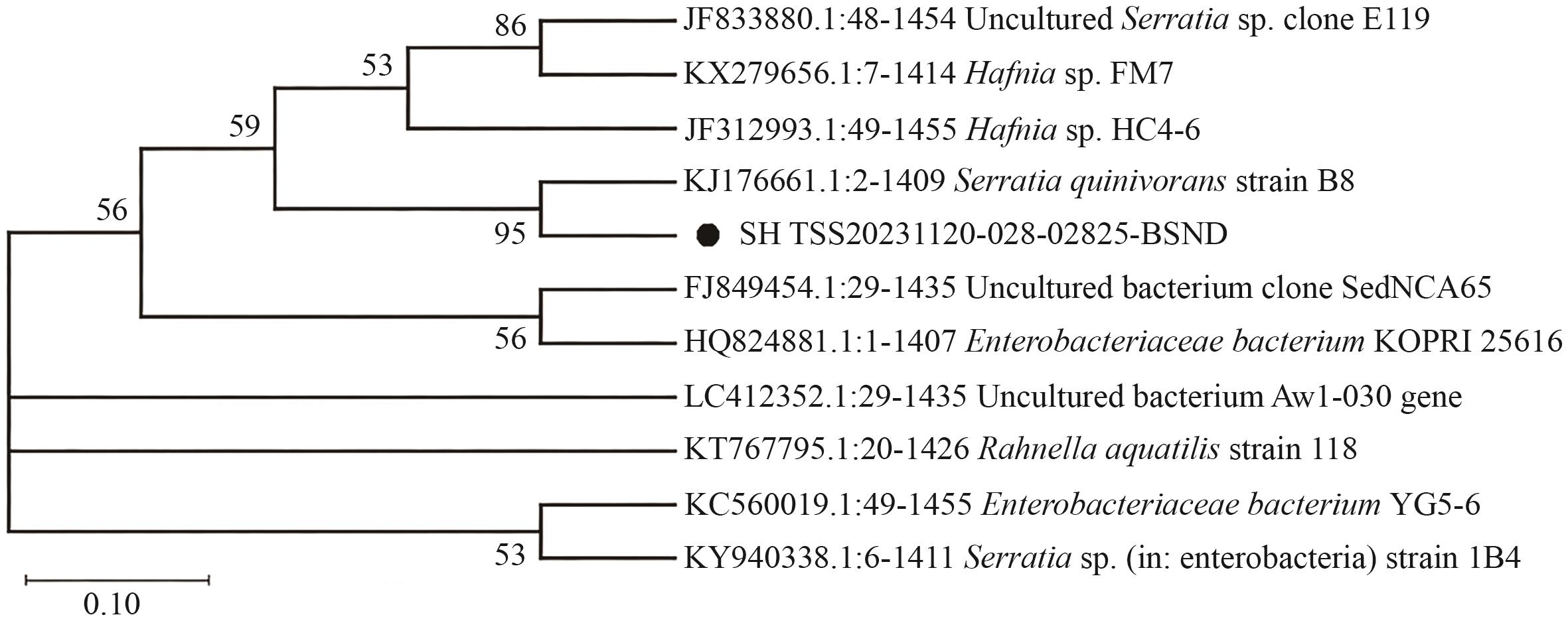
图1 基于16S rRNA基因序列的系统发育树
Fig. 1 Phylogenetic tree based on 16S rRNA gene sequences
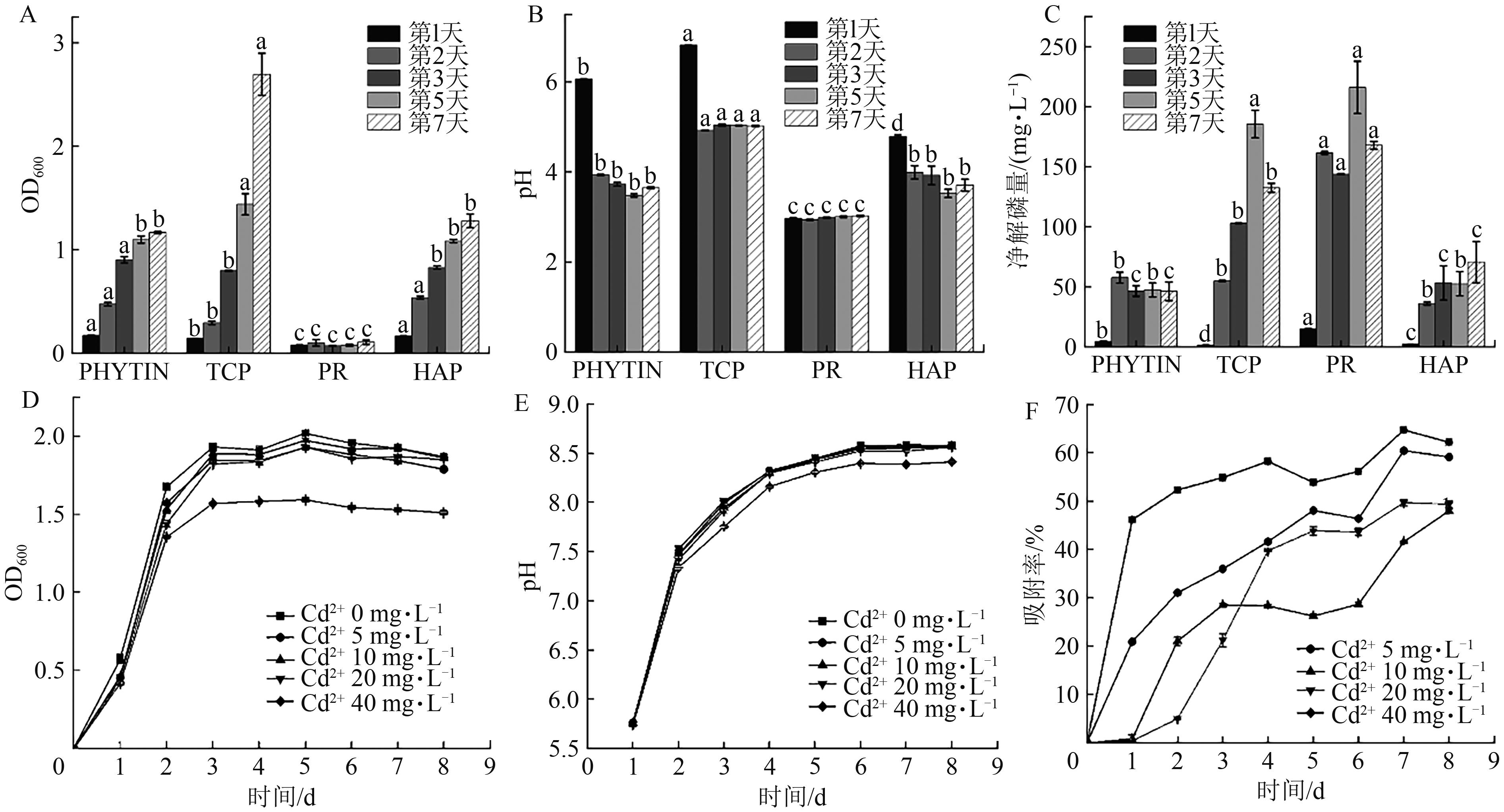
图2 不同磷源及Cd2+胁迫下S. quinivorans SH的生长响应与功能特征A~C:不同磷源条件下菌株OD600、培养液pH和净解磷量的变化;D~F:不同Cd2+浓度胁迫下菌株OD600、培养液pH和Cd吸附率的变化
Fig. 2 Growth responses and functional characteristics of S. quinivorans SH under different phosphorus sources and Cd2+ stress
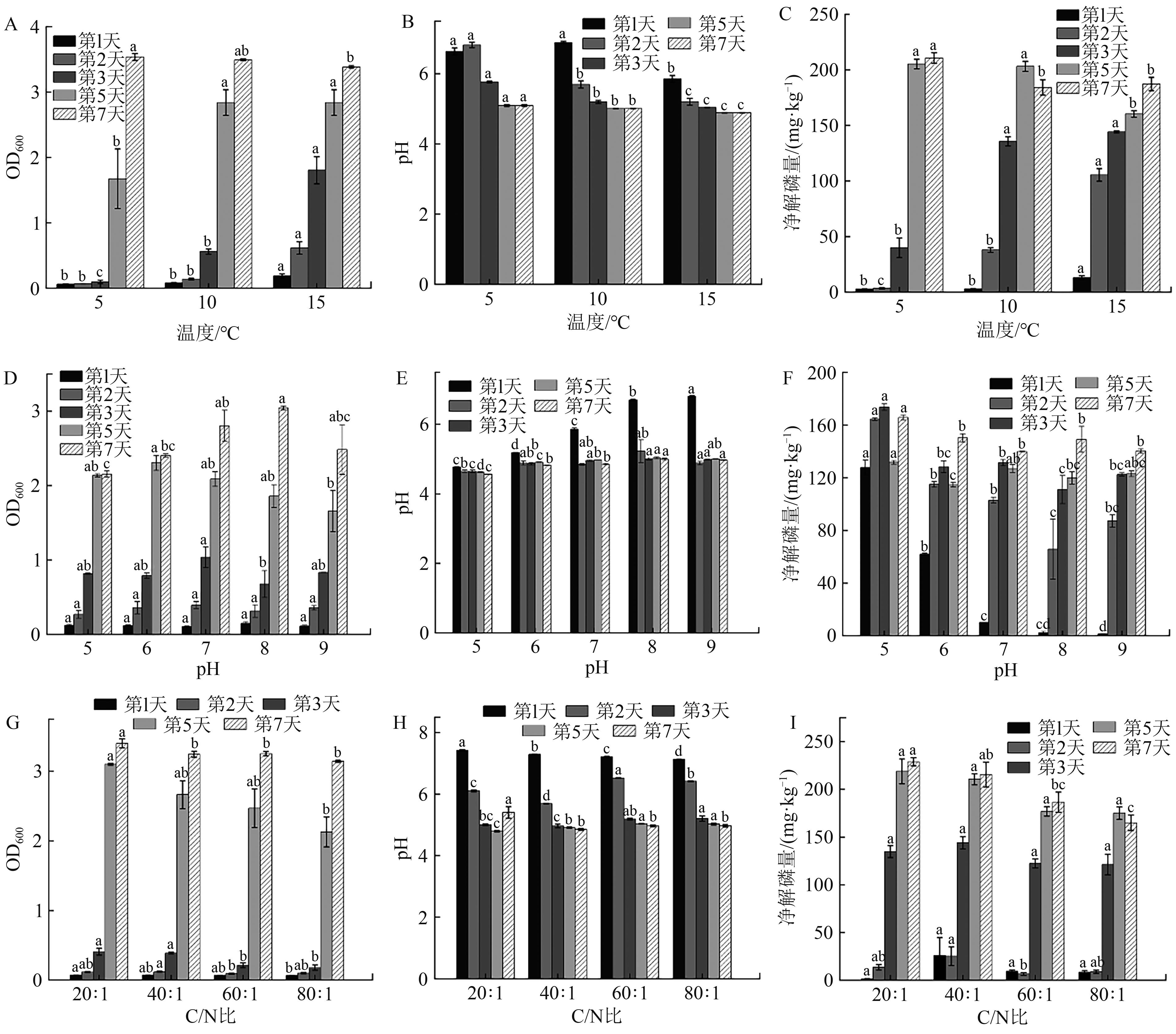
图3 不同温度、pH及C/N比条件下菌株的OD600、生长培养液pH变化及净解磷量A~C:不同温度条件下菌株OD600、培养液pH及净解磷量的变化;D~F:不同初始pH条件下菌株OD600、培养液pH及净解磷量的变化;G~I:不同C/N比条件下菌株OD600、培养液pH及净解磷量的变化
Fig. 3 OD600, variation in growth medium pH, and net phosphate-solubilizing amount of the strain under different temperature, pH, and C/N ratio conditions
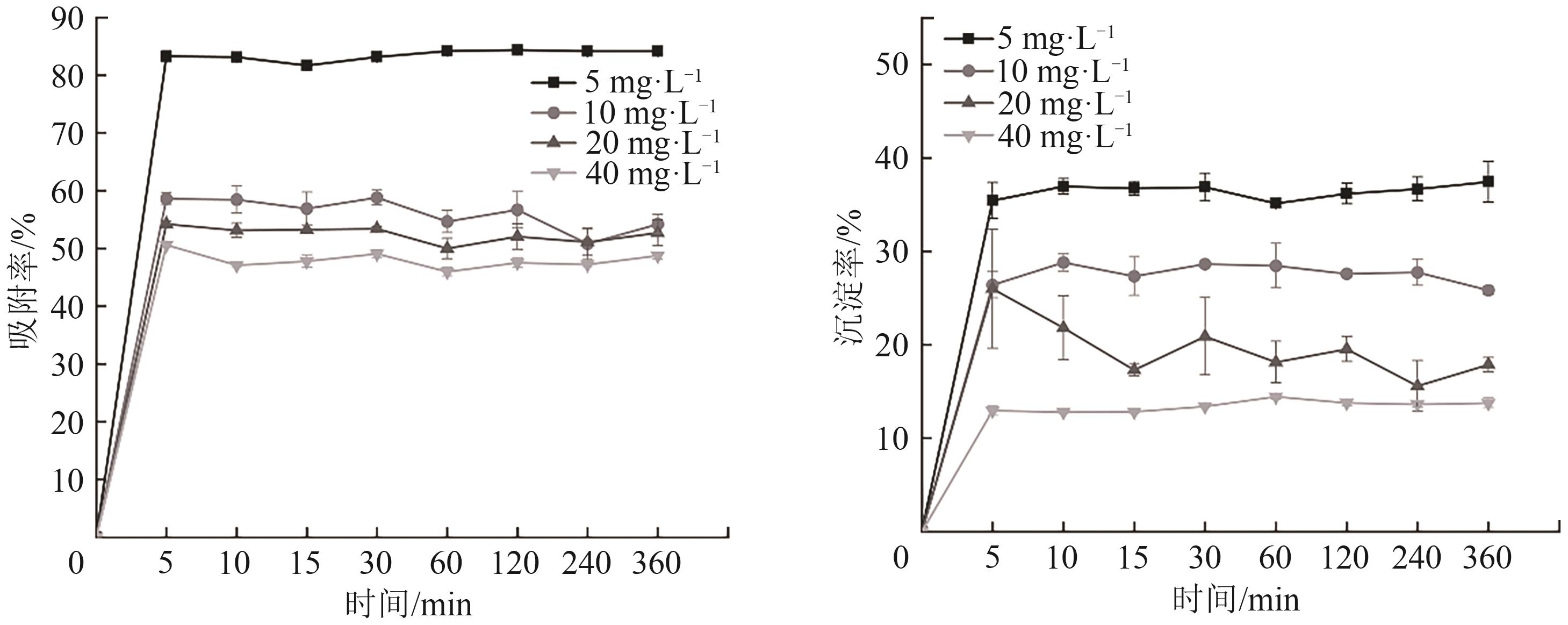
图4 菌体对Cd的吸附率与培养液对Cd的沉淀率随时间变化的曲线
Fig. 4 Changes in Cd adsorption rate by bacterial cells and Cd precipitation rate in the culture medium over time
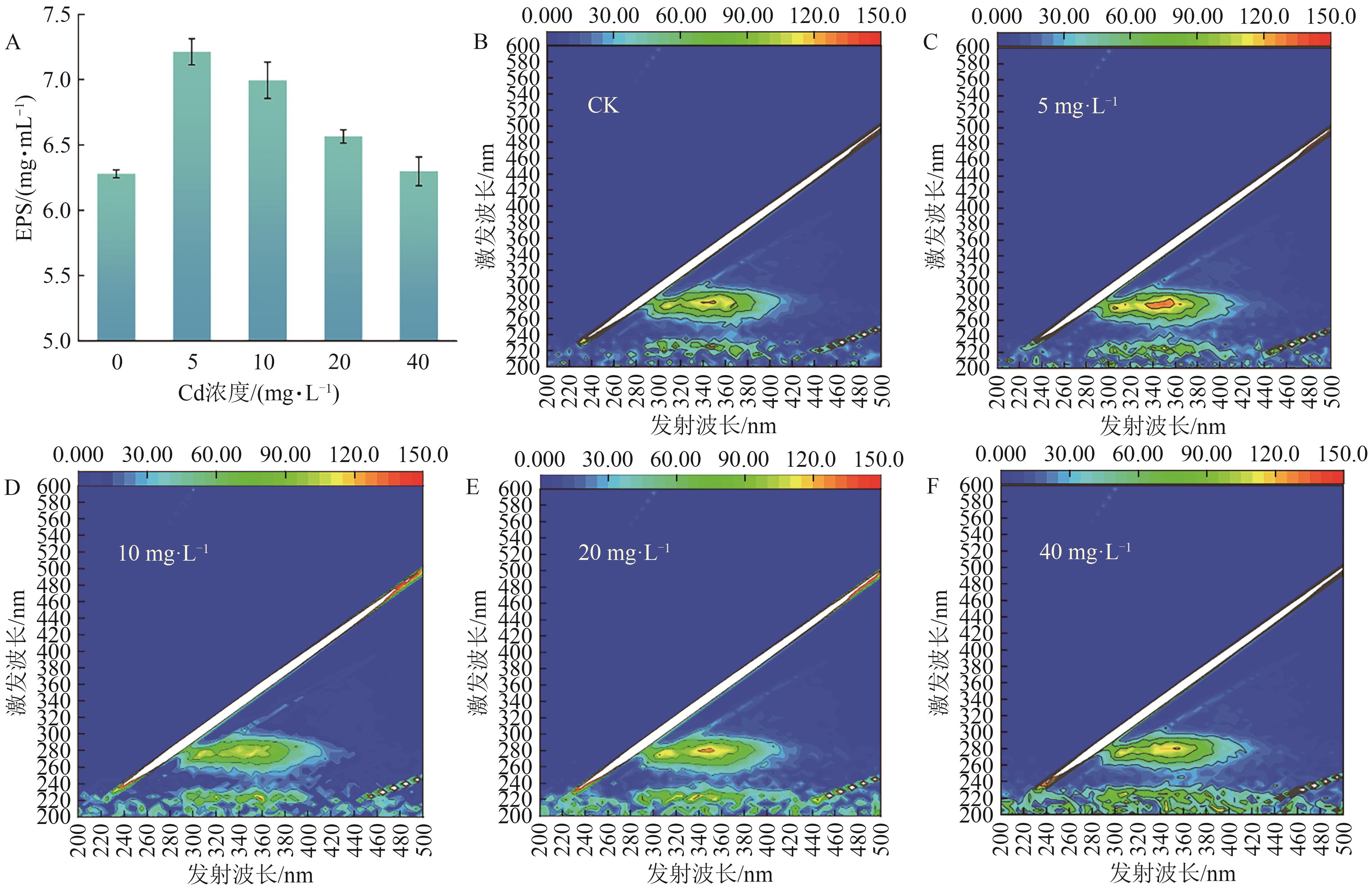
图5 不同Cd浓度下S. quinivorans SH的EPS多糖含量与可溶性EPS粗提液荧光特征A:不同Cd浓度下EPS多糖含量;B:对照组可溶性EPS粗提液的3D-EEM光谱图;C:5 mg·L-1Cd处理下可溶性EPS粗提液的3D-EEM光谱图;D:10 mg·L-1Cd处理下可溶性EPS粗提液的3D-EEM光谱图;E:20 mg·L-1Cd处理下可溶性EPS粗提液的3D-EEM光谱图;F:40 mg·L-1Cd处理下可溶性EPS粗提液的3D-EEM光谱图
Fig. 5 EPS polysaccharide content and fluorescence characteristics of soluble EPS crude extracts from S. quinivorans SH under different Cd concentrations
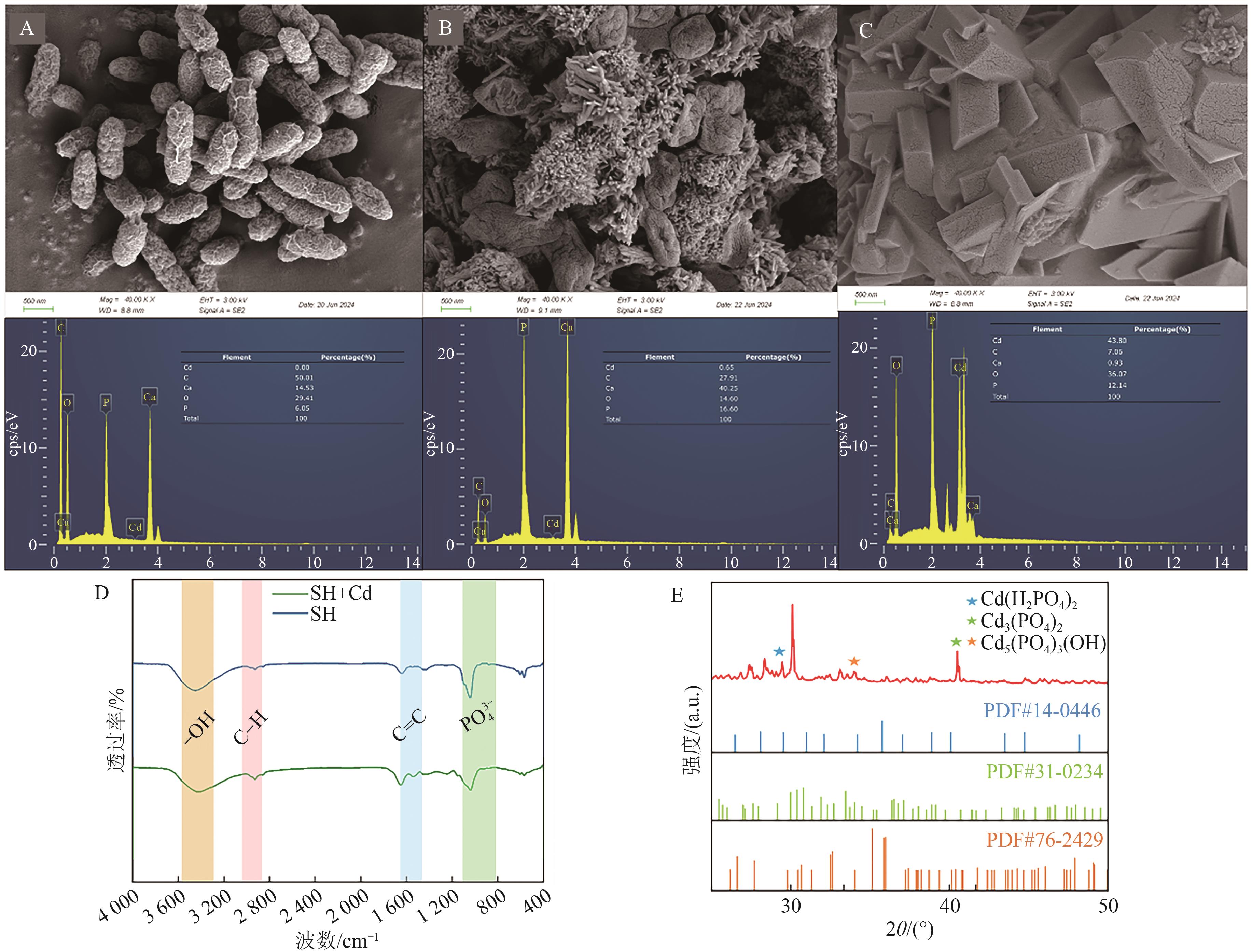
图6 S. quinivorans SH 对镉的吸附与矿化特征A~B:对照组和镉处理组的SEM图像及EDS分析;C:SEM图像及EDS分析显示镉沉淀的形貌和元素分布;D:FTIR光谱图展示SH与SH+Cd的主要官能团;E:XRD图谱显示镉矿化产物
Fig. 6 Characteristics of cadmium adsorption and mineralization by S. quinivorans SH
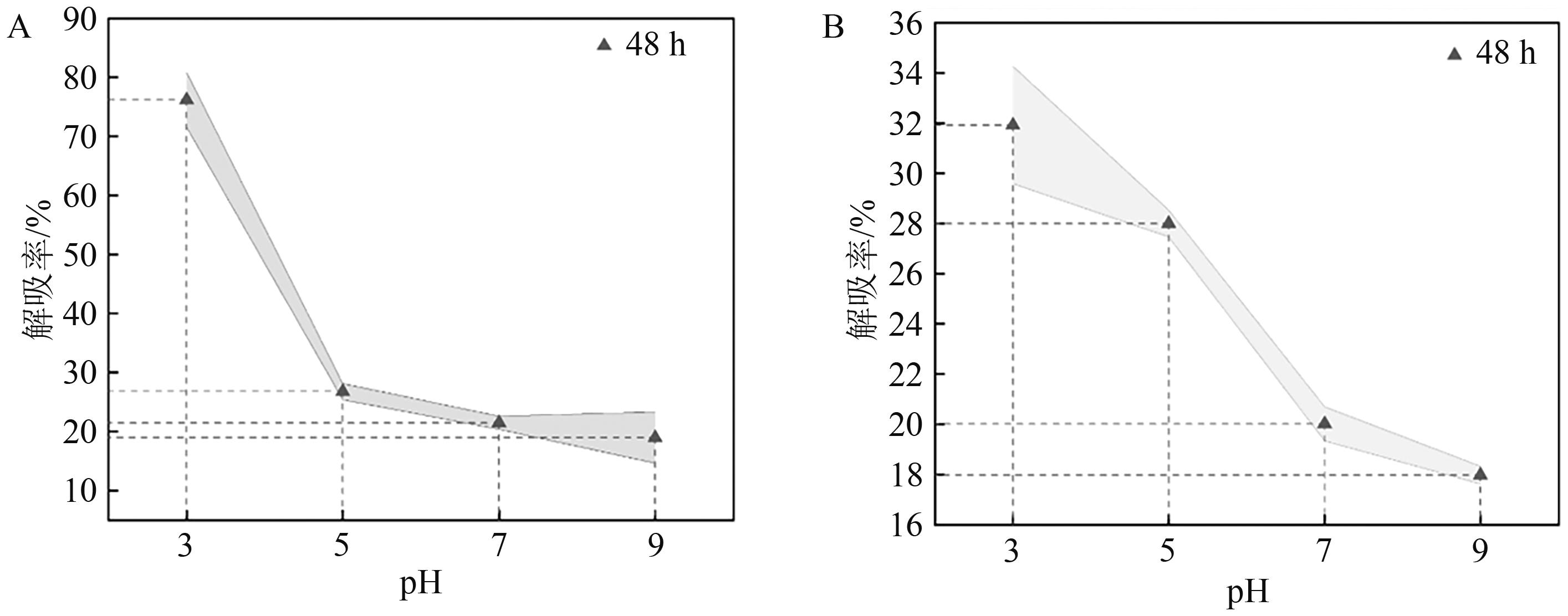
图7 pH对吸附产物和沉淀产物的影响A:pH对吸附产物的影响;B:pH对沉淀产物的影响
Fig. 7 Effects of pH on adsorption products and precipitation products
| 特征 | 统计值 |
|---|---|
| 基因组大小/bp | 5 042 730 |
| 编码序列平均长度/bp | 965 |
| GC含量/% | 51.49 |
| 编码基因数量 | 4 496 |
| Contig数量 | 3 |
| 染色体数量 | 1 |
| 质粒数量 | 2 |
| tRNA数量 | 75 |
| rRNA数量 | 22 |
| sRNA数量 | 88 |
表2 菌株SH基因组特征
Table 2 Genomic characterization of strain SH
| 特征 | 统计值 |
|---|---|
| 基因组大小/bp | 5 042 730 |
| 编码序列平均长度/bp | 965 |
| GC含量/% | 51.49 |
| 编码基因数量 | 4 496 |
| Contig数量 | 3 |
| 染色体数量 | 1 |
| 质粒数量 | 2 |
| tRNA数量 | 75 |
| rRNA数量 | 22 |
| sRNA数量 | 88 |
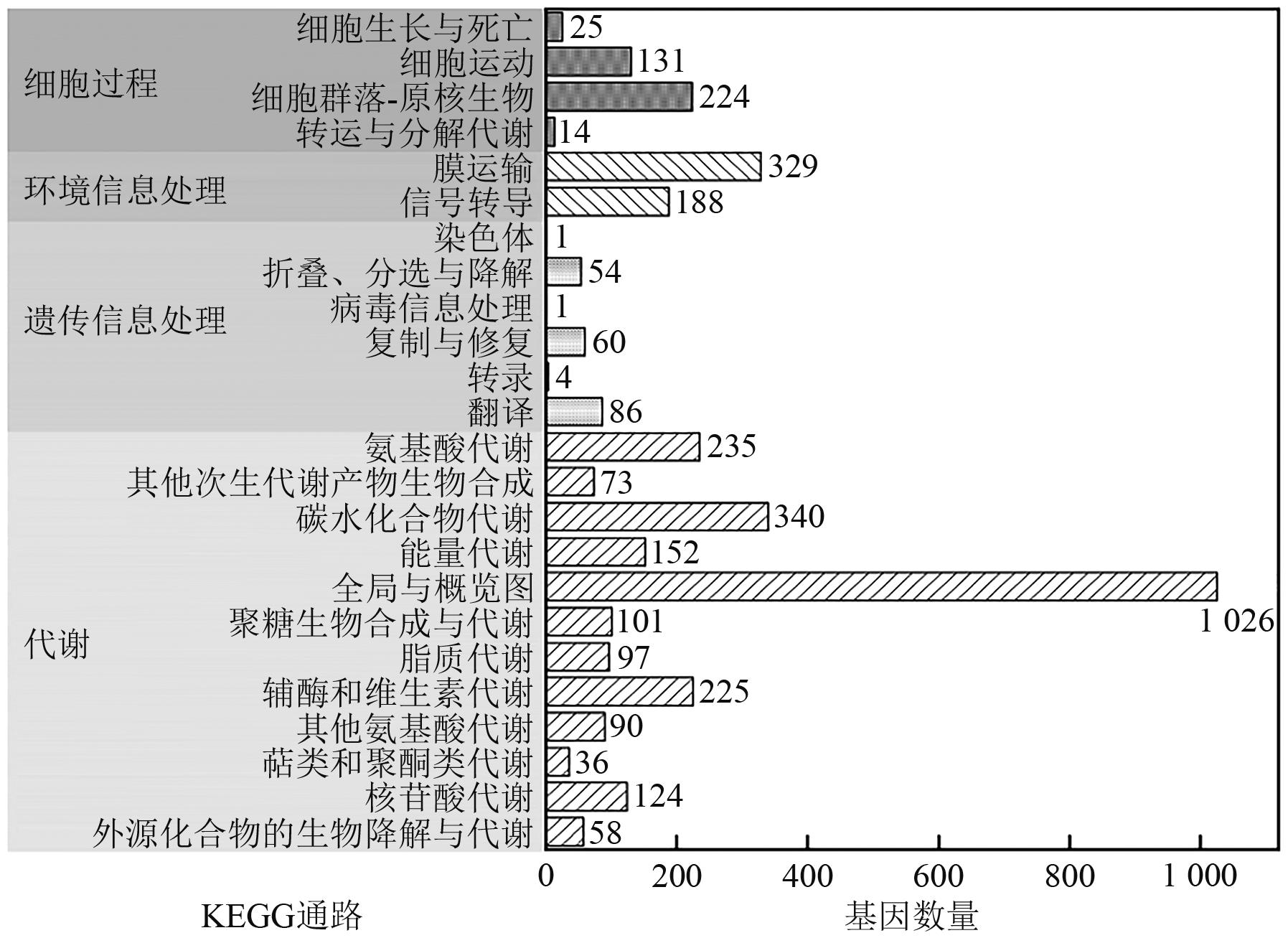
图8 KEGG功能注释分类统计图A:COG功能分类统计;B:KEGG功能分类统计
Fig. 8 Statistical classification of KEGG functional annotations
| [1] | WU J, DUAN D, LU J, et al.. Inorganic pollution around the Qinghai-Xizang Plateau: an overview of the current observations[J]. Sci. Total Environ., 2016, 550: 628-636. |
| [2] | SUHANI I, SAHAB S, SRIVASTAVA V, et al.. Impact of cadmium pollution on food safety and human health[J]. Curr. Opin. Toxicol., 2021, 27: 1-7. |
| [3] | PEERA S K P G, KHANAM R, DAS S, et al.. A state-of-the-art review on cadmium uptake, toxicity, and tolerance in rice: from physiological response to remediation process[J/OL]. Environ. Res., 2023, 220: 115098[2026-05-15]. . |
| [4] | MA Y, WANG L, CAO Y, et al.. Stabilization and remediation of heavy metal-contaminated soils in China: insights from a decade-long national survey[J]. Environ. Sci. Pollut. Res., 2022, 29(26): 39077-39087. |
| [5] | GEORGE S E, WAN Y. Microbial functionalities and immobilization of environmental lead: biogeochemical and molecular mechanisms and implications for bioremediation[J/OL]. J. Hazard. Mater., 2023, 457: 131738[2026-05-15]. . |
| [6] | ZHANG L, ZHANG J, ZHOU R, et al.. β-tricalcium phosphate enhanced biomineralization of Cd2+ and Pb2+ by Sporosarcina ureilytica HJ1 and Sporosarcina pasteurii HJ2[J/OL]. J. Hazard. Mater., 2024, 474: 134624. |
| [7] | HAN L J, LI J S, CHEN Z, et al.. Stabilization of Pb(Ⅱ) in wastewater and tailings by commercial bacteria through microbially induced phosphate precipitation (MIPP)[J/OL]. Sci. Total Environ., 2023, 868: 161628[2026-05-15]. . |
| [8] | HE N, HU L, JIANG C, et al.. Remediation of chromium, zinc, arsenic, lead and antimony contaminated acidic mine soil based on Phanerochaete chrysosporium induced phosphate precipitation[J/OL]. Sci. Total Environ., 2022, 850: 157995[2026-05-15]. . |
| [9] | ZENG G, DAI J, JIAN J, et al.. The effect of phosphate solubilizing bacteria on the fate of cadmium immobilized by microbial induced phosphate precipitation[J/OL]. J. Environ. Manag., 2025, 380: 125125[2026-05-15]. . |
| [10] | 宋宇,陈玉洁,陈凯斌,等.不同胶结液驱动解磷微生物固化/稳定化重金属污染土力学特性研究[J].工程地质学报,2025,33(6):2095-2107. |
| SONG Y, CHEN Y J, CHEN K B, et al.. Study on the mechanical properties of heavy metal contaminated soil solidified/stabilized by phosphate-solubilizing microorganisms driven by different cementing fluids[J]. J. Eng. Geol., 2025, 33(6): 2095-2107. | |
| [11] | GLICK B R. Using soil bacteria to facilitate phytoremediation[J]. Biotechnol. Adv., 2010, 28(3): 367-374. |
| [12] | MA X, LUO Z, YU Y, et al.. Insight into mineral-microbe interaction on cadmium immobilization via microbially induced phosphate precipitation with various phosphate minerals[J/OL]. J. Hazard. Mater., 2025, 498: 139854[2026-05-15]. . |
| [13] | ZENG G, QIAO S, WANG X, et al.. Immobilization of cadmium by Burkholderia sp. QY14 through modified microbially induced phosphate precipitation[J/OL]. J. Hazard. Mater., 2021, 412: 125156[2026-05-15]. . |
| [14] | 李雪涛,许永利.解磷菌的筛选鉴定及其促生效果研究[J].农业与技术,2024,44(24):108-112. |
| LI X T, XU Y L. Screening and identification of phosphate-solubilizing bacteria and its growth-promoting effect[J]. Agric. Technol., 2024, 44(24): 108-112. | |
| [15] | QIN S, ZHANG H, HE Y, et al.. Improving radish phosphorus utilization efficiency and inhibiting Cd and Pb uptake by using heavy metal-immobilizing and phosphate-solubilizing bacteria[J/OL]. Sci. Total Environ., 2023, 868: 161685. |
| [16] | DUAN T, ZHANG J, WANG Z. Responses and indicators of composition, diversity, and productivity of plant communities at different levels of disturbance in a wetland ecosystem[J/OL]. Diversity, 2021, 13(6): 252[2026-05-15]. . |
| [17] | ZHANG W, WANG Q, WU Q, et al.. The response of soil Olsen-P to the P budgets of three typical cropland soil types under long-term fertilization[J/OL]. PLoS One, 2020, 15(3): e0230178[2026-05-15]. . |
| [18] | USMONKULOVA A, MALUSA E, KADIROVA G, et al.. Ni2+ and Cd2+ biosorption capacity and redox-mediated toxicity reduction in bacterial strains from highly contaminated soils of Uzbekistan[J/OL]. Microorganisms, 2025, 13(7): 1485[2026-05-15]. . |
| [19] | XU D, SHEN Z, DOU C, et al.. Effects of soil properties on heavy metal bioavailability and accumulation in crop grains under different farmland use patterns[J/OL]. Sci. Rep., 2022, 12: 9211[2026-05-15]. . |
| [20] | BRINZA L, GERAKI K, MATAMOROS-VELOZA A, et al.. The Irish kelp, Fucus vesiculosus, a highly potential green bio sorbent for Cd (Ⅱ) removal: mechanism, quantitative and qualitative approaches[J/OL]. J. Clean. Prod., 2021, 327: 129422[2026-05-15]. . |
| [21] | CABESTRERO Ó, TEBES-CAYO C, HINMAN N W, et al.. Mineral paragenesis precipitating in salt flat pools of continental environments replicated in microbial mat microcosms without evaporation[J/OL]. Minerals, 2022, 12(5): 646[2026-05-15]. . |
| [22] | YUAN J, LU W. Adsorption of Cr(Ⅵ) from aqueous solutions using inorganic clays modified magnetic chitosan adsorbent: kinetic and thermodynamic study[J/OL]. Desalin. Water Treat., 2024, 319: 100442[2026-05-15]. . |
| [23] | ZENG W, ZHANG S, XIA M, et al.. Insights into the production of extracellular polymeric substances of Cupriavidus pauculus1490 under the stimulation of heavy metal ions[J]. RSC Adv., 2020, 10(34): 20385-20394. |
| [24] | XING Y, LUO X, LIU S, et al.. Synergistic effect of biofilm growth and cadmium adsorption via compositional changes of extracellular matrix in montmorillonite system[J/OL]. Bioresour. Technol., 2020, 315: 123742[2026-05-15]. . |
| [25] | LIU F, HAN X, WANG Z, et al.. Extracellular polymeric substances protect Chlorella sp. against the cadmium stress[J/OL]. Ecologies, 2025, 6(4): 65[2026-05-15]. . |
| [26] | GARCIA-SANCHEZ M, BERTRAND I, BARAKAT A, et al.. Improved rock phosphate dissolution from organic acids is driven by nitrate assimilation of bacteria isolated from nitrate and CaCO3-rich soil[J/OL]. PLoS One, 2023, 18(3): e0283437[2026-05-15]. . |
| [27] | XIAO S S, WEN J Y, QI Z, et al.. Isolation, identification and phosphate solubilization analysis of phosphate-solubilizing bacteria derived from Pinus sylvestris var. mongolica rhizosphere soil[J]. Chin. Agric. Sci.. Bull., 2020, 36(32): 76-81. |
| [28] | MA Y, LIU Y, WANG D, et al.. The impacts of different nitrogen forms on fungal weathering of carbonate and insoluble phosphate in the karst red soil[J/OL]. Environ. Technol. Innov., 2026, 41: 104719[2026-05-15]. . |
| [29] | DESALEGN Y M, BEKELE E A, OLU F E. Optimization of Cd(Ⅱ) removal from aqueous solution by natural hydroxyapatite/bentonite composite using response surface methodology[J/OL]. Sci. Rep., 2023, 13: 5158[2026-05-15]. . |
| [30] | CUI D, TAN C, DENG H, et al.. Biosorption mechanism of aqueous Pb2+, Cd2+, and Ni2+ ions on extracellular polymeric substances (EPS)[J/OL]. Archaea, 2020, 2020(1): 8891543[2026-05-15]. . |
| [31] | LAI W, WU Y, ZHANG C, et al.. Combination of biochar and phosphorus solubilizing bacteria to improve the stable form of toxic metal minerals and microbial abundance in lead/cadmium-contaminated soil[J/OL]. Agronomy, 2022, 12(5): 1003[2026-05-15]. . |
| [32] | ZHANG K, XUE Y, ZHANG J, et al.. Removal of lead from acidic wastewater by bio-mineralized bacteria with pH self-regulation[J/OL]. Chemosphere, 2020, 241: 125041[2026-05-15]. . |
| [33] | 郭梅,韩昕,卢育霞,等.镉污染对黄土物理化学及力学性质的影响[J].地质科技通报,2025,44(3):353-362. |
| GUO M, HAN X, LU Y X, et al.. Effects of cadmium on physical-chemical and mechanical properties of loess[J]. Bull. Geol. Sci. Technol., 2025, 44(3): 353-362. | |
| [34] | SHENG M, LIU Y, ZENG G, et al.. For aqueous/soil cadmium immobilization under acid attack, does the hydroxyapatite converted from Pseudochrobactrum sp. DL-1 induced vaterite necessarily show higher stability?[J/OL]. J. Hazard. Mater., 2024, 478: 135631[2026-05-15]. . |
| [35] | WANG Q, DUAN C J, XU C Y, et al.. Efficient removal of Cd(Ⅱ) by phosphate-modified biochars derived from apple tree branches: processes, mechanisms, and application[J/OL]. Sci. Total Environ., 2022, 819: 152876[2026-05-15]. . |
| [36] | WANG S, LI Y, ZHANG J, et al.. Transcriptome profiling analysis of phosphate-solubilizing mechanism of Pseudomonas strain W134[J/OL]. Microorganisms, 2022, 10(10): 1998[2026-05-15]. . |
| [37] | KOUBA V, BACHMANNOVá C, PODZIMEK T, et al.. Physiology of anammox adaptation to low temperatures and promising biomarkers: a review[J/OL]. Bioresour. Technol., 2022, 349: 126847[2026-04-11]. . |
| [38] | ZHANG X, LIU W, LIU J, et al.. Isolation and growth-promoting mechanisms of phosphate-solubilizing bacteria from Qinghai-Xizang Plateau in Lespedeza bicolor Turcz[J/OL]. Front. Microbiol., 2025, 16: 1669774[2026-05-15]. . |
| [39] | ZULUAGA M Y A, DE OLIVEIRA A L M, VALENTINUZZI F, et al.. An insight into the role of the organic acids produced by Enterobacter sp. strain 15S in solubilizing tricalcium phosphate: in situ study on cucumber[J/OL]. BMC Microbiol., 2023, 23: 184[2026-05-15]. . |
| [40] | HUANG H, WANG K, LI S, et al.. Different survival strategies of the phosphate-mineralizing bacterium Enterobacter sp. PMB-5 in response to cadmium stress: biomineralization, biosorption, and bioaccumulation[J/OL]. J. Hazard. Mater., 2024, 465: 133284[2026-05-15]. . |
| [41] | YANG X, YUE S, WU Z, et al. Identification of the Pst system of phosphate solubilizing bacteria Pseudomonas sp.wj1 and functional analysis of pstS gene[J]. J. China Agric. Univ., 2018, 23(6): 40-48. |
| [42] | DE LACERDA J R M, SILVA T FDA, VOLLÚ R E, et al.. Generally recognized as safe (GRAS) Lactococcus lactis strains associated with Lippia sidoides Cham. are able to solubilize/mineralize phosphate[J/OL]. SpringerPlus, 2016, 5(1): 828[2026-05-15]. . |
| [43] | YANG S, DENG W, LIU S, et al.. Presence of heavy metal resistance genes in Escherichia coli and Salmonella isolates and analysis of resistance gene structure in E. coli E308[J]. J. Glob. Antimicrob. Resist., 2020, 21: 420-426. |
| [44] | KWON E H, ADHIKARI A, IMRAN M, et al.. Novel melatonin-producing Bacillus safensis EH143 mitigates salt and cadmium stress in soybean[J/OL]. J. Pineal Res., 2024, 76(4): e12957[2026-05-15]. . |
| [1] | 郭芳芳,杨薇,姜伟. 细菌纳米磁小体的合成机制及应用[J]. 生物技术进展, 2012, 2(1): 16-22. |
| 阅读次数 | ||||||
|
全文 |
|
|||||
|
摘要 |
|
|||||
