

生物技术进展 ›› 2026, Vol. 16 ›› Issue (1): 140-148.DOI: 10.19586/j.2095-2341.2025.0135
王彦惠1( ), 兰欣悦1, 刘祎桐2, 林晟豪1, 陈鸣1, 许文涛1, 朱龙佼1()
收稿日期:2025-10-09
接受日期:2025-11-07
出版日期:2026-01-25
发布日期:2026-02-12
通讯作者:
朱龙佼
作者简介:王彦惠 E-mail: wyhdcxwcs@163.com;
基金资助:
Yanhui WANG1(), Xinyue LAN1, Yitong LIU2, Shenghao LIN1, Ming CHEN1, Wentao XU1, Longjiao ZHU1()
Received:2025-10-09
Accepted:2025-11-07
Online:2026-01-25
Published:2026-02-12
Contact:
Longjiao ZHU
摘要:
功能性食醋是食醋产业多元化与高值化发展的重要方向。为评估不同再加工工艺的改良效果,以“华佗药香醋”为对象,采用液相色谱-串联质谱联用(liquid chromatography-tandem mass spectrometry,LC-MS/MS)技术及体外抗氧化活性测定等方法,系统比较了浸泡(25 ℃)与煮沸处理对其营养成分与功能活性的影响。结果显示,浸泡工艺提升了产品的营养成分含量,总有机酸和总氨基酸分别提高了10.43%和30.04%,但未达到显著水平。同时,该工艺还显著增强了样品的抗氧化能力,1,1-二苯基-2-三硝基苯肼(1,1-diphenyl-2-picrylhydrazine,DPPH)和2,2'-联氮-双-3-乙基苯并噻唑啉-6-磺酸[2, 2'-azino-bis(3-ethylbenzothiazoline-6-sulfonic acid),ABTS]自由基清除率分别提升了87.39%和58.36%(P<0.05)。扫描电镜分析(scanning electron microscopy, SEM)进一步揭示药香醋中存在天然纳米结构,且其形貌、粒径及Zeta电位均受加工工艺调控。结果表明,浸泡工艺可同步提升药香醋的营养成分与抗氧化能力,工艺可调纳米结构为其功能增效机制提供了直接微观证据。
中图分类号:
王彦惠, 兰欣悦, 刘祎桐, 林晟豪, 陈鸣, 许文涛, 朱龙佼. 再加工工艺对药香醋品质的影响与纳米结构揭示[J]. 生物技术进展, 2026, 16(1): 140-148.
Yanhui WANG, Xinyue LAN, Yitong LIU, Shenghao LIN, Ming CHEN, Wentao XU, Longjiao ZHU. Effect of Reprocessing on the Quality of Medicinal Aromatic Vinegar and its Nanostructure Revelation[J]. Current Biotechnology, 2026, 16(1): 140-148.
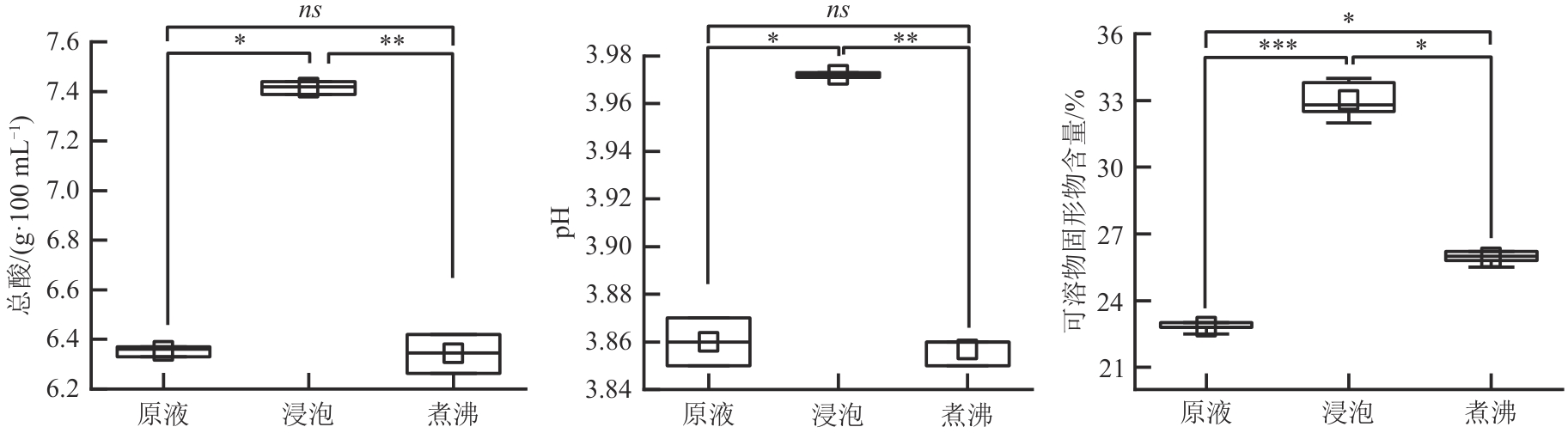
图1 基本理化参数注:*、**、***分别表示在P<0.05、P<0.01、P<0.001水平上具有统计学意义;ns表示无统计学意义。
Fig. 1 Basic physicochemical parameters
| 有机酸种类 | 标准曲线 | 相关系数(r) | 线性范围/(ng·mL-1) | 定量限/(ng·mL-1) | 原液/(ng·mL-1) | 浸泡/(ng·mL-1) | 煮沸/(ng·mL-1) |
|---|---|---|---|---|---|---|---|
| 柠檬酸 | y=853.377x+7.480e5 | 0.993 02 | 20~2 000 | 20 | 6 149.55 | 6 844.64 | 6 311.48 |
| 乳酸 | y=1 578.044x+2.594e5 | 0.992 71 | 20~4 000 | 20 | 563.42 | 567.44 | 534.15 |
| 焦谷氨酸 | y=125.072x-529.814 | 0.994 19 | 20~8 000 | 20 | 508.68 | 443.61 | 424.96 |
| 苹果酸 | y=3 718.915x+8.734e4 | 0.990 65 | 4~800 | 4 | 132.07 | 262.24 | 210.59 |
| 酒石酸 | y=567.176x+13 609.325 | 0.991 74 | 20~2 000 | 20 | 191.56 | 235.23 | 198.79 |
| 苯乳酸 | y=1 286.594x-891.087 | 0.996 09 | 2~800 | 2 | 183.57 | 171.13 | 169.01 |
| 琥珀酸 | y=8 022.780x+14 171.818 | 0.997 15 | 2~1 600 | 2 | 151.54 | 135.46 | 129.40 |
| 丙二酸 | y=702.731x-6 263.514 | 0.992 88 | 40~4 000 | 40 | 11.26 | 47.21 | 39.73 |
| 香草酸 | y=347.304x+2 807.078 | 0.993 35 | 10~8 000 | 10 | 27.29 | 26.02 | 25.48 |
| 3-羟基-3-甲基戊二酸 | y=6 487.890x-1 043.688 | 0.997 69 | 2.5~2 000 | 2.5 | 25.82 | 22.90 | 21.36 |
| 泛酸 | y=514.681x+807.806 | 0.998 45 | 20~16 000 | 20 | 1.57 | 17.44 | 17.96 |
| 戊二酸 | y=7 210.433x+1 811.293 | 0.997 76 | 1~800 | 1 | 5.94 | 6.03 | 5.55 |
| D-葡萄糖醛酸 | y=1 387.180x+30.906 | 0.997 12 | 5~4 000 | 5 | 6.32 | 5.88 | 22.69 |
| 富马酸 | y=1 412.000x+5 988.081 | 0.997 72 | 5~4 000 | 5 | 0.44 | 4.93 | 5.10 |
| 辛二酸 | y=25 544.093x+1.309e5 | 0.995 16 | 1~200 | 1 | 4.67 | 4.14 | 4.28 |
| 烟酸 | y=1 818.504x+800.838 | 0.995 53 | 2.5~1 000 | 2.5 | 4.14 | 3.94 | 3.59 |
| 5-羟甲基-2-呋喃甲酸 | y=2 148.361x+2 741.174 | 0.996 96 | 2.5~2 000 | 2.5 | 3.02 | 3.63 | 2.89 |
| 苯丙酮酸 | y=620.082x-1 523.647 | 0.998 74 | 4~800 | 4 | 1.62 | 2.65 | 1.31 |
| 马来酸 | y=3 718.915x+8.734e4 | 0.990 65 | 4~800 | 4 | 2.36 | 2.30 | 1.66 |
| 3-甲基戊二酸 | y=6 230.506x-4 717.793 | 0.994 54 | 2.5~2 000 | 2.5 | 1.43 | 1.48 | 1.33 |
| 高香草酸 | y=1 603.625x-5 382.444 | 0.993 53 | 20~2 000 | 20 | 1.19 | 1.08 | 1.25 |
| 己二酸 | y=5 163.754x+464.640 | 0.997 29 | 2~800 | 2 | 0.80 | 0.86 | 0.77 |
| 乙基丙二酸 | y=7 227.696x-2 425.879 | 0.996 82 | 1~800 | 1 | 0.40 | 0.57 | 0.41 |
| 马尿酸 | y=6 284.347x-1 550.857 | 0.997 53 | 0.5~400 | 0.5 | 0.05 | 0.17 | 0.14 |
| 吡啶甲酸 | y=4 713.446x+1 140.537 | 0.993 41 | 2.5~2 000 | 2.5 | 0.00 | 0.00 | 0.00 |
| 3-吲哚乙酸 | y=1 499.337x-1 739.254 | 0.995 18 | 5~4 000 | 5 | 0.00 | 0.00 | 0.00 |
| 总计 | 7 978.69 | 8 810.97 | 8 133.88 |
表1 26种有机酸含量定量分析表
Table 1 Quantitative analysis of 26 organic acids
| 有机酸种类 | 标准曲线 | 相关系数(r) | 线性范围/(ng·mL-1) | 定量限/(ng·mL-1) | 原液/(ng·mL-1) | 浸泡/(ng·mL-1) | 煮沸/(ng·mL-1) |
|---|---|---|---|---|---|---|---|
| 柠檬酸 | y=853.377x+7.480e5 | 0.993 02 | 20~2 000 | 20 | 6 149.55 | 6 844.64 | 6 311.48 |
| 乳酸 | y=1 578.044x+2.594e5 | 0.992 71 | 20~4 000 | 20 | 563.42 | 567.44 | 534.15 |
| 焦谷氨酸 | y=125.072x-529.814 | 0.994 19 | 20~8 000 | 20 | 508.68 | 443.61 | 424.96 |
| 苹果酸 | y=3 718.915x+8.734e4 | 0.990 65 | 4~800 | 4 | 132.07 | 262.24 | 210.59 |
| 酒石酸 | y=567.176x+13 609.325 | 0.991 74 | 20~2 000 | 20 | 191.56 | 235.23 | 198.79 |
| 苯乳酸 | y=1 286.594x-891.087 | 0.996 09 | 2~800 | 2 | 183.57 | 171.13 | 169.01 |
| 琥珀酸 | y=8 022.780x+14 171.818 | 0.997 15 | 2~1 600 | 2 | 151.54 | 135.46 | 129.40 |
| 丙二酸 | y=702.731x-6 263.514 | 0.992 88 | 40~4 000 | 40 | 11.26 | 47.21 | 39.73 |
| 香草酸 | y=347.304x+2 807.078 | 0.993 35 | 10~8 000 | 10 | 27.29 | 26.02 | 25.48 |
| 3-羟基-3-甲基戊二酸 | y=6 487.890x-1 043.688 | 0.997 69 | 2.5~2 000 | 2.5 | 25.82 | 22.90 | 21.36 |
| 泛酸 | y=514.681x+807.806 | 0.998 45 | 20~16 000 | 20 | 1.57 | 17.44 | 17.96 |
| 戊二酸 | y=7 210.433x+1 811.293 | 0.997 76 | 1~800 | 1 | 5.94 | 6.03 | 5.55 |
| D-葡萄糖醛酸 | y=1 387.180x+30.906 | 0.997 12 | 5~4 000 | 5 | 6.32 | 5.88 | 22.69 |
| 富马酸 | y=1 412.000x+5 988.081 | 0.997 72 | 5~4 000 | 5 | 0.44 | 4.93 | 5.10 |
| 辛二酸 | y=25 544.093x+1.309e5 | 0.995 16 | 1~200 | 1 | 4.67 | 4.14 | 4.28 |
| 烟酸 | y=1 818.504x+800.838 | 0.995 53 | 2.5~1 000 | 2.5 | 4.14 | 3.94 | 3.59 |
| 5-羟甲基-2-呋喃甲酸 | y=2 148.361x+2 741.174 | 0.996 96 | 2.5~2 000 | 2.5 | 3.02 | 3.63 | 2.89 |
| 苯丙酮酸 | y=620.082x-1 523.647 | 0.998 74 | 4~800 | 4 | 1.62 | 2.65 | 1.31 |
| 马来酸 | y=3 718.915x+8.734e4 | 0.990 65 | 4~800 | 4 | 2.36 | 2.30 | 1.66 |
| 3-甲基戊二酸 | y=6 230.506x-4 717.793 | 0.994 54 | 2.5~2 000 | 2.5 | 1.43 | 1.48 | 1.33 |
| 高香草酸 | y=1 603.625x-5 382.444 | 0.993 53 | 20~2 000 | 20 | 1.19 | 1.08 | 1.25 |
| 己二酸 | y=5 163.754x+464.640 | 0.997 29 | 2~800 | 2 | 0.80 | 0.86 | 0.77 |
| 乙基丙二酸 | y=7 227.696x-2 425.879 | 0.996 82 | 1~800 | 1 | 0.40 | 0.57 | 0.41 |
| 马尿酸 | y=6 284.347x-1 550.857 | 0.997 53 | 0.5~400 | 0.5 | 0.05 | 0.17 | 0.14 |
| 吡啶甲酸 | y=4 713.446x+1 140.537 | 0.993 41 | 2.5~2 000 | 2.5 | 0.00 | 0.00 | 0.00 |
| 3-吲哚乙酸 | y=1 499.337x-1 739.254 | 0.995 18 | 5~4 000 | 5 | 0.00 | 0.00 | 0.00 |
| 总计 | 7 978.69 | 8 810.97 | 8 133.88 |
| 氨基酸 | 标准曲线 | 相关系数(r) | 线性范围/(ng·mL-1) | 定量限/(ng·mL-1) | 原液/(ng·mL-1) | 浸泡/(ng·mL-1) | 煮沸/(ng·mL-1) |
|---|---|---|---|---|---|---|---|
| 丙氨酸 | y=0.002x+0.006 42 | 0.992 98 | 2~5 000 | 2 | 3 315.79 | 4 084.80 | 3 266.88 |
| 缬氨酸 | y=0.022x+0.017 6 | 0.991 24 | 0.2~250 | 0.2 | 2 186.41 | 3 009.93 | 2 245.27 |
| 天冬氨酸 | y=0.004x+0.009 57 | 0.994 48 | 0.8~2 000 | 0.8 | 1 913.12 | 2 407.06 | 1 866.67 |
| 脯氨酸 | y=0.032x+0.005 37 | 0.995 85 | 0.2~2 000 | 0.2 | 1 356.28 | 1 765.38 | 1 314.54 |
| 亮氨酸 | y=0.048x+0.032 2 | 0.995 94 | 0.2~1 000 | 0.2 | 1 251.94 | 1 509.04 | 1 257.01 |
| 异亮氨酸 | y=0.035x+0.008 36 | 0.996 20 | 0.2~2 000 | 0.2 | 1 014.88 | 1 353.67 | 1 028.62 |
| 甘氨酸 | y=1.825e-4x+8.080 3e-4 | 0.991 18 | 4~10 000 | 4 | 921.30 | 1 112.67 | 860.35 |
| 丝氨酸 | y=0.014x+0.006 75 | 0.991 55 | 0.2~500 | 0.2 | 489.72 | 1 075.42 | 797.95 |
| 精氨酸 | y=0.004x+0.012 2 | 0.995 27 | 0.2~500 | 0.2 | 907.13 | 1 022.86 | 785.77 |
| 谷氨酸 | y=0.011x+0.008 86 | 0.994 79 | 0.4~2 000 | 0.4 | 721.83 | 872.28 | 728.62 |
| 赖氨酸 | y=0.016x+0.006 67 | 0.994 46 | 0.1~250 | 0.1 | 582.20 | 771.73 | 551.31 |
| 苯丙氨酸 | y=0.049x+0.013 3 | 0.995 49 | 0.1~1 000 | 0.1 | 429.77 | 586.48 | 446.95 |
| 苏氨酸 | y=0.003x+0.001 01 | 0.993 51 | 2~1 000 | 2 | 455.16 | 537.54 | 430.90 |
| 酪氨酸 | y=0.009x+0.009 79 | 0.991 89 | 0.25~1 250 | 0.25 | 382.44 | 451.34 | 347.28 |
| γ-氨基丁酸 | y=0.011x+0.001 68 | 0.992 86 | 0.1~1 000 | 0.1 | 309.91 | 425.70 | 327.25 |
| 天冬酰胺 | y=0.002x+0.010 62 | 0.991 02 | 0.2~2 000 | 0.2 | 330.04 | 358.57 | 265.76 |
| 鸟氨酸 | y=1.193e-4x+6.536 4e-5 | 0.995 04 | 2~20 000 | 2 | 71.03 | 292.01 | 276.49 |
| 谷氨酰胺 | y=0.026x+0.017 6 | 0.992 60 | 0.4~2 000 | 0.4 | 46.34 | 67.76 | 49.92 |
| 组氨酸 | y=0.006x+0.009 07 | 0.991 46 | 0.1~1 000 | 0.1 | 33.41 | 37.32 | 88.30 |
| 甲硫氨酸 | y=0.014x-0.008 52 | 0.991 71 | 1.25~2 500 | 1.25 | 2.15 | 6.19 | 4.42 |
| 色氨酸 | y=0.083x+0.014 8 | 0.992 67 | 0.05~500 | 0.05 | 4.28 | 0.84 | 0.16 |
| 同型半胱氨酸 | y=0.004x-0.002 48 | 0.990 51 | 1~1 000 | 1 | 0.00 | 0.00 | 0.00 |
| 必需氨基酸/总氨基酸 | 35.64% | 35.92% | 35.73% | ||||
| 必需氨基酸/非必须氨基酸 | 55.37% | 56.06% | 55.60% | ||||
| 总计 | 16 725.14 | 21 748.60 | 16 940.43 |
表2 22种氨基酸定量分析表
Table 2 Quantitative analysis of 22 organic acids
| 氨基酸 | 标准曲线 | 相关系数(r) | 线性范围/(ng·mL-1) | 定量限/(ng·mL-1) | 原液/(ng·mL-1) | 浸泡/(ng·mL-1) | 煮沸/(ng·mL-1) |
|---|---|---|---|---|---|---|---|
| 丙氨酸 | y=0.002x+0.006 42 | 0.992 98 | 2~5 000 | 2 | 3 315.79 | 4 084.80 | 3 266.88 |
| 缬氨酸 | y=0.022x+0.017 6 | 0.991 24 | 0.2~250 | 0.2 | 2 186.41 | 3 009.93 | 2 245.27 |
| 天冬氨酸 | y=0.004x+0.009 57 | 0.994 48 | 0.8~2 000 | 0.8 | 1 913.12 | 2 407.06 | 1 866.67 |
| 脯氨酸 | y=0.032x+0.005 37 | 0.995 85 | 0.2~2 000 | 0.2 | 1 356.28 | 1 765.38 | 1 314.54 |
| 亮氨酸 | y=0.048x+0.032 2 | 0.995 94 | 0.2~1 000 | 0.2 | 1 251.94 | 1 509.04 | 1 257.01 |
| 异亮氨酸 | y=0.035x+0.008 36 | 0.996 20 | 0.2~2 000 | 0.2 | 1 014.88 | 1 353.67 | 1 028.62 |
| 甘氨酸 | y=1.825e-4x+8.080 3e-4 | 0.991 18 | 4~10 000 | 4 | 921.30 | 1 112.67 | 860.35 |
| 丝氨酸 | y=0.014x+0.006 75 | 0.991 55 | 0.2~500 | 0.2 | 489.72 | 1 075.42 | 797.95 |
| 精氨酸 | y=0.004x+0.012 2 | 0.995 27 | 0.2~500 | 0.2 | 907.13 | 1 022.86 | 785.77 |
| 谷氨酸 | y=0.011x+0.008 86 | 0.994 79 | 0.4~2 000 | 0.4 | 721.83 | 872.28 | 728.62 |
| 赖氨酸 | y=0.016x+0.006 67 | 0.994 46 | 0.1~250 | 0.1 | 582.20 | 771.73 | 551.31 |
| 苯丙氨酸 | y=0.049x+0.013 3 | 0.995 49 | 0.1~1 000 | 0.1 | 429.77 | 586.48 | 446.95 |
| 苏氨酸 | y=0.003x+0.001 01 | 0.993 51 | 2~1 000 | 2 | 455.16 | 537.54 | 430.90 |
| 酪氨酸 | y=0.009x+0.009 79 | 0.991 89 | 0.25~1 250 | 0.25 | 382.44 | 451.34 | 347.28 |
| γ-氨基丁酸 | y=0.011x+0.001 68 | 0.992 86 | 0.1~1 000 | 0.1 | 309.91 | 425.70 | 327.25 |
| 天冬酰胺 | y=0.002x+0.010 62 | 0.991 02 | 0.2~2 000 | 0.2 | 330.04 | 358.57 | 265.76 |
| 鸟氨酸 | y=1.193e-4x+6.536 4e-5 | 0.995 04 | 2~20 000 | 2 | 71.03 | 292.01 | 276.49 |
| 谷氨酰胺 | y=0.026x+0.017 6 | 0.992 60 | 0.4~2 000 | 0.4 | 46.34 | 67.76 | 49.92 |
| 组氨酸 | y=0.006x+0.009 07 | 0.991 46 | 0.1~1 000 | 0.1 | 33.41 | 37.32 | 88.30 |
| 甲硫氨酸 | y=0.014x-0.008 52 | 0.991 71 | 1.25~2 500 | 1.25 | 2.15 | 6.19 | 4.42 |
| 色氨酸 | y=0.083x+0.014 8 | 0.992 67 | 0.05~500 | 0.05 | 4.28 | 0.84 | 0.16 |
| 同型半胱氨酸 | y=0.004x-0.002 48 | 0.990 51 | 1~1 000 | 1 | 0.00 | 0.00 | 0.00 |
| 必需氨基酸/总氨基酸 | 35.64% | 35.92% | 35.73% | ||||
| 必需氨基酸/非必须氨基酸 | 55.37% | 56.06% | 55.60% | ||||
| 总计 | 16 725.14 | 21 748.60 | 16 940.43 |
| 样品 | L* | a* | b* |
|---|---|---|---|
| 原液 | 18.60c | -1.07a | 1.73a |
| 浸泡 | 20.40a | -0.94b | 1.38b |
| 煮沸 | 19.15b | -0.97b | 1.60ab |
表3 华佗药香醋的颜色特征
Table 3 Color characteristics of Huatuo medicinal aromatic vinegar
| 样品 | L* | a* | b* |
|---|---|---|---|
| 原液 | 18.60c | -1.07a | 1.73a |
| 浸泡 | 20.40a | -0.94b | 1.38b |
| 煮沸 | 19.15b | -0.97b | 1.60ab |
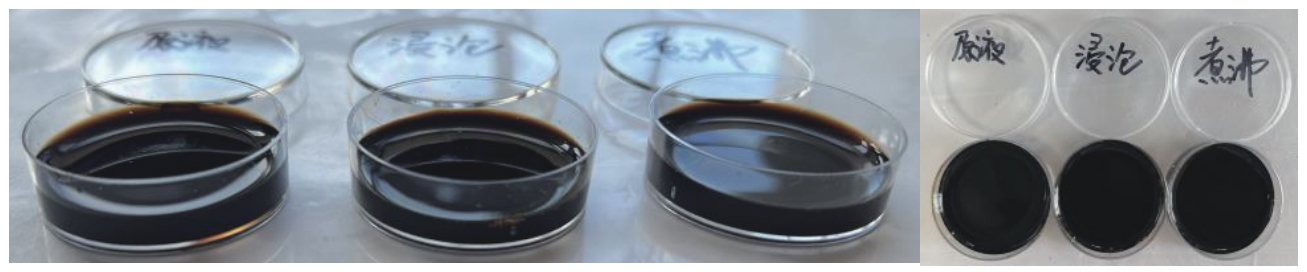
图2 华佗药香醋醋液成品展示
Fig. 2 Display of finished Huatuo medicinal vinegar product
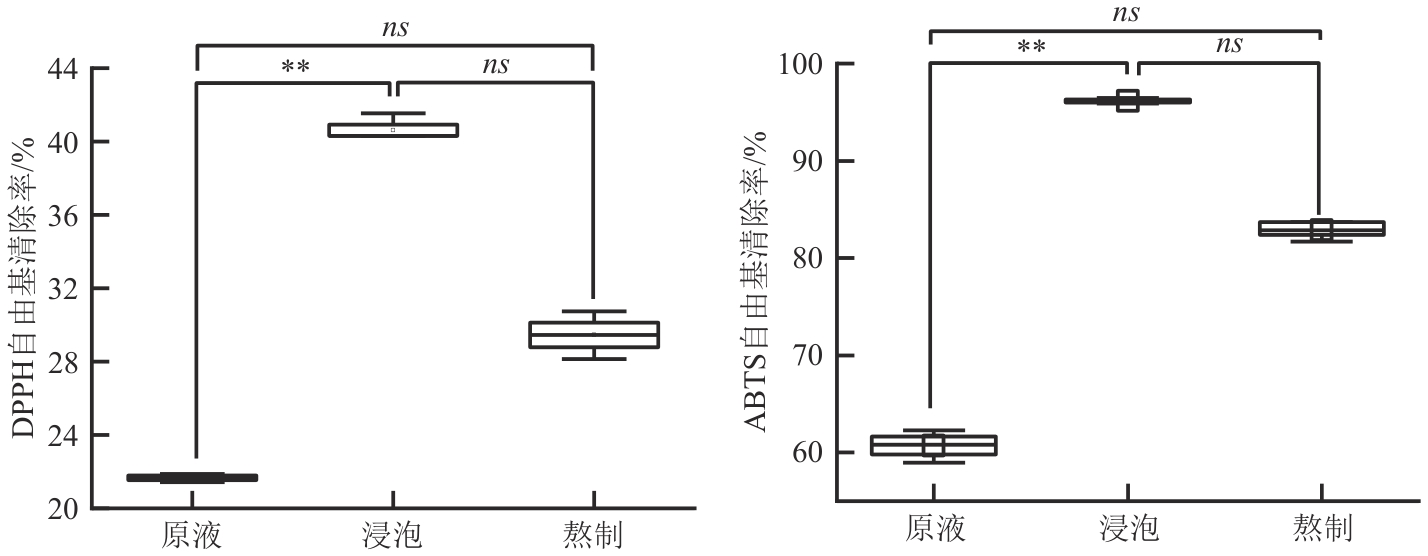
图3 DPPH和ABTS自由基清除能力
Fig. 3 DPPH and ABTS free radical scavenging abilities
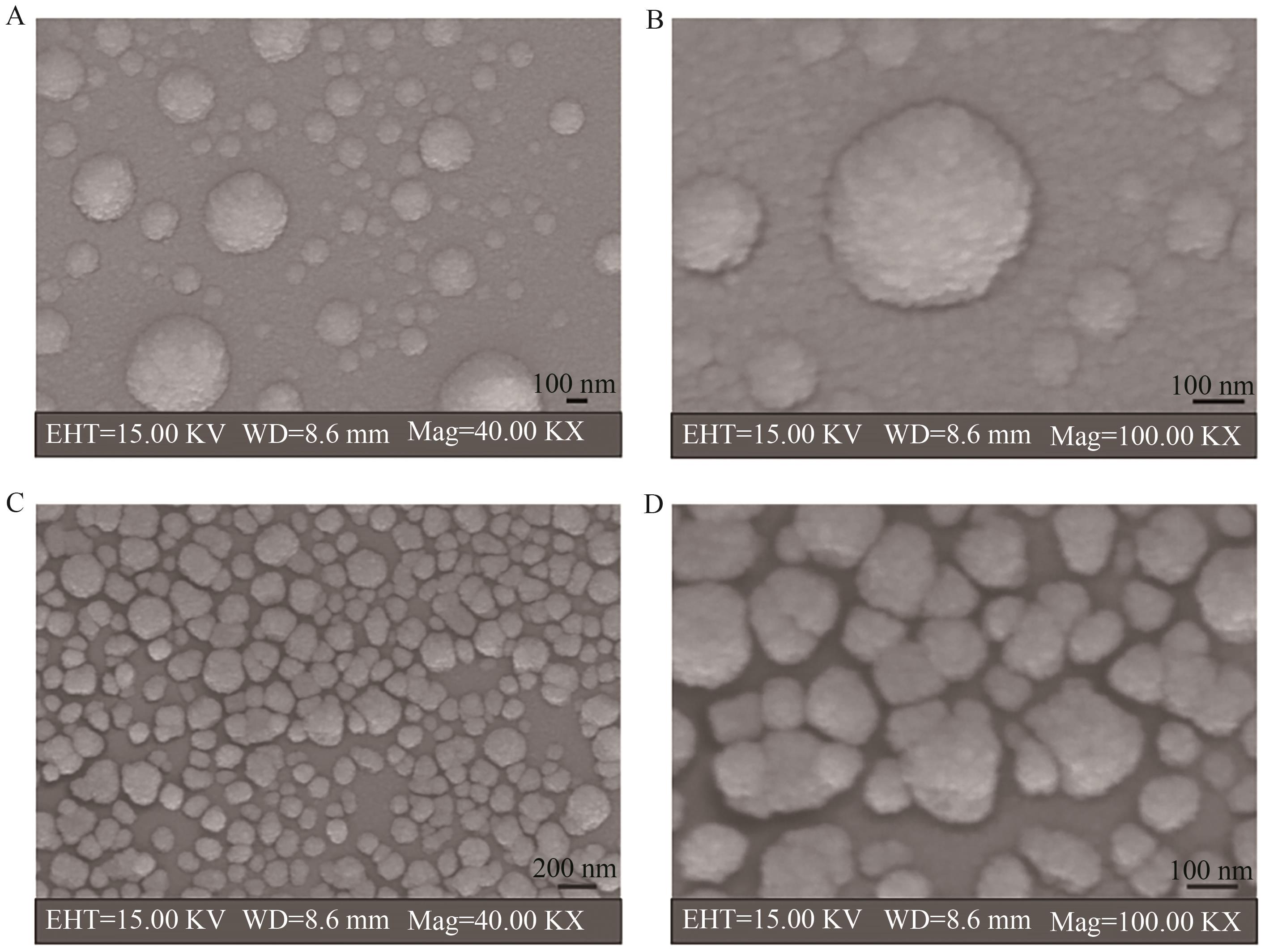
图4 2种再加工工艺处理下的扫描电镜图A~B:常温浸泡组;C~D:高温煮沸组
Fig. 4 Scanning electron microscopy images of two reprocessing processes
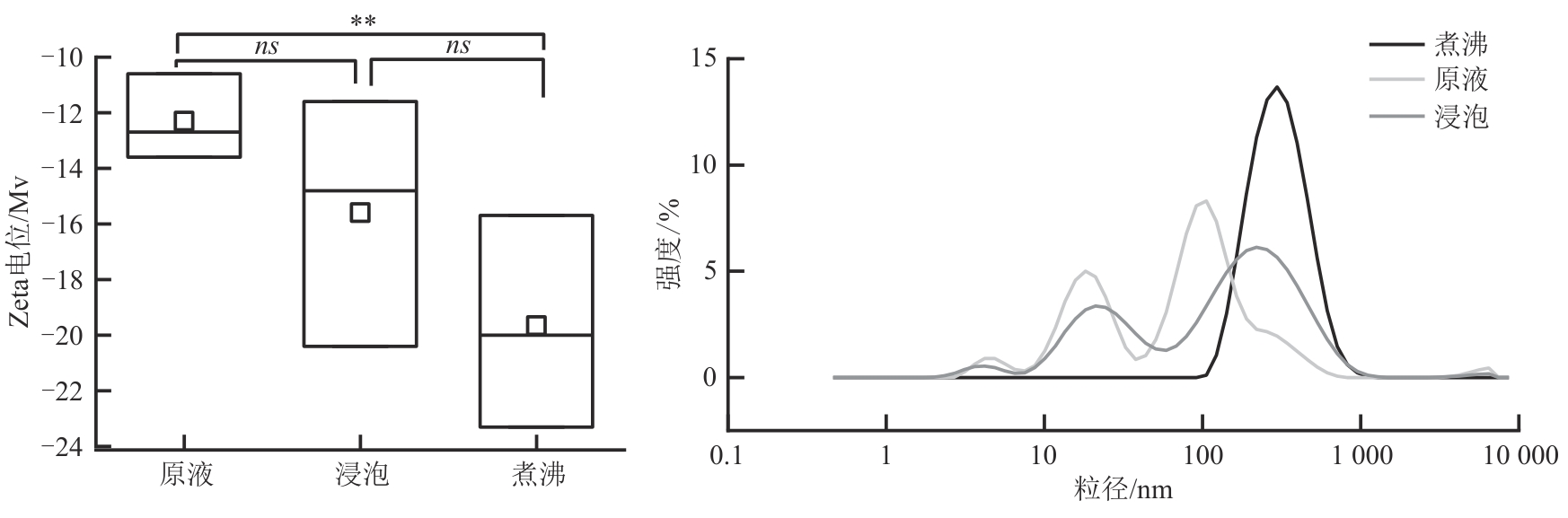
图5 不同工工艺处理下的溶液的Zeta电位和粒径
Fig. 5 Zeta potential and particle size of solutions treated with different processes
| [1] | CHEN G L, ZHENG F J, LIN B, et al.. Vinegar: a potential source of healthy and functional food with special reference to sugarcane vinegar[J/OL]. Nutrints, 2023, 10: 1145862[2025-11-07]. . |
| [2] | HO C W, LAZIM A M, FAZRY S, et al.. Varieties, production, composition and health benefits of vinegars: a review[J]. Food Chem., 2017, 221: 1621-1630. |
| [3] | 褚秀军,李会珍,褚丹萍.芦笋薏米中药复合保健醋的开发及展望[J].食品安全导刊,2022(34):148-150. |
| CHU X J, LI H Z, CHU D P. Development and prospect of traditional Chinese medicinal compound health vinegar with Asparagus polyphyllus and Coix lacryma-jobi var. ma-yuen[J]. China Food Saf. Mag., 2022(34): 148-150. | |
| [4] | WU J, CAO M Y, PENG Y, et al.. Effect of processing with vinegar on efficacy of Curcuma longa in treatment of dysmenorrhea in rats with syndrome of liver depression and Qi stagnation[J]. China J. Chin. Mater. Med., 2023, 48(13): 3498-3507. |
| [5] | LI Y, LI M, MAO J, et al.. The processing mechanism of vinegar-processed Curcumae rhizome enhances anti hepatic fibrotic effects through regulation of PI3K/Akt/mTOR signaling pathway[J/OL]. Phytomedicine, 2024, 135: 156098[2025-11-07]. . |
| [6] | 安家静.茶醋的发酵工艺及功能性研究[D].贵阳:贵州大学,2019. |
| [7] | 白绍赐,杨明源,张群芳,等.松花粉醋发酵过程中风味品质差异性分析[J].食品科学,2024,45(17):154-164. |
| BAI S C, YANG M Y, ZHANG Q F, et al.. Changes in flavor and quality of pine pollen vinegar during fermentation[J]. Food Sci., 2024, 45(17): 154-164. | |
| [8] | 徐哲萱,杨海龙.米曲霉固态发酵铁皮石斛叶工艺条件的优化[J].现代食品,2023,29(11):43-49. |
| XU Z X, YANG H L. Optimization of solid-state fermentation conditions of Dendrobium officinale leaves by Aspergillus oryzae [J]. Mod. Food, 2023, 29(11): 43-49. | |
| [9] | 徐融融,卢红梅,吴震,等.不同发酵方式对铁皮石斛醋有机酸及风味特征影响的分析[J].中国酿造,2022,41(3):38-44. |
| XU R R, LU H M, WU Z, et al.. Effect of different fermentation methods on organic acids and flavor characteristics of Dendrobium officinale vinegar[J]. China Brew., 2022, 41(3): 38-44. | |
| [10] | YIN R, JIANG J, MA X, et al.. Dynamic changes of physicochemical parameters, antioxidant activity, organic acids, polyphenols, and volatile components in prune vinegar during fermentation[J/OL]. Food Biosci., 2024, 59: 104042[2025-11-07]. . |
| [11] | HASAN M U, SINGH Z, SHAH H M S, et al.. Methyl jasmonate advances fruit ripening, colour development, and improves antioxidant quality of 'Yoho' and 'Jiro' persimmon[J/OL]. Food Chem., 2024, 459: 140360[2025-11-07]. . |
| [12] | LI N, FAN X, CHEN T, et al.. Molecular mechanism of color deepening of ready-to-eat shrimp during storage[J/OL]. Food Chem., 2024, 450: 139332[2025-11-07]. . |
| [13] | 冀权,罗正勇,勉海荣,等.红茶菌发酵枸杞果醋饮料工艺研究与品质分析[J].饮料工业,2023,26(5):41-48. |
| JI Q, LUO Z Y, MIAN H R, et al.. Optimize the process of fermented goji vinegar with kombucha and conduct quality analysis[J]. Beverage Ind., 2023, 26(5): 41-48. | |
| [14] | 康优,吕杨,高磊,等.乳酸片球菌与马克斯克鲁维酵母混合附属发酵剂对切达干酪品质的影响[J].食品科学,2025,46(10):120-127. |
| KANG Y, LÜ Y, GAO L, et al.. Effects of mixed adjunct culture of Pediococcus acidilactici and Kluyveromyces marxianus on the quality of cheddar cheese[J]. Food Sci., 2025, 46(10): 120-127. | |
| [15] | LIM J, KIM K, KWON D Y, et al.. Effects of different solvents on the extraction of phenolic and flavonoid compounds, and antioxidant activities, in Scutellaria baicalensis hairy roots[J/OL]. Horticulturae, 2024, 10(2): 160[2025-11-07]. . |
| [16] | SATHASIVAM R, KIM N S, LIM J, et al.. Comprehensive analysis of primary and secondary metabolites and antioxidant activities provides insights into metabolic profiling of different organs of Pimpinella brachycarpa Nakai[J/OL]. Food Chem., 2025, 468: 142394[2025-11-07]. . |
| [17] | 王彦惠,吴清浊,孙瑜彤,等.热处理对杏仁分离蛋白结构及热稳定性的影响[J].食品工业,2023,44(12):140-146. |
| WANG Y H, WU Q Z, SUN Y T, et al.. Effects of different heat treatment on the structure and thermal stability of almond protein isolate[J]. Food Ind., 2023, 44(12): 140-146. | |
| [18] | ZHOU J, YANG S, MA Y, et al.. Soluble sugar and organic acid composition and flavor evaluation of Chinese cherry fruits[J/OL]. Food Chem., 2023, 20: 100953[2025-11-07]. . |
| [19] | ÖZDEMIR N, PASHAZADEH H, ZANNOU O, et al.. Phytochemical content, and activityantioxidant, and volatile compounds associated with the aromatic property, of the vinegar produced from rosehip fruit (Rosa canina L.)[J/OL]. LWT, 2022, 154: 112716[2025-11-07]. . |
| [20] | ZHANG Z, ZHANG Z H, HE R, et al.. Research advances in technologies and mechanisms to regulate vinegar flavor[J/OL]. Food Chem., 2024, 460(Pt 3): 140783[2025-11-07]. . |
| [21] | OTERO L, PÉREZ-MATEOS M, HOLGADO F, et al.. Hyperbaric cold storage: pressure as an effective tool for extending the shelf-life of refrigerated mackerel (Scomber scombrus L.)[J]. Innov. Food Sci. Emerg. Technol., 2019, 51: 41-50. |
| [22] | SEYIDOGLU N, KARAKÇı D, BAKıR B, et al.. Hawthorn vinegar in health with a focus on immune responses[J/OL]. Nutrients, 2024, 16(12): 1868[2025-11-07]. . |
| [23] | WANG Z, LI T, LIU F, et al.. Effects of ultrasonic treatment on the maturation of Zhenjiang vinegar[J]. Ultrason. Sonochem., 2017, 39: 272-280. |
| [24] | KHALIFA S A M, EL-SHABASY R M, TAHIR H E, et al.. Vinegar-a beneficial food additive: production, safety, possibilities, and applications from ancient to modern times[J]. Food Funct., 2024, 15(20): 10262-10282. |
| [25] | 刘廷锐,张超,朱文优,等.四川不同地区的熟醋及其固态发酵过程中有机酸含量变化分析[J].食品研究与开发,2020,41(3):166-172. |
| LIU T R, ZHANG C, ZHU W Y, et al.. Analysis of changes of organic acid content in cooked vinegar and its solid state fermentation process in different areas of Sichuan[J]. Food Res. Dev., 2020, 41(3): 166-172. | |
| [26] | HOLEČEK M. Aspartic acid in health and disease[J/OL]. Nutrients, 2023, 15(18): 4023[2025-11-07]. . |
| [27] | PHANG J M. The regulatory mechanisms of proline and hydroxyproline metabolism: recent advances in perspective[J/OL]. Front. Oncol., 2022, 12: 1118675[2025-11-07]. . |
| [28] | MAESTRE O, SANTOS-DUEÑAS I M, PEINADO R, et al.. Changes in amino acid composition during wine vinegar production in a fully automatic pilot acetator[J]. Proc. Biochem., 2008, 43(8): 803-807. |
| [29] | 杨玉霞,郭峰君.红茶菌发酵香蕉醋的工艺及抗氧化活性研究[J].食品安全导刊,2024(30):134-139. |
| YANG Y X, GUO F J. Study on the process and antioxidant activity of banana vinegar fermented by kombucha[J]. China Food Saf. Mag., 2024(30): 134-139. | |
| [30] | FENDLER J H. Self-assembled nanostructured materials[J]. Chem. Mater., 1996, 8(8): 1616-1624. |
| [31] | DEVARAJ V, LEE J M, KIM Y J, et al.. Engineering efficient self-assembled plasmonic nanostructures by configuring metallic nanoparticle's morphology[J/OL]. Int. J. Mol. Sci., 2021, 22(19): 10595[2025-11-07]. . |
| [32] | ZHAO J, WANG H, LI Y, et al.. Construction of self-assembled bilayer core-shell V2O3 microspheres as absorber with superior microwave absorption performance[J]. J. Colloid Interface Sci., 2023, 639: 68-77. |
| [33] | 朱倩儿,刘晓青,陈晓宇,等.油相对虾青素纳米乳液稳定性及生物可及性的影响[J/OL].食品工业科 技,2025[2026-01-05].. |
| ZHU Q E, LIU X Q, CHEN X Y, et al.. Influence of oil phase on stability and bioaccessibility of astaxanthin nanoemulsions[J/OL]. Sci. Technol. Food Ind.,2025[2026-01-05]. . |
| No related articles found! |
| 阅读次数 | ||||||
|
全文 |
|
|||||
|
摘要 |
|
|||||
